Skip to content
Three Practical Gates for Selecting a Chinese Diode Factory
Last Updated: 2026-10-08
Quick Answer
Selecting a Chinese diode factory becomes more reliable when three gates are kept separate: product accountability, process control and problem resolution. Ask each supplier to demonstrate the exact product it supplies, how relevant changes are controlled and how a traced failure would be investigated. Use evidence rather than factory size or price alone.
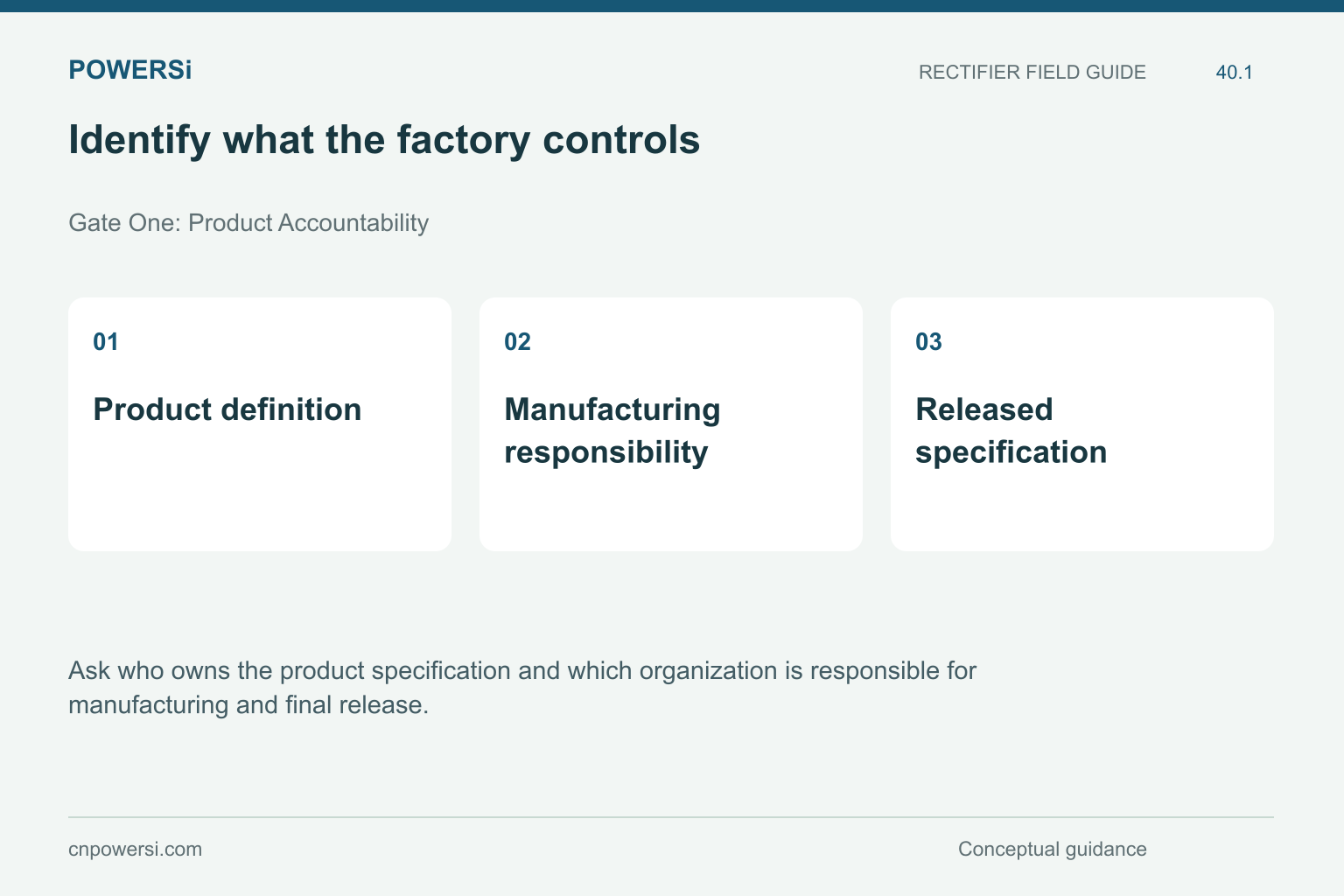
Identify what the factory controls.
Gate One: Product Accountability
Ask who owns the product specification and which organization is responsible for manufacturing and final release. A supplier may use external wafer or assembly services; the important question is whether those relationships and responsibilities are controlled.
Request a consistent chain from the quotation to the ordering code, package drawing and delivered label. If these refer to different entities or undocumented variants, resolve the discrepancy before evaluation. A well-presented catalogue cannot compensate for uncertainty about which product will arrive.
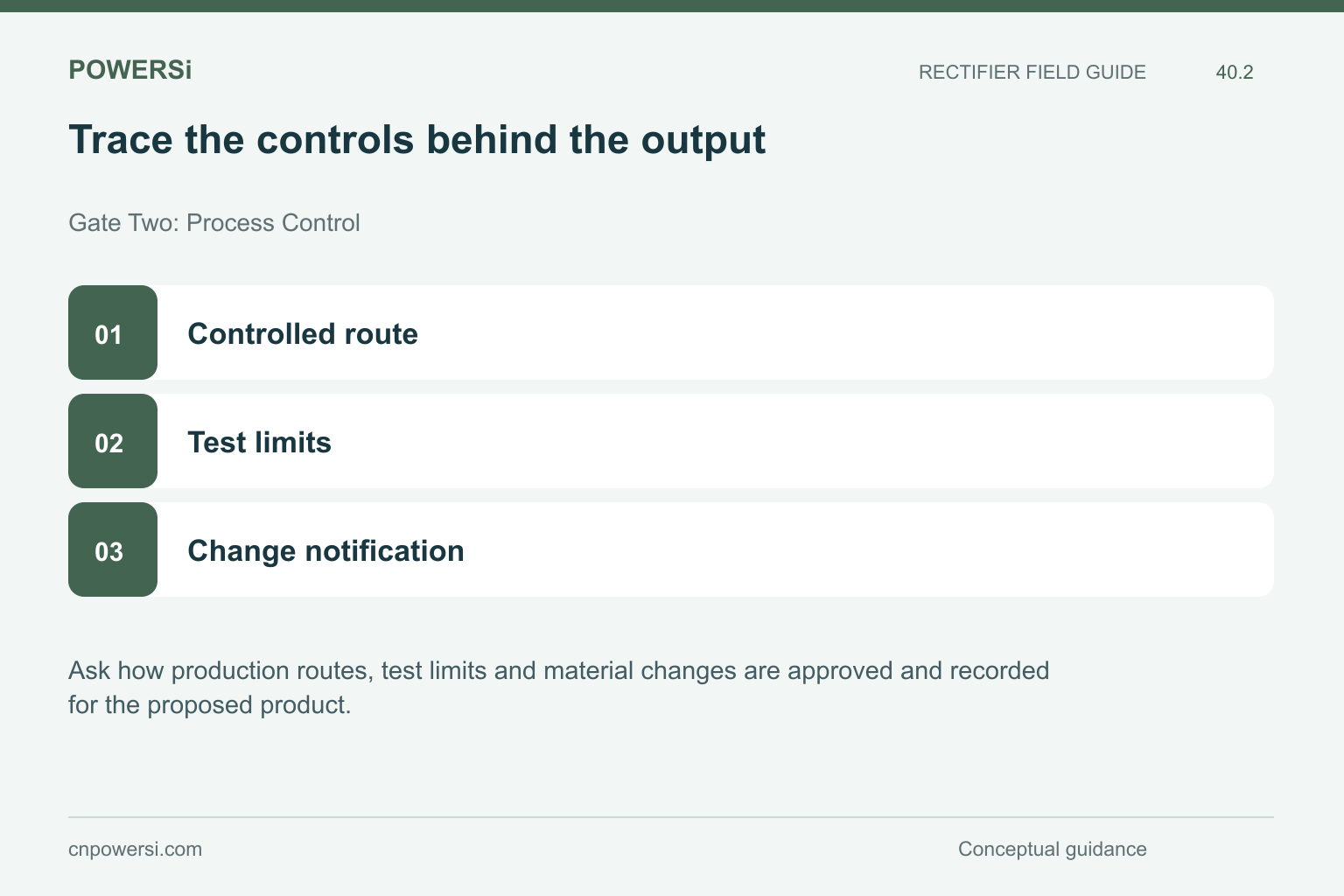
Trace the controls behind the output.
Gate Two: Process Control
Ask how production routes, test limits and material changes are approved and recorded for the proposed product. Choose a relevant example, such as a package-material or test-program change, and ask the supplier to explain its assessment and release path.
The purpose is not to demand ownership of every machine. It is to establish control over the activities that can change the delivered device. Certificates can support this review, but their site, scope and validity must align with the claimed operation.
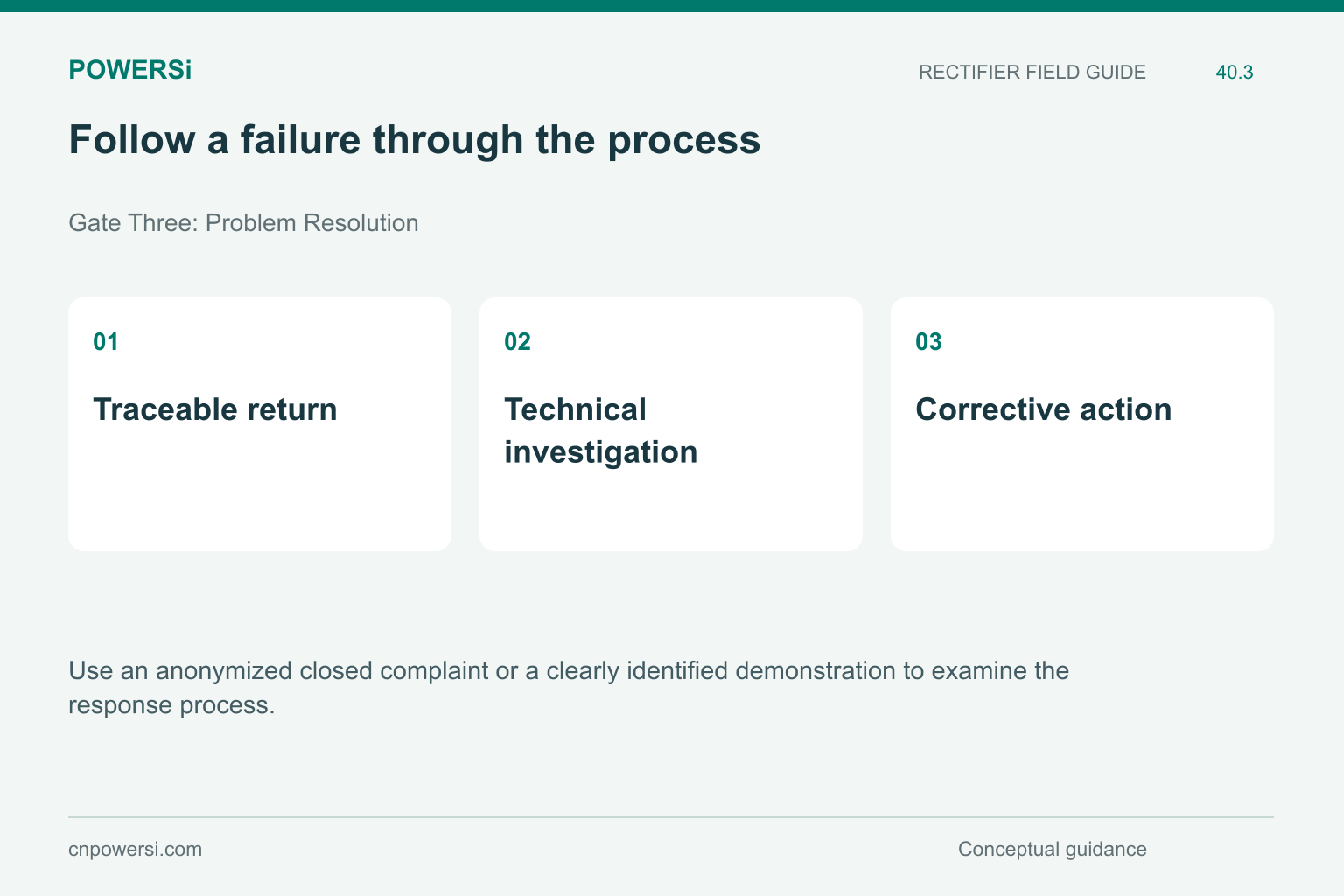
Follow a failure through the process.
Gate Three: Problem Resolution
Use an anonymized closed complaint or a clearly identified demonstration to examine the response process. Can the supplier connect a returned unit to a lot, preserve evidence, assess possible causes and explain the corrective action? Protect customer confidentiality during this exchange.
Distinguish a rapid acknowledgement from a completed investigation. Agree the contact route, evidence needed and escalation points. A promise to replace parts may solve an immediate commercial problem while leaving the underlying application or manufacturing cause unresolved.
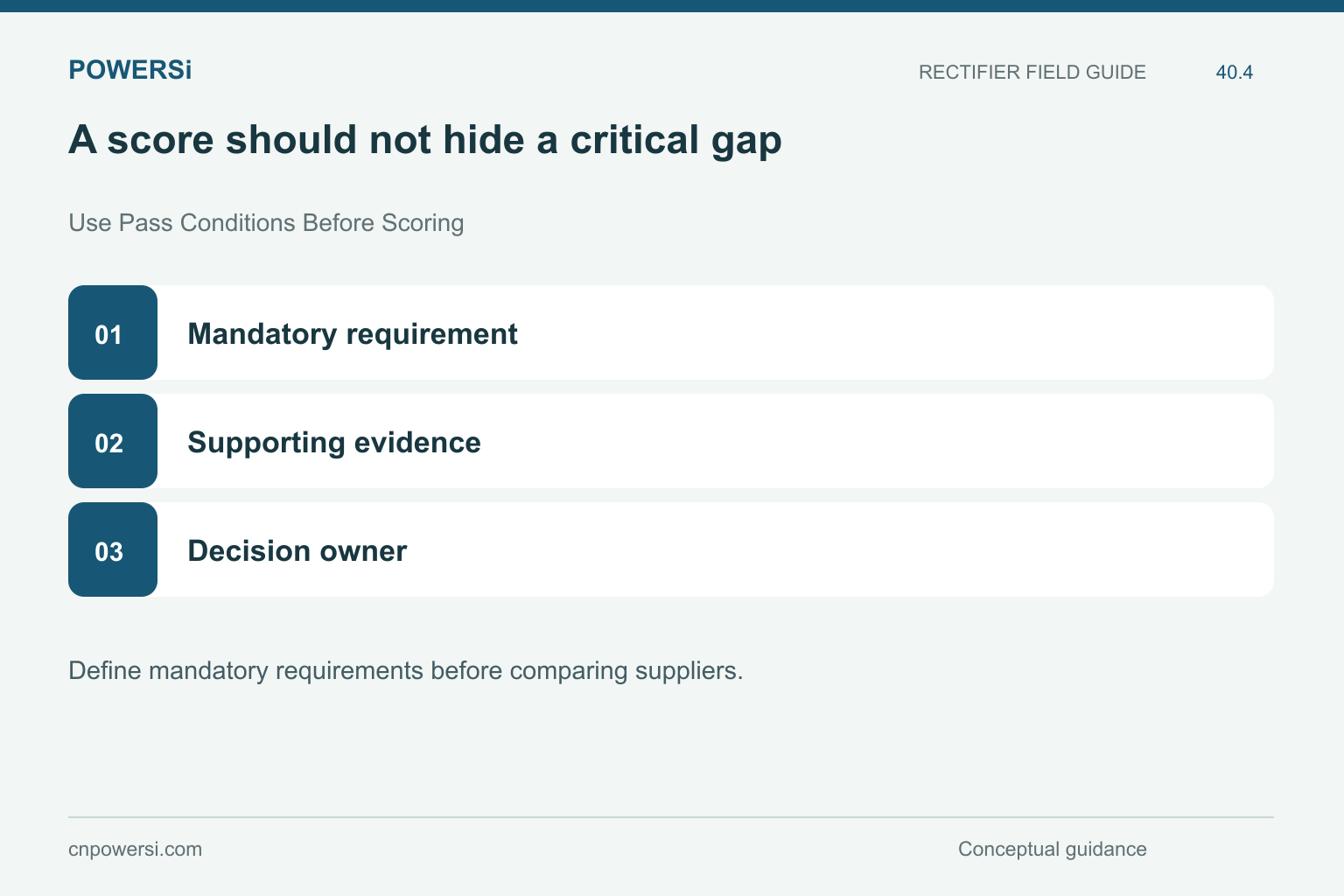
A score should not hide a critical gap.
Use Pass Conditions Before Scoring
Define mandatory requirements before comparing suppliers. An unresolved product identity or an unmet qualification requirement should not disappear inside a weighted average of price, responsiveness and presentation quality.
Score noncritical differences only after the mandatory gates pass. Keep the evidence reference and decision owner beside each rating. This makes the result explainable to both purchasing and engineering and reduces the temptation to choose a supplier because it gave the most persuasive tour.
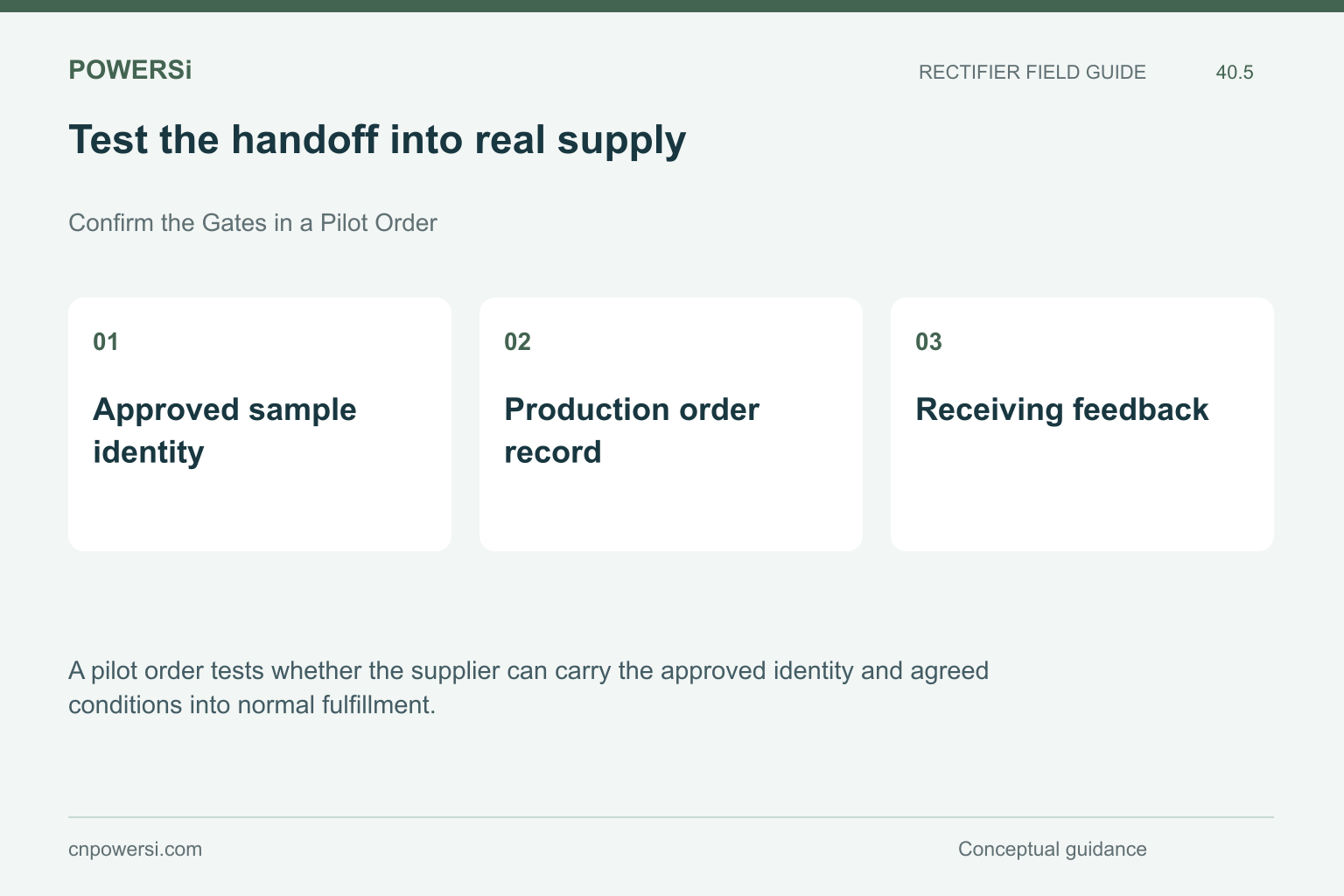
Test the handoff into real supply.
Confirm the Gates in a Pilot Order
A pilot order tests whether the supplier can carry the approved identity and agreed conditions into normal fulfillment. Check documents, labeling, packing and traceability, then apply the agreed receiving and application evaluation plan.
Record discrepancies and close them before scaling volume. Passing the three gates supports a controlled supplier decision; it does not prove that every product from the factory is interchangeable or that future changes need no assessment.
Key Takeaways
- Identify what the factory controls.
- Follow a failure through the process.
- Test the handoff into real supply.
Conclusion
Use the three gates to make supplier discussions concrete. Ask POWERSi about the responsibilities and evidence relevant to your exact proposed product.
FAQs
Must a supplier own every manufacturing stage?
No. The review should establish accountable control over internal and external operations.
Is a large factory sufficient evidence?
No. Size does not establish the proposed product identity or process controls.
Can price offset missing mandatory evidence?
It should not. Keep mandatory gates separate from commercial scoring.
Why review a closed complaint?
It shows how traceability, investigation and corrective action operate in practice.
What does a pilot order add?
It checks whether approved technical and commercial requirements survive normal fulfillment.