Skip to content
Rectifier Distribution Opportunities: Qualify the Customer BOM First
Last Updated: 2026-10-08
Quick Answer
A rectifier distribution opportunity starts with an authorized customer requirement, not an imported part number alone. Screen the BOM for technical ownership, recurring demand and realistic qualification effort. Estimate contribution after samples, engineering support, inventory and returns, then pursue substitutions whose evidence and economics support a repeatable business.
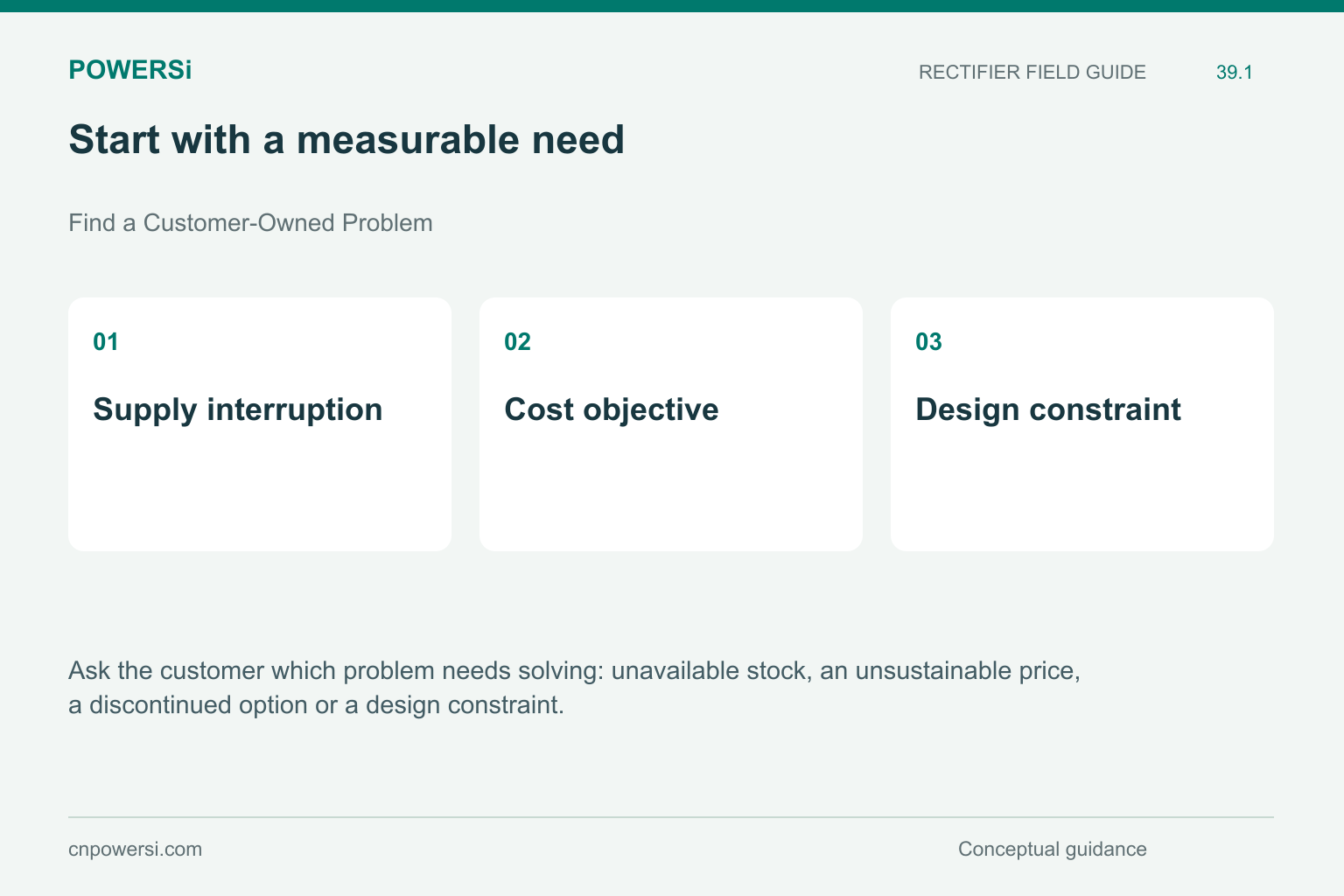
Start with a measurable need.
Find a Customer-Owned Problem
Ask the customer which problem needs solving: unavailable stock, an unsustainable price, a discontinued option or a design constraint. Establish who can approve a new manufacturer. Purchasing interest without engineering participation often creates a quotation exercise rather than a viable design-in.
Use customer-authorized BOM information and limit it to the evaluation scope. Record exact original codes and annual demand assumptions, but do not treat forecast demand as an order. Prioritize applications where the customer can supply enough operating information to evaluate an alternative responsibly.
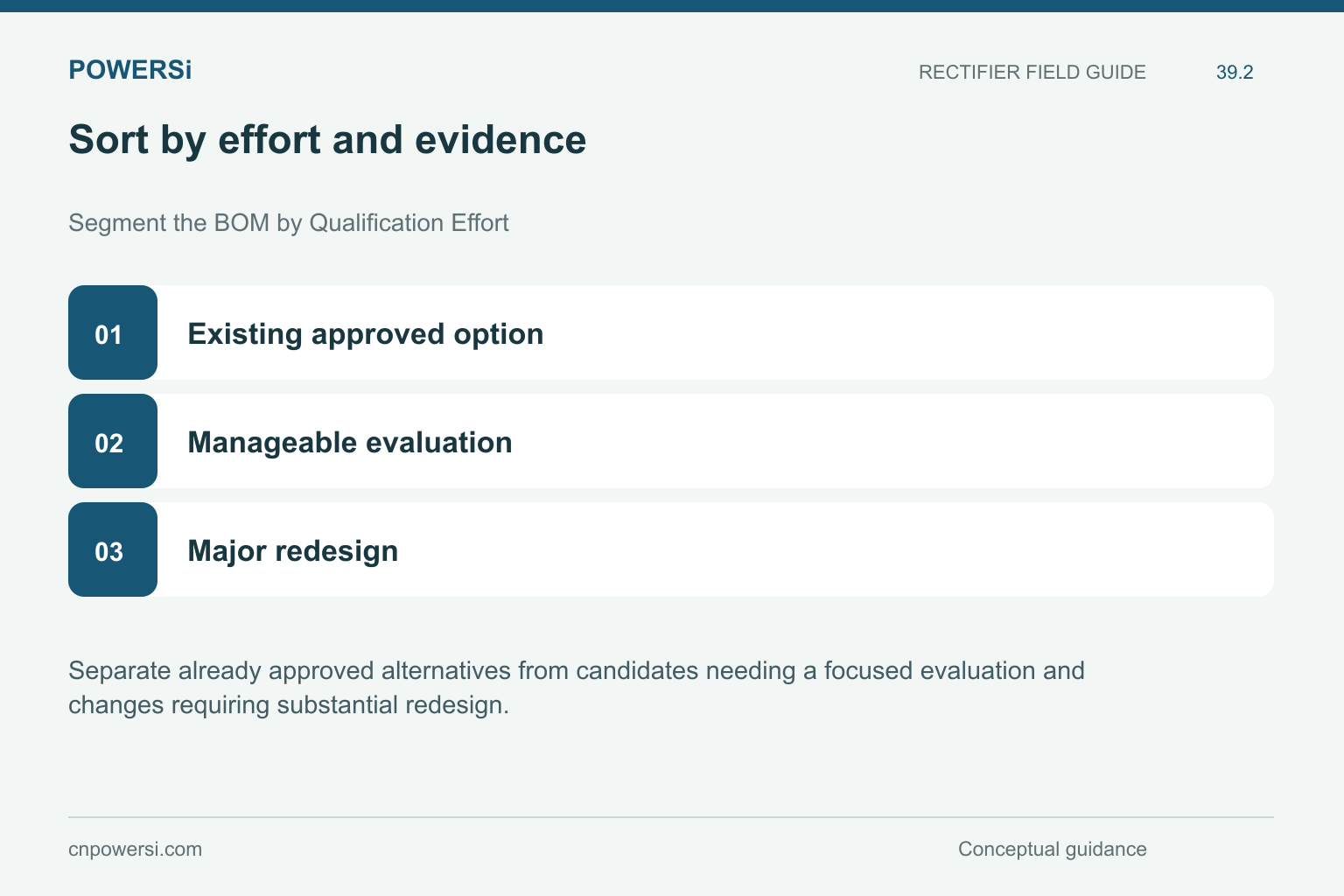
Sort by effort and evidence.
Segment the BOM by Qualification Effort
Separate already approved alternatives from candidates needing a focused evaluation and changes requiring substantial redesign. A shared package does not establish which group a part belongs to. Recovery behavior, isolation or an automotive requirement can materially change the workload.
Build a small opportunity list with an engineering owner, expected evidence and customer timing. This helps avoid spending sample and support resources on dozens of lines whose approval path is unknown. The highest annual quantity is not necessarily the most accessible opportunity.
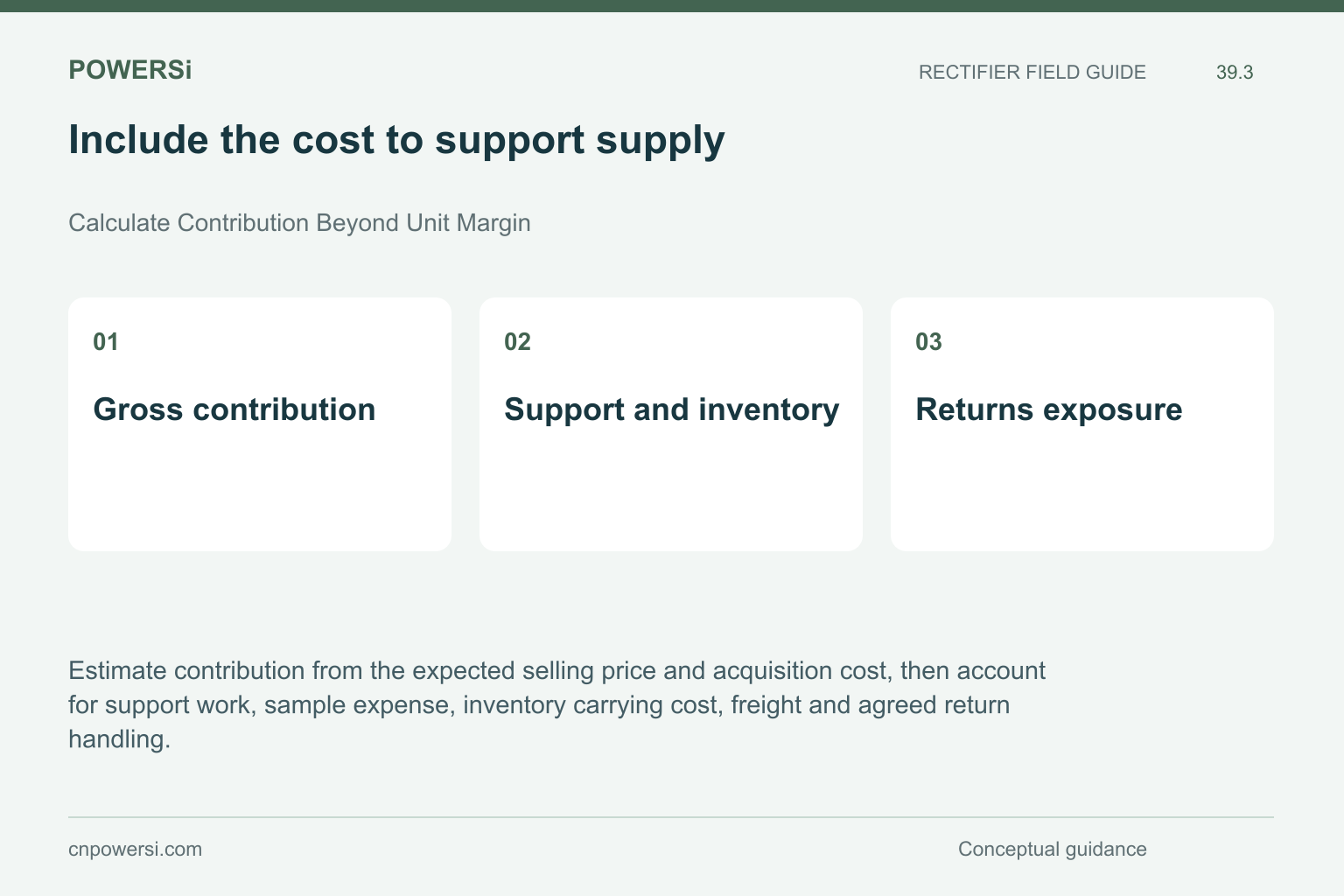
Include the cost to support supply.
Calculate Contribution Beyond Unit Margin
Estimate contribution from the expected selling price and acquisition cost, then account for support work, sample expense, inventory carrying cost, freight and agreed return handling. Keep one-time qualification expense separate from recurring costs.
Use scenarios for realistic purchase volume rather than multiplying the customer’s most optimistic forecast by unit margin. A technically difficult line may still be worthwhile, but its engineering effort needs an owner and a budget. Do not promote a general profit percentage without actual commercial terms.
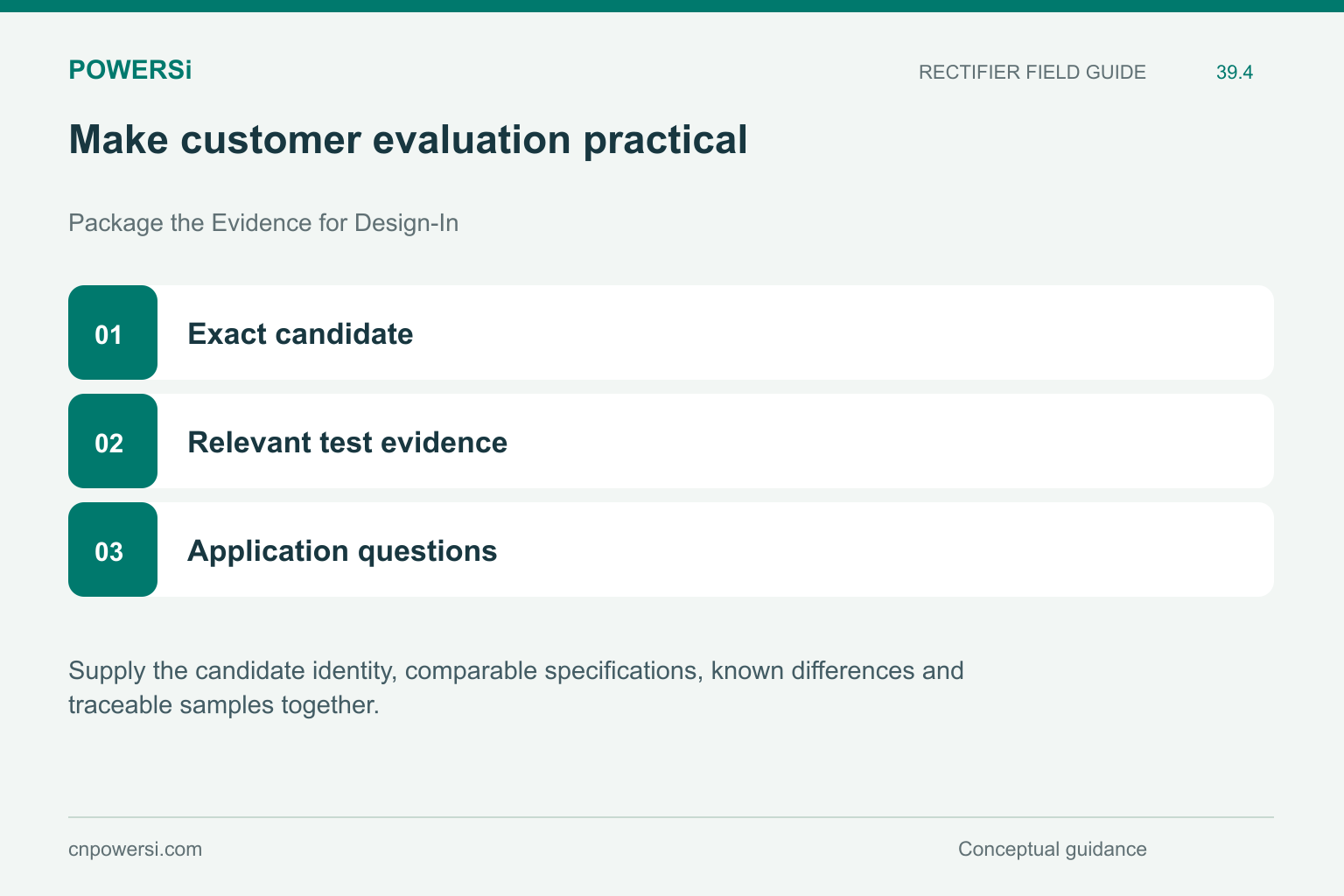
Make customer evaluation practical.
Package the Evidence for Design-In
Supply the candidate identity, comparable specifications, known differences and traceable samples together. Explain which application questions the customer must resolve and how the manufacturer will support them. A generic cross-reference list leaves too much work hidden.
Keep a single record of customer feedback and candidate revisions. If the offered construction or package changes during evaluation, explain the change before treating earlier results as applicable. Strong distribution support makes evidence easier to use; it does not replace the customer’s technical decision.
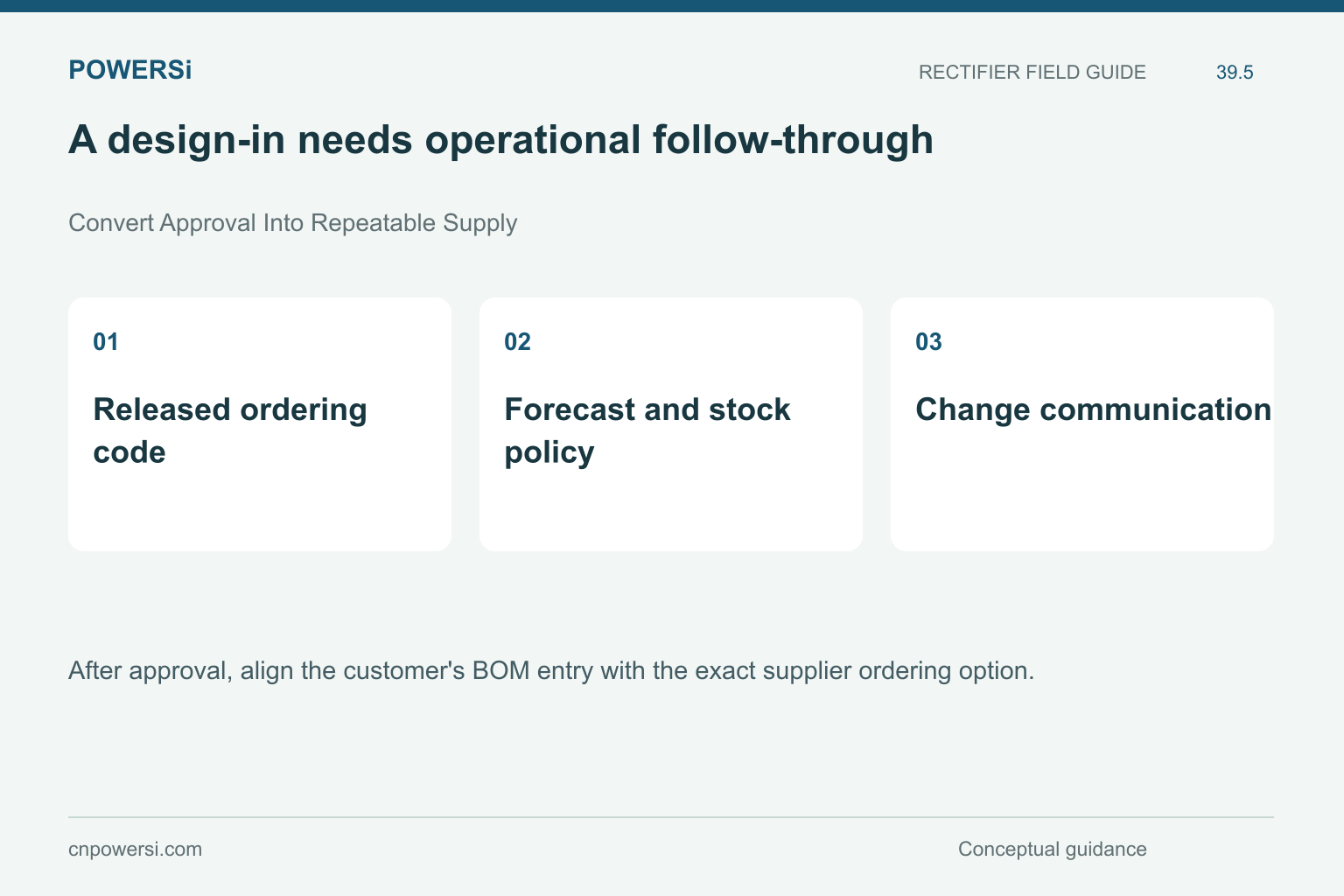
A design-in needs operational follow-through.
Convert Approval Into Repeatable Supply
After approval, align the customer’s BOM entry with the exact supplier ordering option. Agree forecast handling, order acceptance, packaging, traceability and how changes will be communicated. Distinguish an engineering-approved source from a guaranteed delivery commitment.
Track repeat orders and support burden against the original business case. A promising sample project becomes a distribution opportunity only when the customer can order and receive the approved product consistently under agreed terms.
Key Takeaways
- Start with a measurable need.
- Include the cost to support supply.
- A design-in needs operational follow-through.
Conclusion
Choose a few evidence-backed projects before expanding the line card. Discuss candidate documentation and technical support with POWERSi against specific customer requirements.
FAQs
Is every imported BOM line an opportunity?
No. Approval ownership, evidence access and economics determine whether a substitution is practical.
Does a forecast establish revenue?
No. Keep forecasts, accepted orders and actual shipments separate.
Should engineering support be included in cost?
Yes. Qualification and ongoing support can materially affect contribution.
Can a distributor approve a circuit replacement alone?
The customer must follow its own technical approval process.
What follows sample approval?
Release the exact ordering option and agree repeat-supply responsibilities.