Skip to content
Diode Dual Sourcing: Check Whether Two Suppliers Share the Same Risks
Last Updated: 2026-10-08
Quick Answer
Diode dual sourcing improves resilience only when both sources are technically approved and their relevant dependencies are understood. Two seller names may still rely on the same die source, assembly site or logistics route. Map common failure points, maintain usable alternate capacity and rehearse the switch before a disruption makes it urgent.
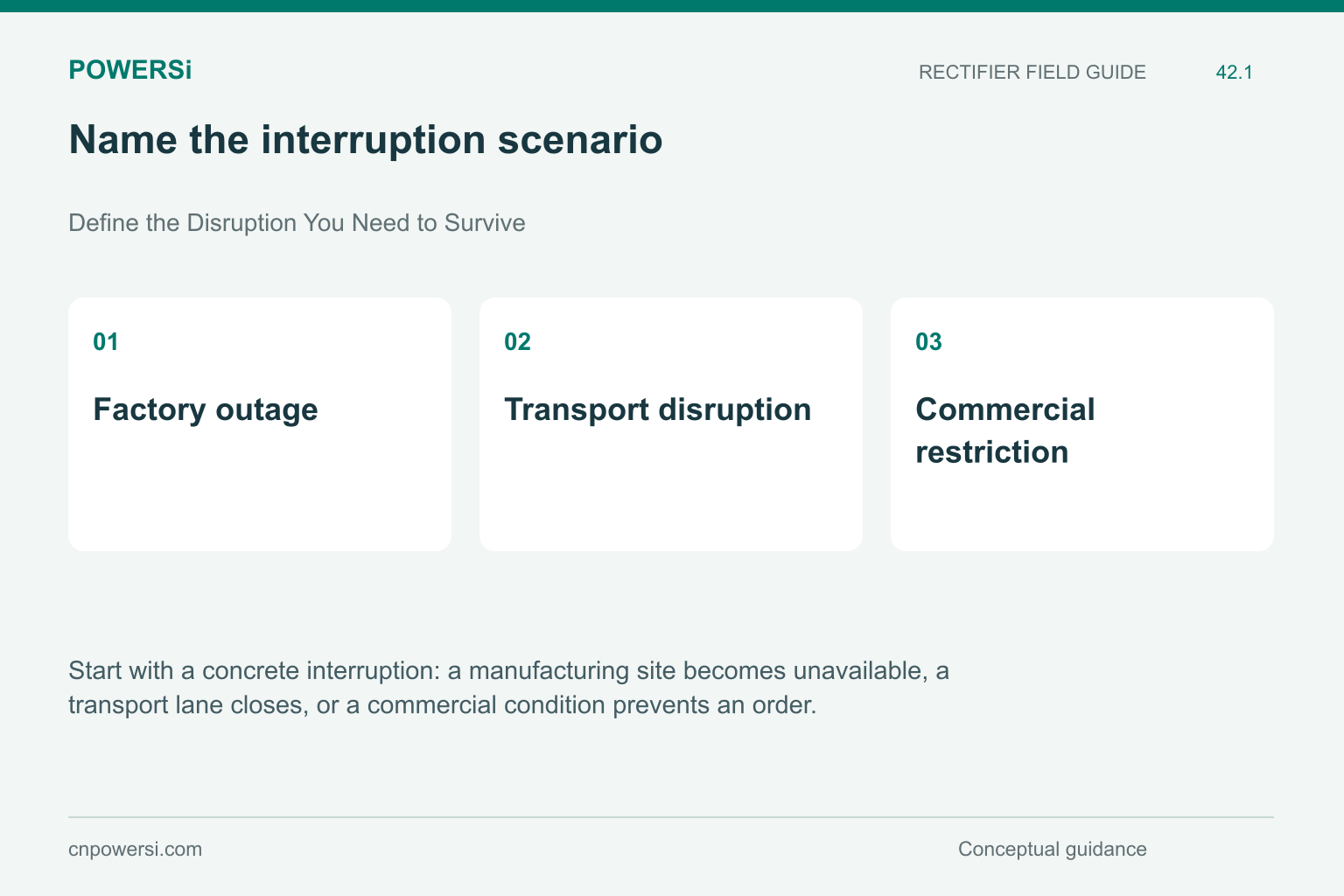
Name the interruption scenario.
Define the Disruption You Need to Survive
Start with a concrete interruption: a manufacturing site becomes unavailable, a transport lane closes, or a commercial condition prevents an order. Define how long production must continue and which assemblies are exposed.
Do not assume that a domestic source removes every cross-border dependency. Nor should a foreign source be considered unusable simply because of a headline. Trade conditions change; evaluate actual transactions through current company procedures. The sourcing plan should state operational exposures without inventing tariff or export-control conclusions.
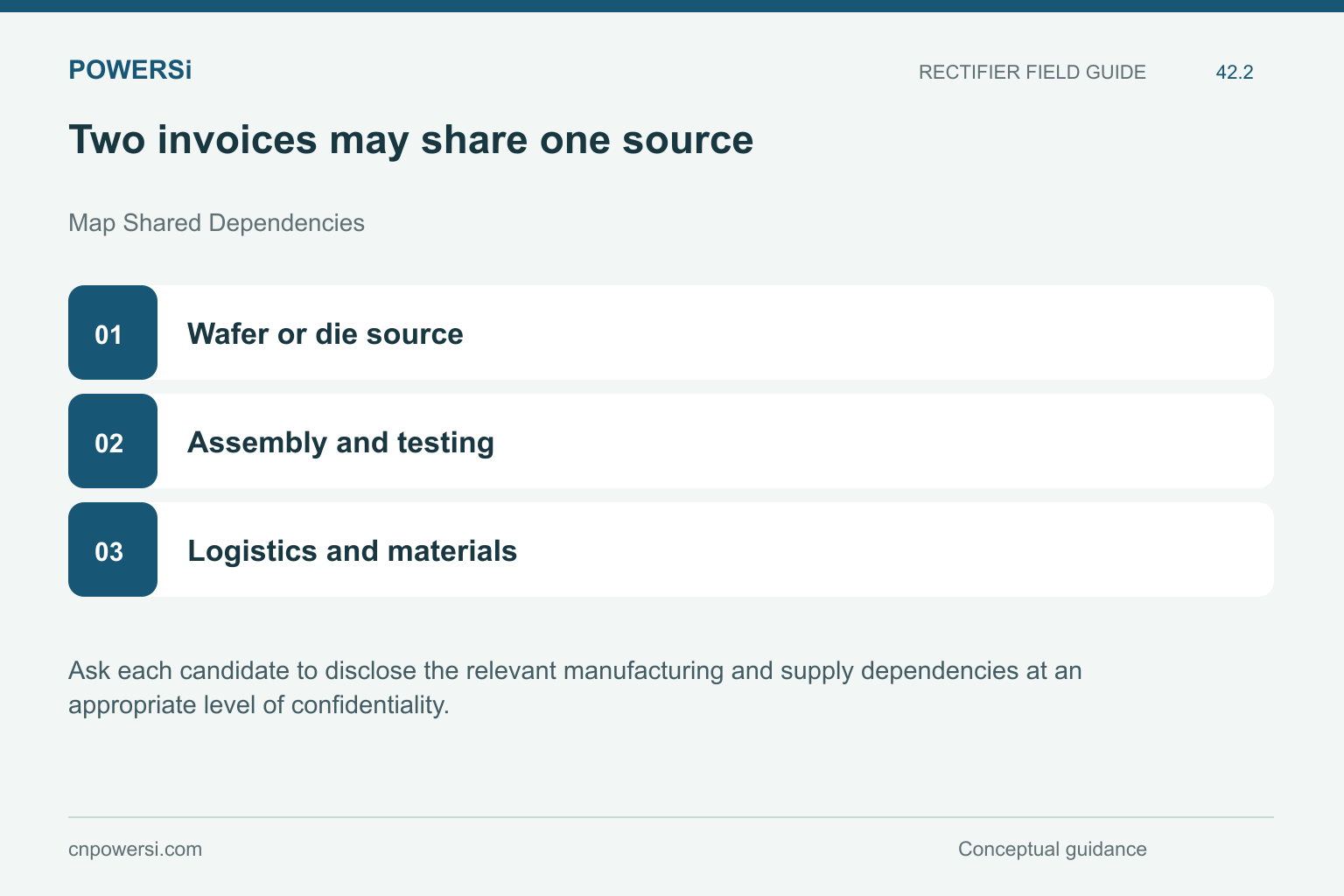
Two invoices may share one source.
Map Shared Dependencies
Ask each candidate to disclose the relevant manufacturing and supply dependencies at an appropriate level of confidentiality. Shared wafer fabrication, assembly, materials or transport can cause both sources to fail during the same event.
Record what is known, restricted and still unresolved. You do not need every commercial detail to identify a common site or route that defeats the intended contingency. Where disclosure is limited, reflect that uncertainty in the continuity plan rather than declare the sources fully independent.
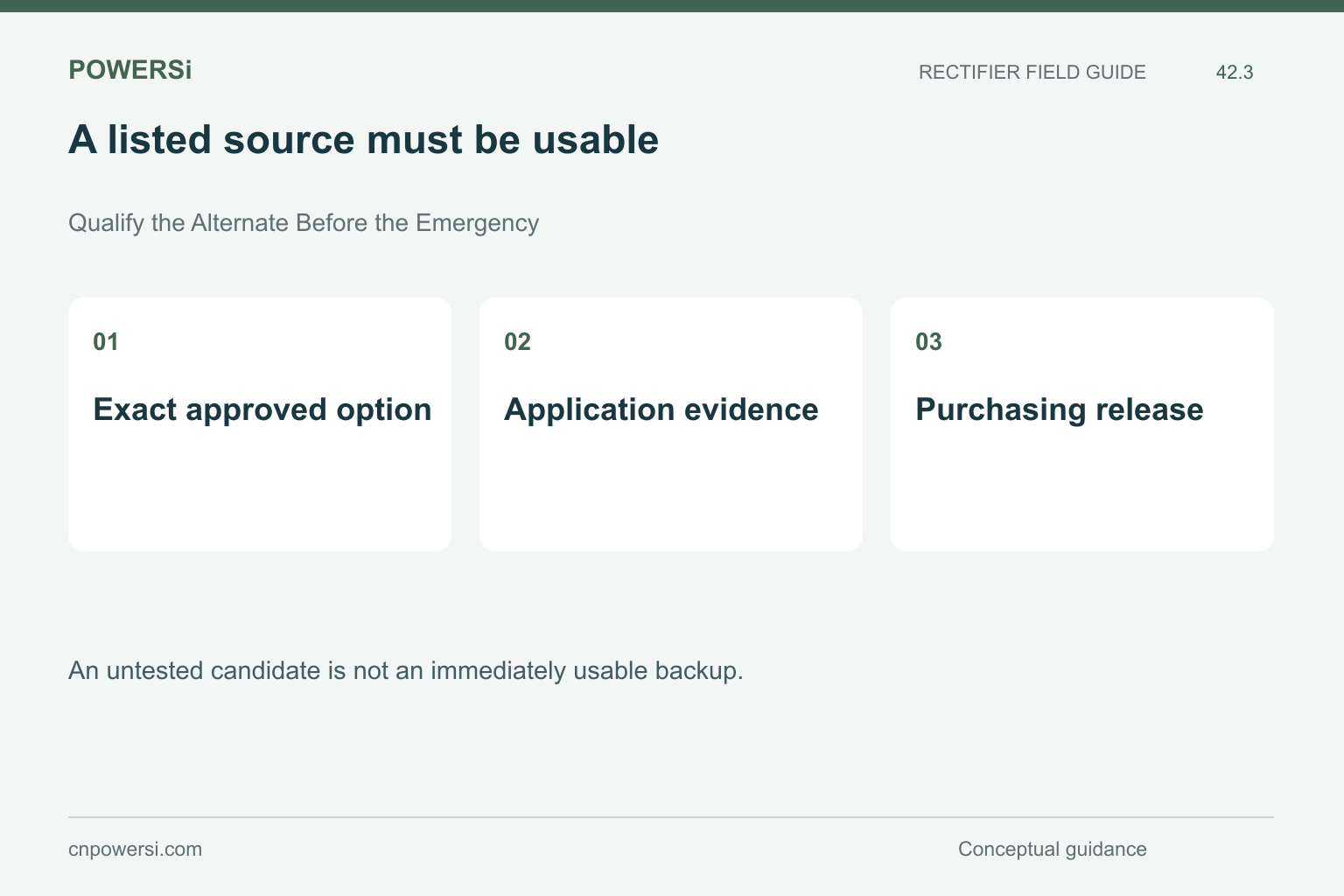
A listed source must be usable.
Qualify the Alternate Before the Emergency
An untested candidate is not an immediately usable backup. Complete the relevant technical comparison and customer approval before the original source becomes unavailable. Retain the approved package, construction and ordering code.
Check whether either source requires different assembly settings or inspection instructions. If so, build those changes into the switch procedure. A source that needs a lengthy redesign may still be valuable strategically, but it cannot support a short interruption response without advance preparation.
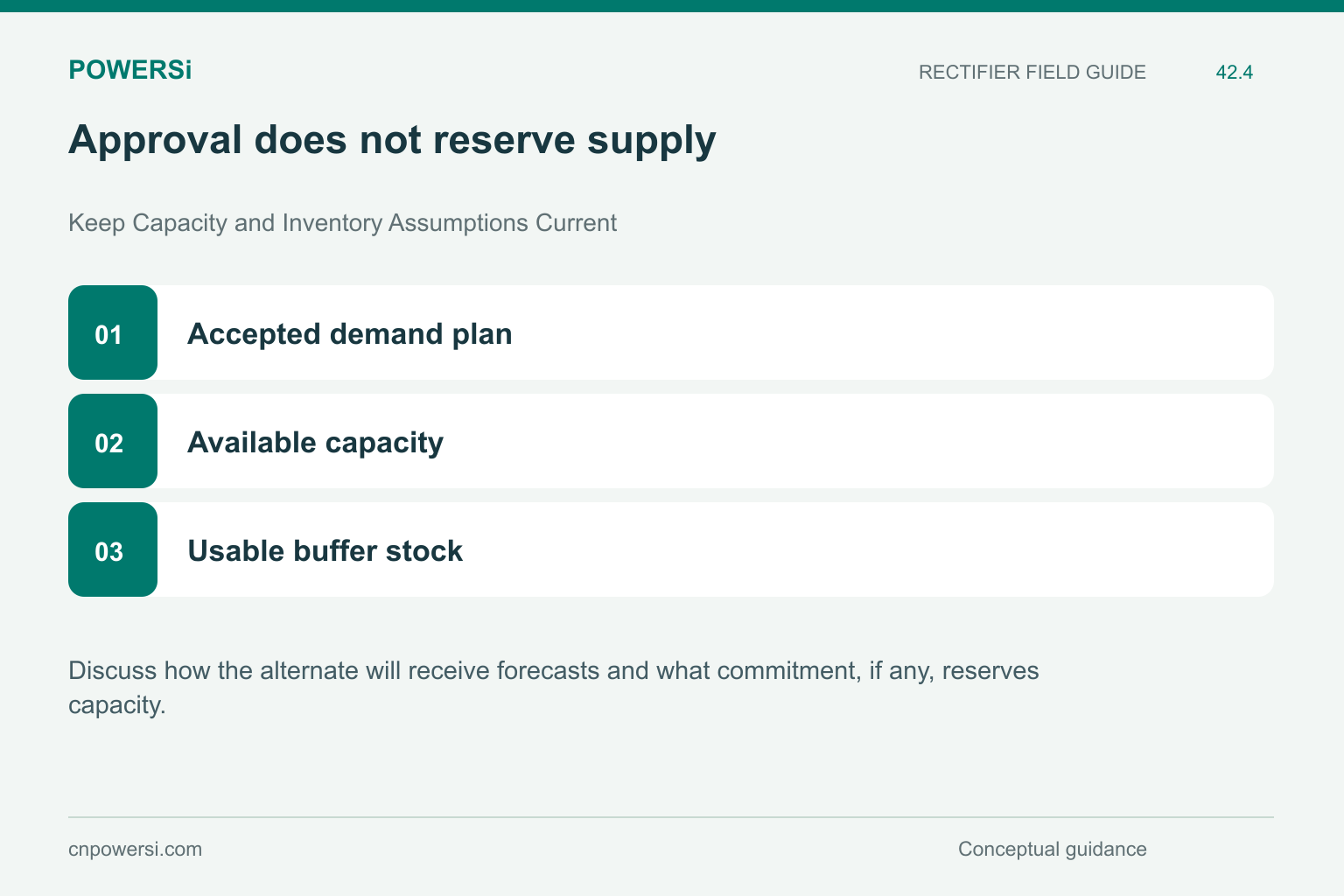
Approval does not reserve supply.
Keep Capacity and Inventory Assumptions Current
Discuss how the alternate will receive forecasts and what commitment, if any, reserves capacity. Occasional samples do not establish production availability. Avoid treating an unsigned forecast or catalogue lead time as a guaranteed recovery plan.
Size any buffer against the interruption scenario, actual replenishment time and inventory constraints. Track the approved variant and storage conditions so the buffer remains usable. Reconcile stock with engineering changes instead of counting obsolete material as resilience.
Exercise the complete handoff.
Rehearse and Review the Source Switch
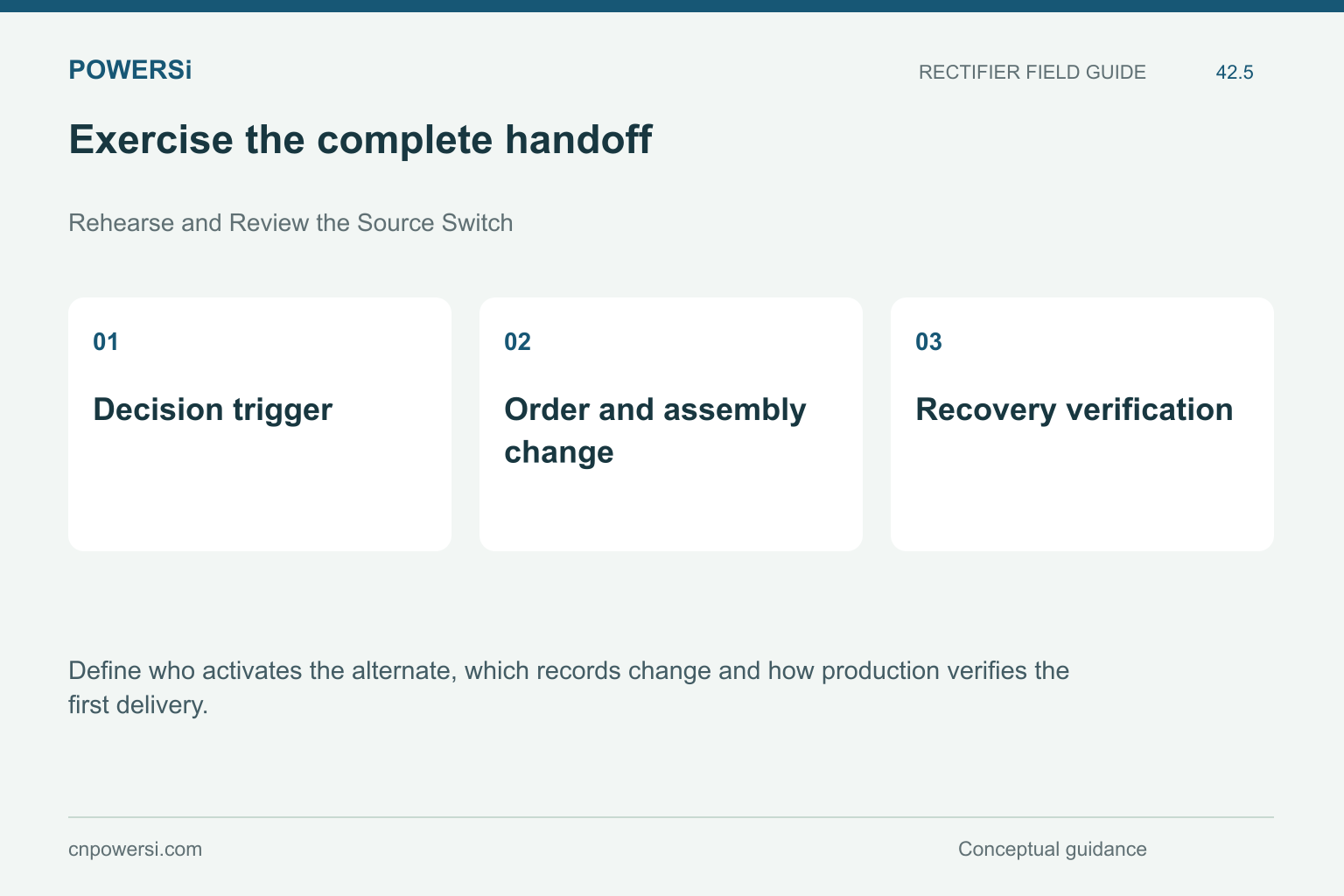
Define who activates the alternate, which records change and how production verifies the first delivery. A limited planned order can reveal document or packing issues before an emergency. Review the result with purchasing, quality and engineering.
Update the risk map when either supplier changes manufacturing routes or when the product requirement changes. Dual sourcing is an operating capability, not a permanent pass earned when a second name enters the supplier database.
Key Takeaways
- Name the interruption scenario.
- A listed source must be usable.
- Exercise the complete handoff.
Conclusion
Build a backup that can actually be activated. Discuss exact alternate codes and supply assumptions with POWERSi as part of a documented continuity plan.
FAQs
Do two distributors always create independent supply?
No. They may depend on the same manufacturer or inventory source.
Does domestic sourcing eliminate logistics risk?
No. Relevant materials, stages and routes may still be shared or cross-border.
Is an approved part automatically available?
No. Technical approval and supply commitment are separate.
Why place a planned alternate order?
It exercises the real purchasing, receiving and assembly handoff.
When should the risk map be updated?
After relevant source, route, product or demand changes and during periodic continuity reviews.