Skip to content
Diode Datasheet Quality Check: Spot Misleading Comparisons Before Buying
Last Updated: 2026-09-23
Quick Answer
A diode datasheet quality check can reveal incomplete conditions, inconsistent numbers and unfair comparisons, but it cannot prove hidden manufacturing defects on its own. Compare guaranteed limits under equivalent conditions, connect each claim to an exact part, and use a defined sample acceptance plan to investigate concerns before ordering.
A quotation advertises a higher current rating at a lower price. Another supplier lists a smaller current value for a similar package. That difference deserves investigation, but it is not evidence that either device is falsely rated. The two numbers may describe different junction temperatures, cooling conditions or internal diode configurations.
The buyer’s task is to turn an attractive headline into a comparison that engineering and receiving can actually use.
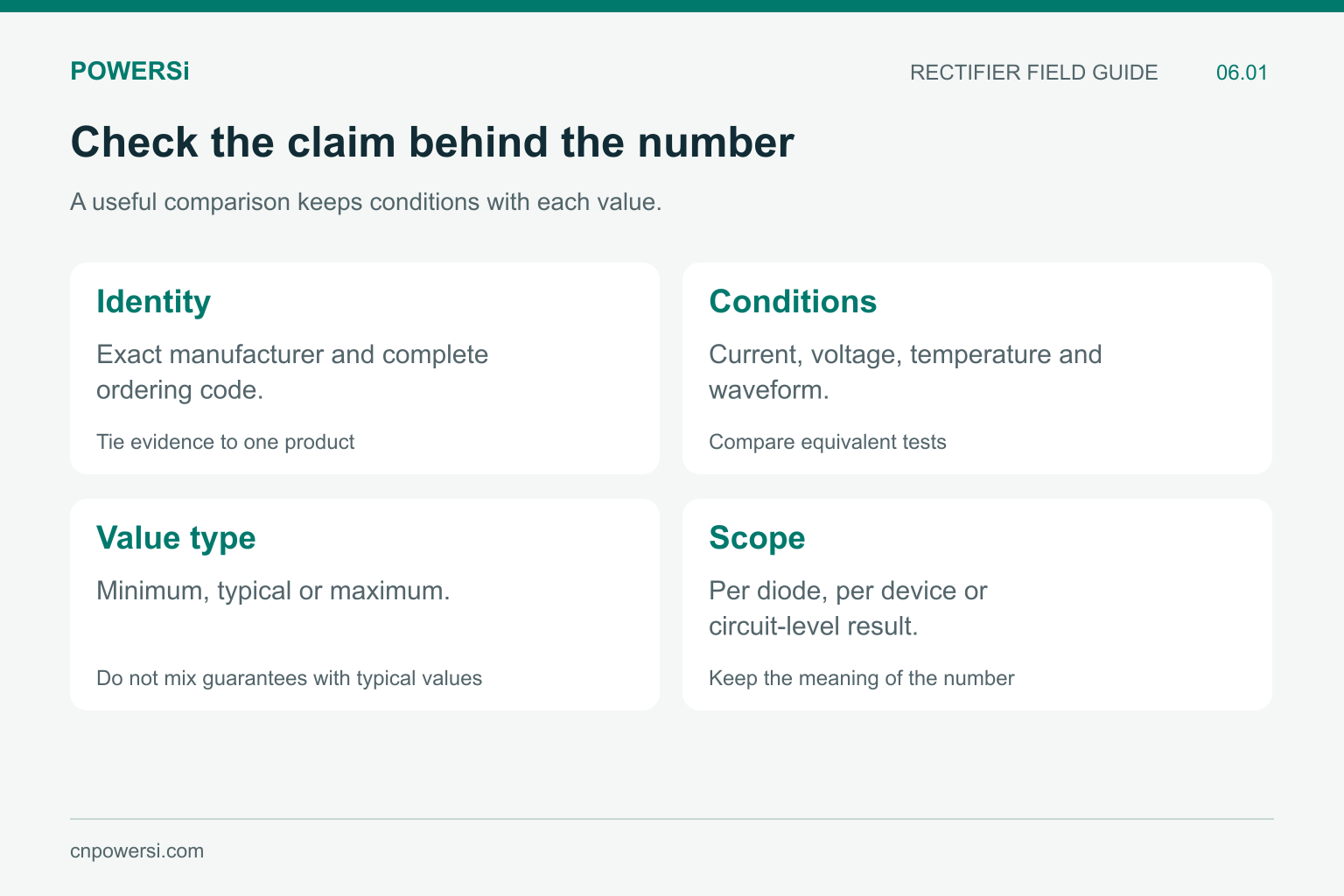
A headline rating needs its complete context.
Start With a Complete Rating Record
Create one row for each important requirement. Alongside the value, record the symbol, unit, minimum/typical/maximum status, temperature, current or voltage condition, and whether it applies to one diode or the complete device.
| Comparison field | Question to resolve |
|---|---|
| Current rating | Per device or per diode, and under what thermal conditions? |
| Forward voltage | At which current and junction temperature; typical or maximum? |
| Reverse leakage | At which reverse voltage and temperature? |
| Surge capability | What pulse shape, duration and starting condition apply? |
| Dynamic behavior | Which switching conditions and endpoint define the result? |
| Thermal resistance | Junction-to-case or junction-to-ambient, with what mounting? |
An empty field is missing information, not a zero value. A typical characteristic is useful for understanding behavior, but it is not interchangeable with a guaranteed maximum. These distinctions often explain a price or performance comparison without implying misconduct.
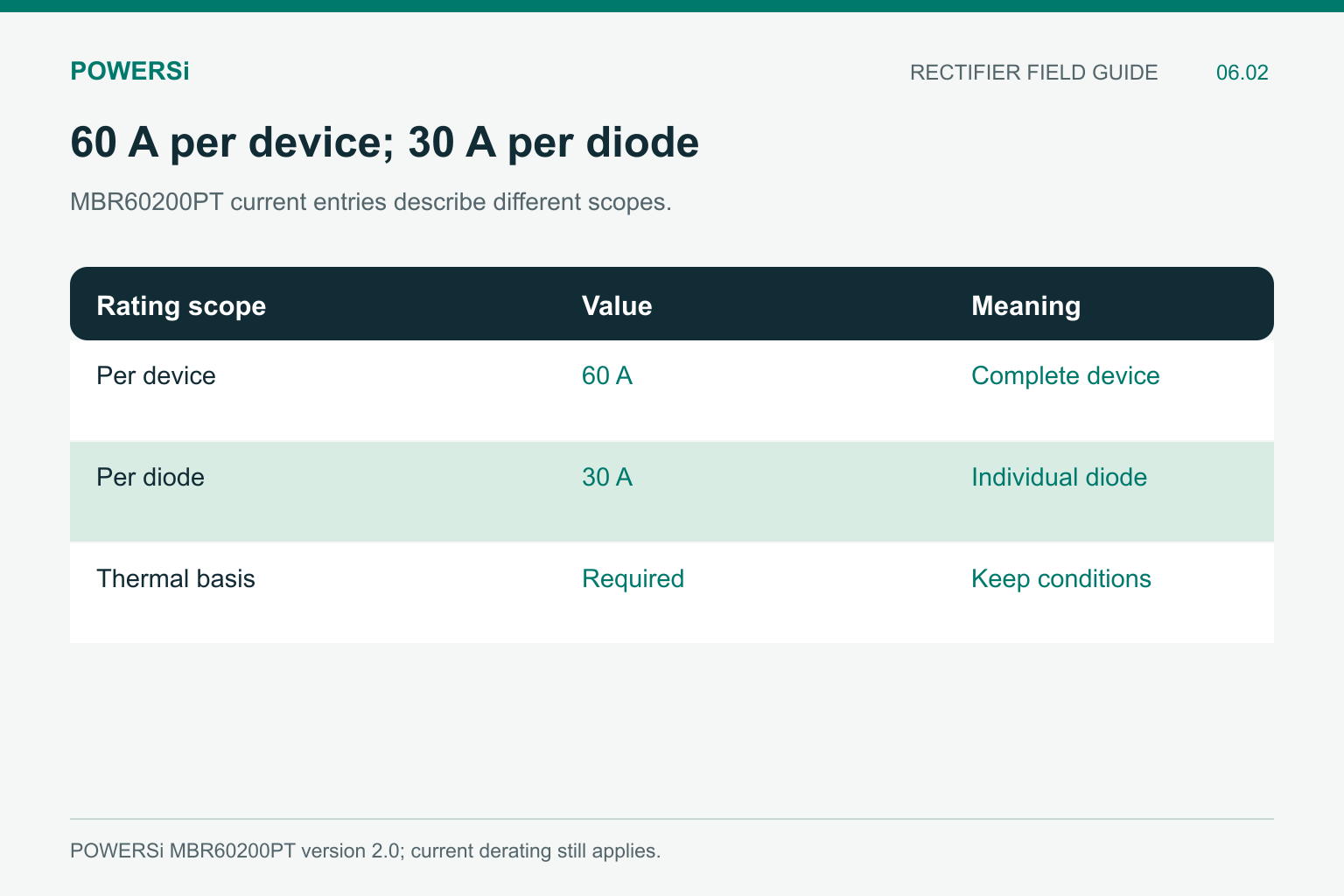
Do not compare a device total with another part’s per-diode value.
A Real Example: Device Current Versus Diode Current
POWERSi MBR60200PT lists average forward current of 60 A per device and 30 A per diode. Copying “60 A” into a comparison against another part’s per-diode value changes the meaning of the number. It could make a technically valid product look stronger or weaker than it is.
Both entries also need the thermal basis and current-derating information. A headline device current is not a promise that the assembled circuit can deliver that current at any ambient temperature or with any heatsink.
The same device specifies a maximum forward voltage of 0.95 V at IF = 30 A and Tj = 25 °C. Its 0.76 V value at IF = 30 A and Tj = 125 °C is typical. Comparing those two numbers as though they were equivalent guarantees would be misleading, even though both belong to the same component.
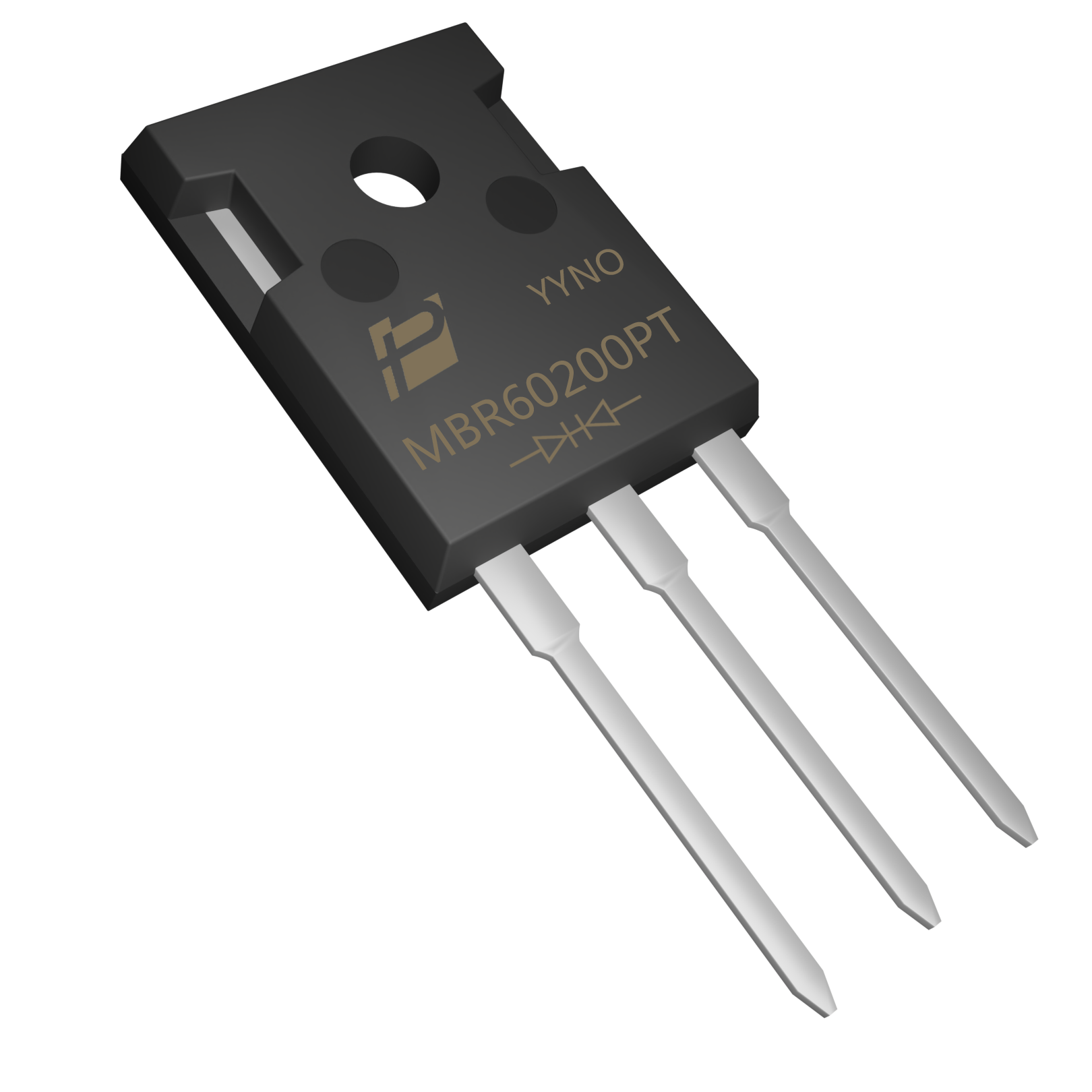
MBR60200PT silicon Schottky rectifier in a three-lead package.
Separate Red Flags From Proof of a Defect
Several findings justify a technical question: units that change between tables, a headline that omits the operating condition, contradictory values for the same condition, or a quotation that does not identify the manufacturer and complete ordering code.
However, a document error does not by itself establish a smaller die, inferior bond wires or a counterfeit shipment. Likewise, a neat document and a familiar logo do not establish that a delivered lot meets every limit. Document quality, product identity and measured performance are separate evidence categories.
Ask the supplier to resolve a discrepancy with a controlled document revision or written technical explanation tied to the exact model. Keep the original quotation and response together. This is more useful than arguing over a detached screenshot or comparing values copied from unrelated operating conditions.
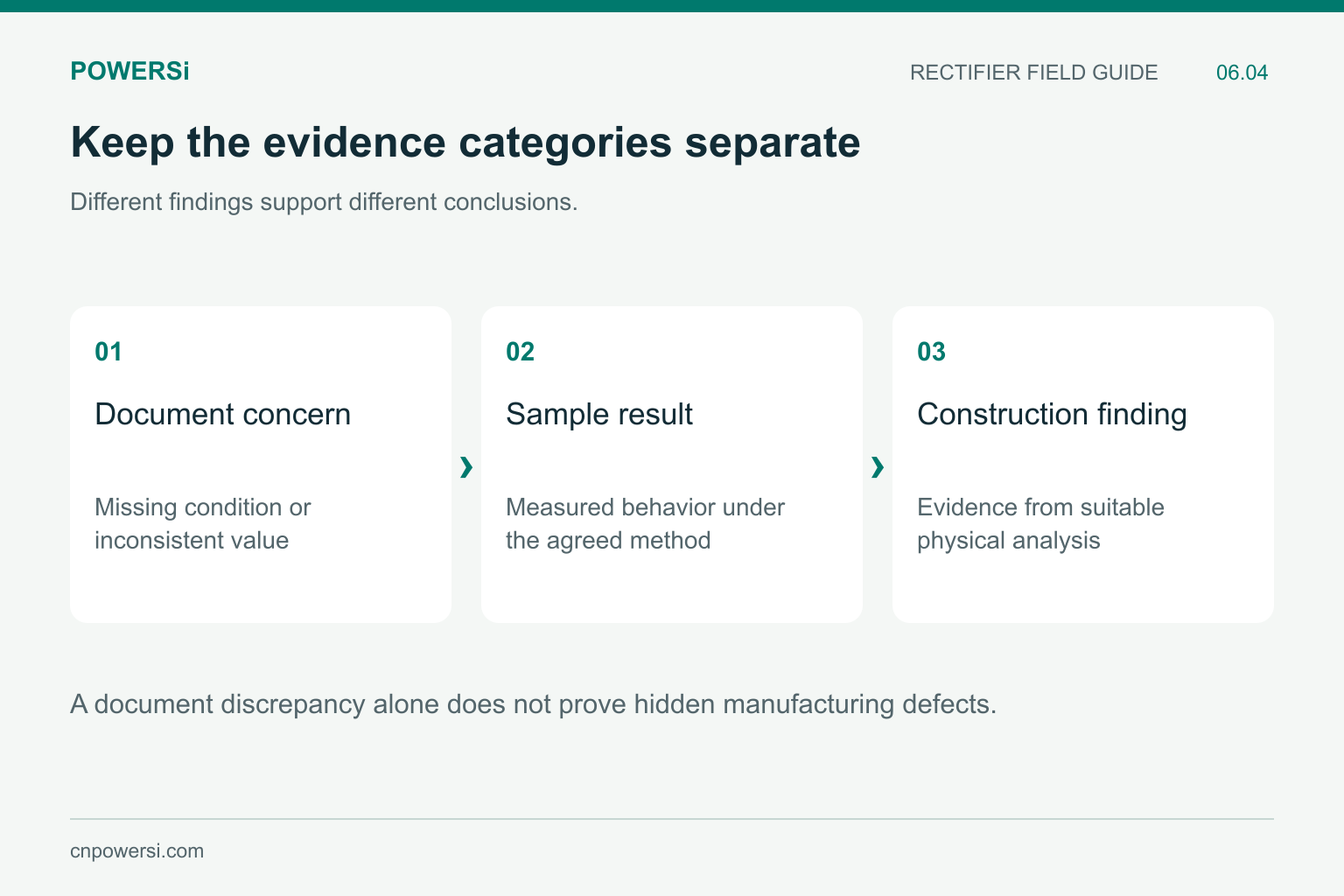
Investigate a concern using evidence appropriate to the claim.
Turn the Concern Into a Sample Test
Define the acceptance criterion before samples arrive. State the part identity, parameter, limit, operating condition, fixture and measurement method. If a forward-voltage limit applies at a stated junction temperature, a prolonged high-current measurement that heats the junction can invalidate a simple room-temperature comparison.
For leakage measurements, temperature stabilization and instrument range matter. For switching measurements, parasitic inductance, probes and the commutation waveform influence the result. Use a competent laboratory and a method appropriate to the parameter rather than treating a handheld diode-mode reading as a full qualification.
Record sample quantity, lot identification and measurement uncertainty. A result close to a specification boundary needs interpretation against the agreed method and instrument capability. Do not silently change the test conditions after seeing an inconvenient result.
Decide What the Evidence Supports
A sample failure under the agreed conditions is a reason to contain the affected material and investigate. A sample pass supports acceptance under that plan; it is not proof of every untested reliability characteristic or every future shipment.
Where the concern involves internal construction, an agreed failure-analysis method may be appropriate. Electrical tables alone cannot reveal the complete die and assembly structure. Keep any conclusion proportional to the evidence and tied to the lot and product involved.
For repeat orders, maintain the approved manufacturer code, document revision, sample report and change-notification requirements. This makes the next delivery easier to assess and prevents a previously resolved ambiguity from returning with a new buyer.
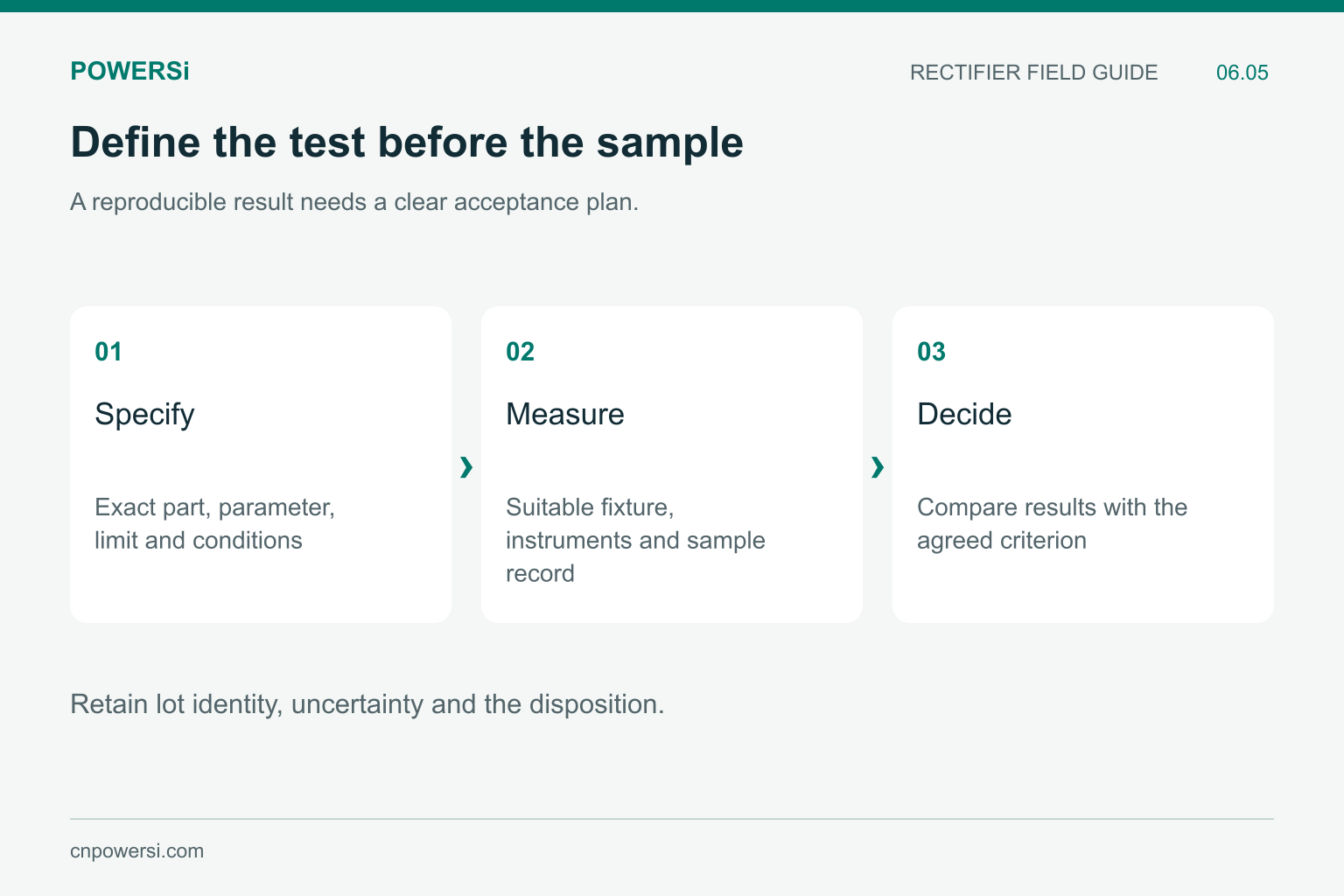
A sample result supports the scope of its test plan.
Key Takeaways
- Compare conditions and value types before comparing headline numbers.
- Treat inconsistent documentation as a question to resolve, not automatic proof of fraud.
- Define sample tests and acceptance criteria before measuring.
- Keep the approved identity and supporting evidence linked through repeat orders.
Conclusion
A useful diode datasheet quality check produces a clear decision: the comparison is valid, more information is needed, or a measured result fails an agreed requirement. That approach helps procurement identify real risks without confusing different test conditions with poor manufacturing.
Browse the POWERSi product catalog or send the exact part number, comparison table and operating requirements to [email protected] for a technical product inquiry.
FAQs
Does a higher current rating prove a better diode?
No. Compare the current definition, temperature, cooling arrangement and internal configuration before drawing a conclusion.
Can a datasheet prove that a supplier used a smaller die?
No. Electrical specifications do not disclose the complete internal construction. That concern needs appropriate physical or failure-analysis evidence.
Is a typical value an acceptance limit?
Not unless the purchase specification explicitly establishes it as such. Keep typical characteristics separate from guaranteed limits.
Can a multimeter confirm the full product specification?
No. It can support basic checks, but rated-current, leakage, thermal and switching behavior require suitable test conditions and equipment.
What belongs in a sample acceptance record?
Include exact identity, lot, document revision, parameter limits, test conditions, method, measurement results and the resulting disposition.