Skip to content
How to Write a Rectifier Alternate Comparison Report for Customer Approval
Last Updated: 2026-10-08
Quick Answer
A rectifier alternate comparison report should let the customer reproduce the comparison and understand the proposed release boundary. Identify both ordering codes, preserve specification conditions, attach traceable application evidence and state each unresolved difference. End with a scoped recommendation and approval record rather than a blanket “equivalent” label or a table of unmatched headline values.
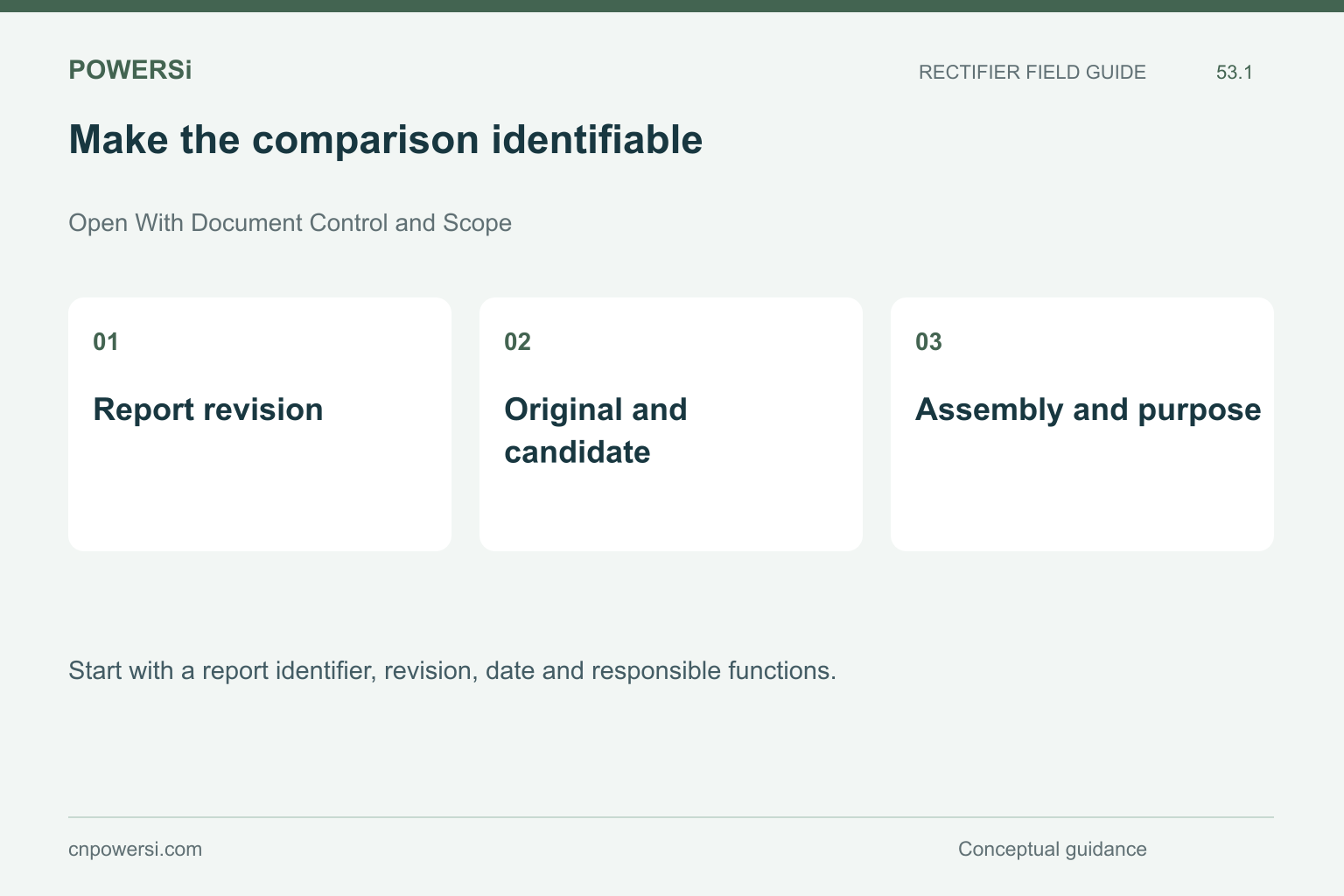
Make the comparison identifiable.
Open With Document Control and Scope
Start with a report identifier, revision, date and responsible functions. Identify the original manufacturer and full code, candidate manufacturer and full code, target assembly revision and reason for the proposed change. State whether mechanical or process changes are permitted.
Define the decision requested: permission to evaluate, conditional pilot use or production release. These are different approvals. A report prepared for sample evaluation should not later circulate as a production-equivalence certificate without an explicit revision and decision.
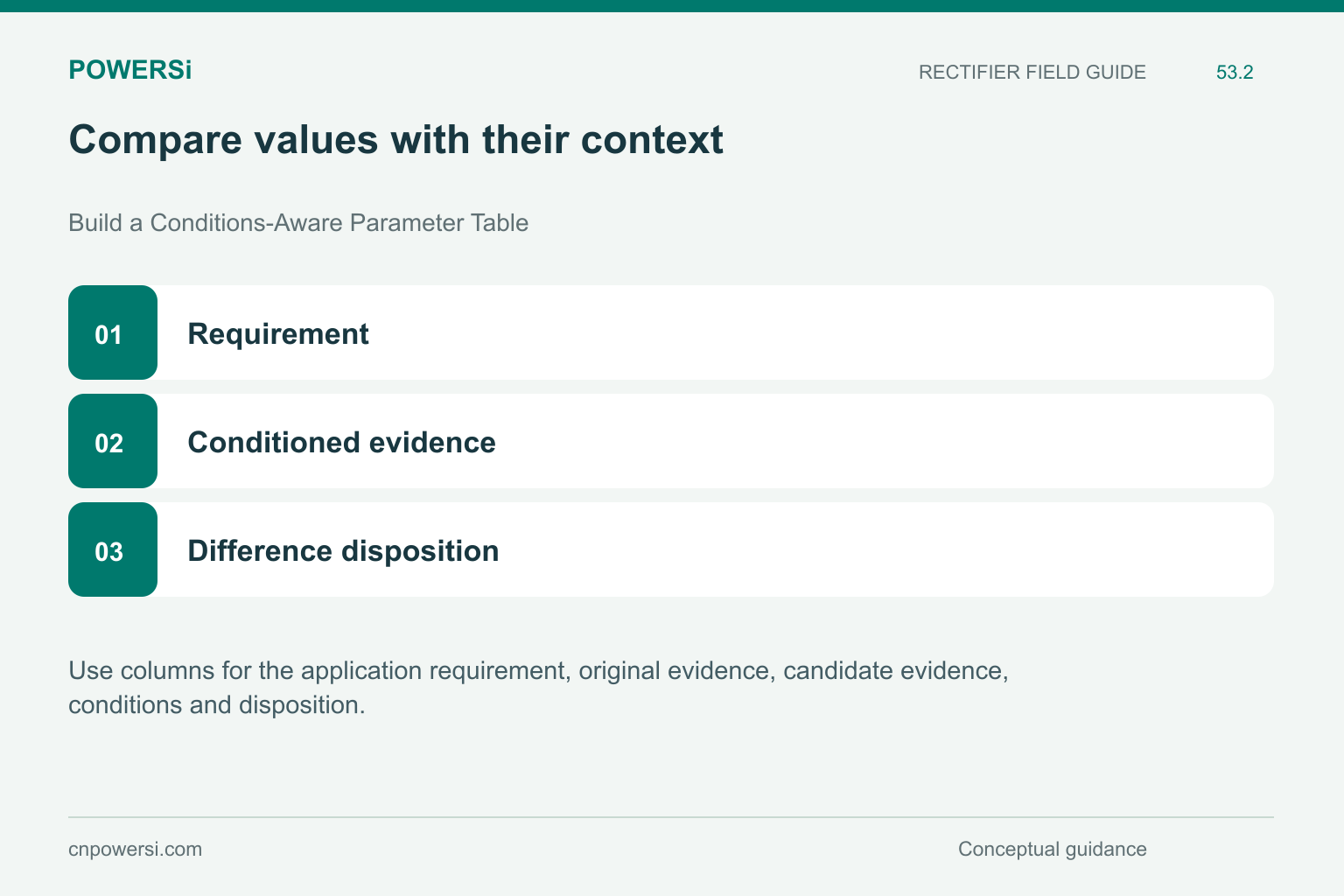
Compare values with their context.
Build a Conditions-Aware Parameter Table
Use columns for the application requirement, original evidence, candidate evidence, conditions and disposition. Preserve units and distinguish typical values, guaranteed limits and absolute maximum ratings. Record document revisions so the comparison can be reconstructed.
If two values use different currents or temperatures, explain the mismatch instead of ranking them directly. A missing value is an unresolved item, not zero. Use a separate action field for the evidence required to decide whether the difference matters.
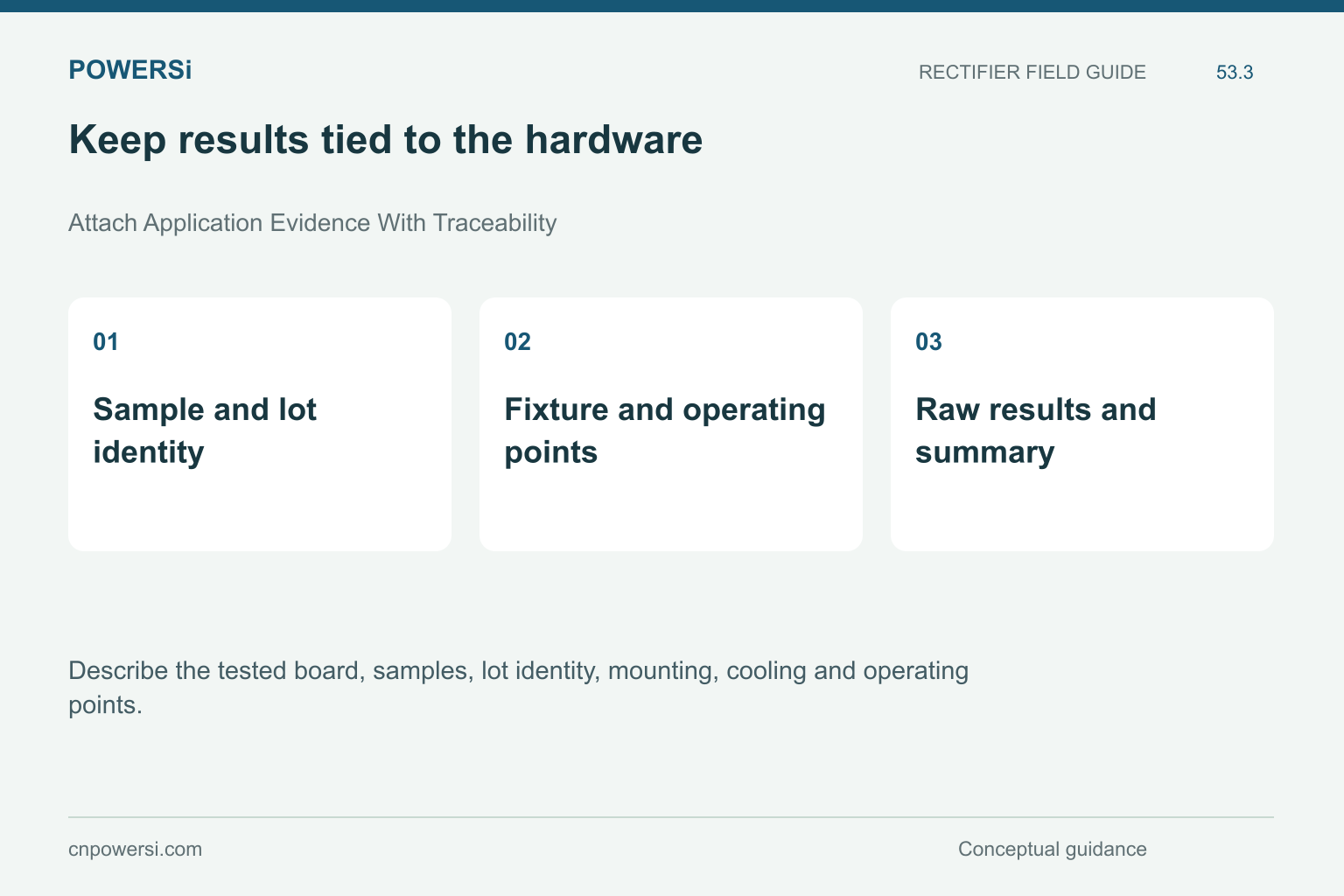
Keep results tied to the hardware.
Attach Application Evidence With Traceability
Describe the tested board, samples, lot identity, mounting, cooling and operating points. Link the measurement method and raw files to a concise results summary. Explain meaningful variation and limitations, including any operating conditions not covered.
Separate manufacturer specifications from your measurements and calculations. If a calculation uses typical data or a simplified thermal model, label its role appropriately. This allows the customer to assess the evidence without mistaking a prediction for a measured acceptance result.
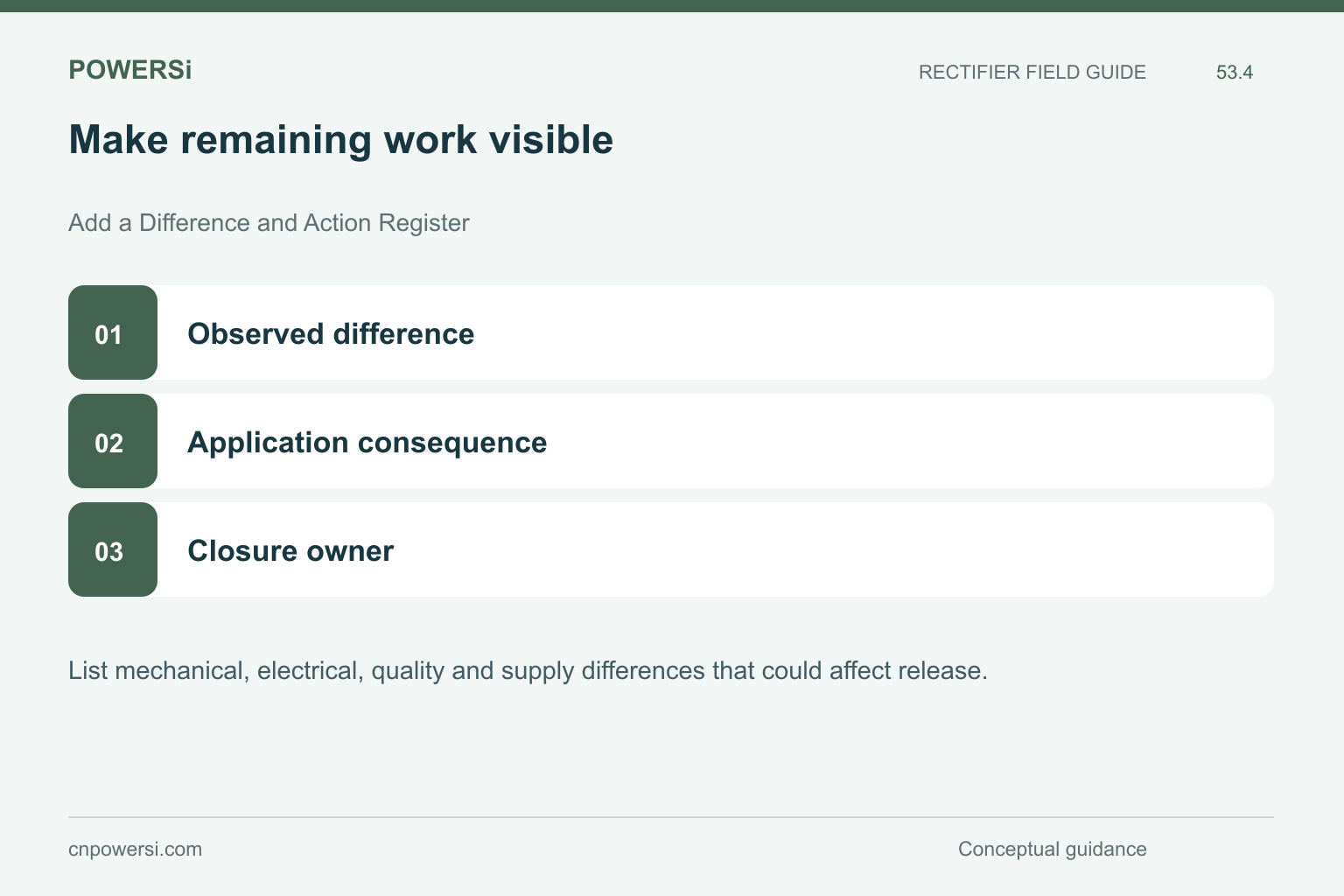
Make remaining work visible.
Add a Difference and Action Register
List mechanical, electrical, quality and supply differences that could affect release. Give each an owner, action, target date and closure evidence. Keep commercial availability separate from technical suitability so an attractive delivery offer cannot silently close an engineering gap.
For accepted differences, record the rationale and scope. Avoid vague entries such as “similar” or “OK” without context. The register should make it clear which conditions are accepted, which are unresolved and which make the proposed substitution unsuitable.
Ask for the exact decision.
End With a Scoped Recommendation
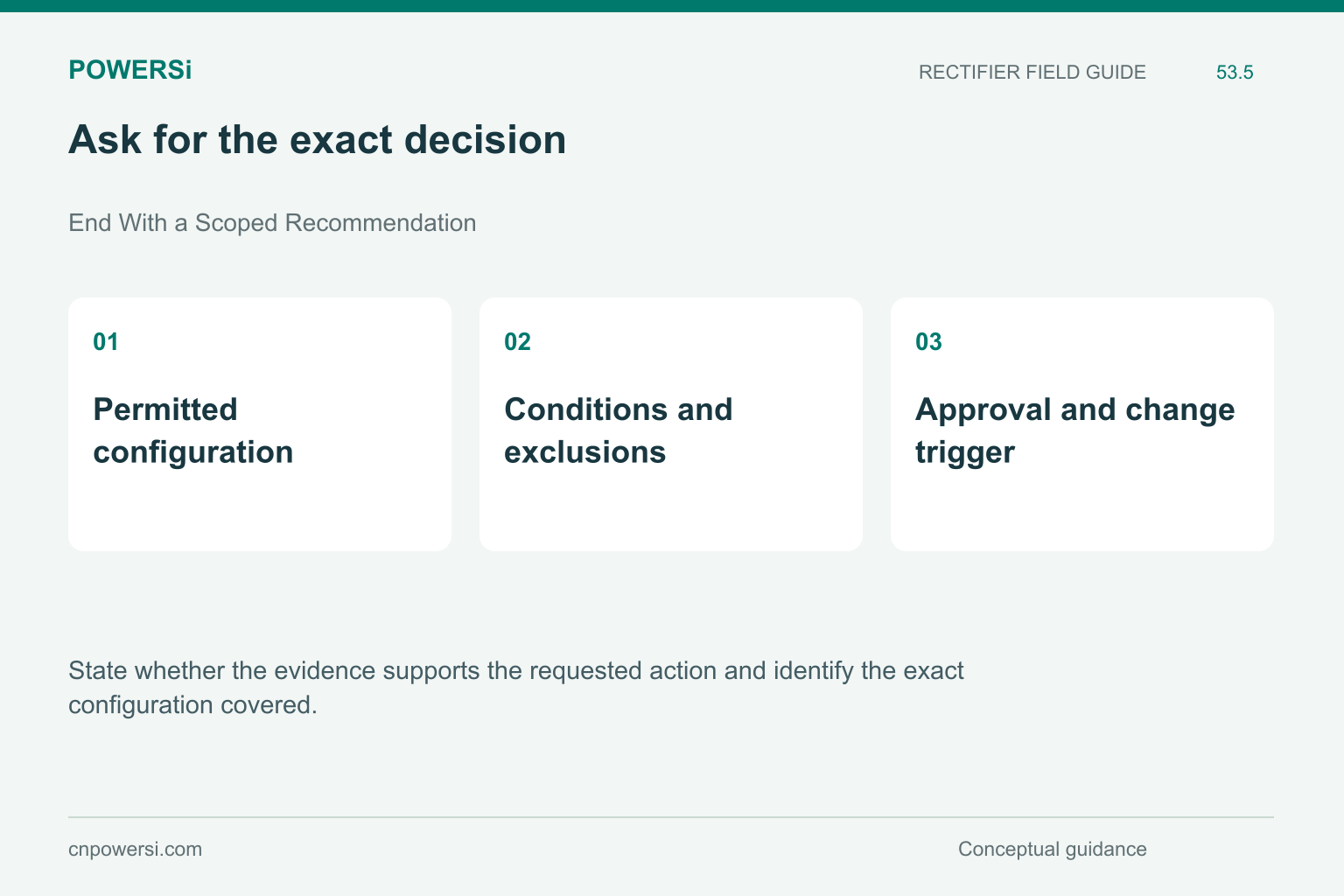
State whether the evidence supports the requested action and identify the exact configuration covered. Include conditions, exclusions and events that require reassessment, such as a changed package, source route or board cooling arrangement.
Preserve the customer’s approval record with the final report. A signed comparison is not permission to supply a different suffix later. The document remains useful when someone outside the original project can identify what was approved, why and under which boundaries.
Key Takeaways
- Make the comparison identifiable.
- Keep results tied to the hardware.
- Ask for the exact decision.
Conclusion
Use the report to make one specific release decision reviewable. Request relevant candidate documentation from POWERSi and keep the evidence linked to the exact product option.
FAQs
Should every difference be treated as a failure?
No. Evaluate its application consequence and record the disposition.
Can typical and maximum values share a ranking column?
Only with their distinct meanings preserved; they are not directly equivalent evidence.
Where should missing data appear?
In the table and action register as an unresolved item with an owner.
Does a sample-evaluation report authorize production?
No. The requested decision and resulting approval must explicitly cover production.
What makes a report reproducible?
Exact identities, revisions, conditions, sample records, methods and linked results.