Skip to content
UF Diode Replacement Economics: A Worked Cost-Saving Example
Last Updated: 2026-10-08
Quick Answer
UF diode replacement savings depend on qualified volume, comparable prices and implementation expense. Use a transparent calculation rather than an unsupported customer success story. Separate recurring component savings from one-time evaluation costs and recurring overhead, then test how changes in volume or price affect the result before committing to a substitution project.
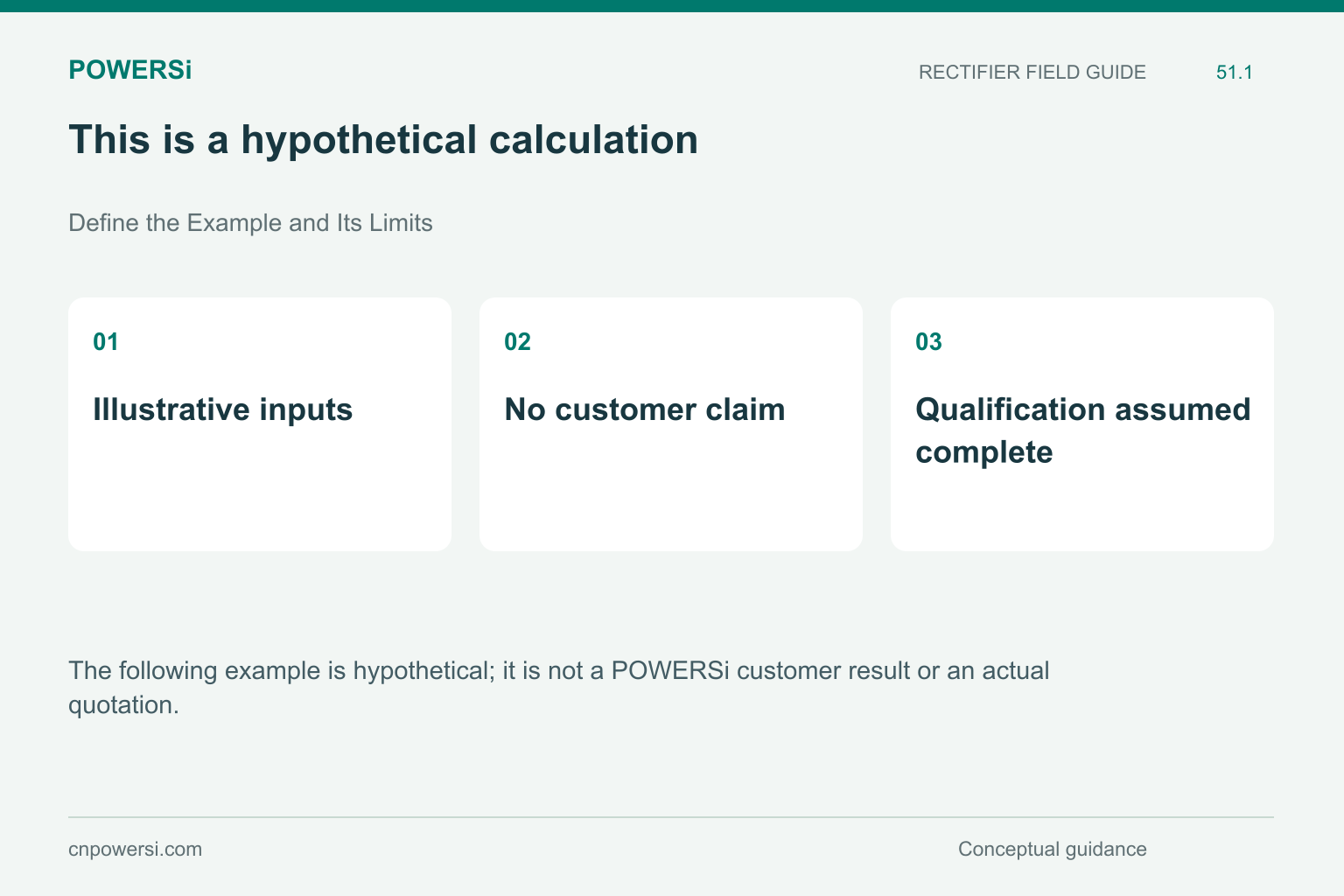
This is a hypothetical calculation.
Define the Example and Its Limits
The following example is hypothetical; it is not a POWERSi customer result or an actual quotation. Assume an industrial power-supply project has completed technical approval for a specified alternate ultrafast diode. The calculation begins only after that condition is satisfied.
The UF family label does not prove interchangeability. Exact voltage, recovery behavior, package, thermal duty and purchasing option still require evaluation. A low quotation cannot make an unsuitable candidate economical, and the example does not identify a universal UF replacement.
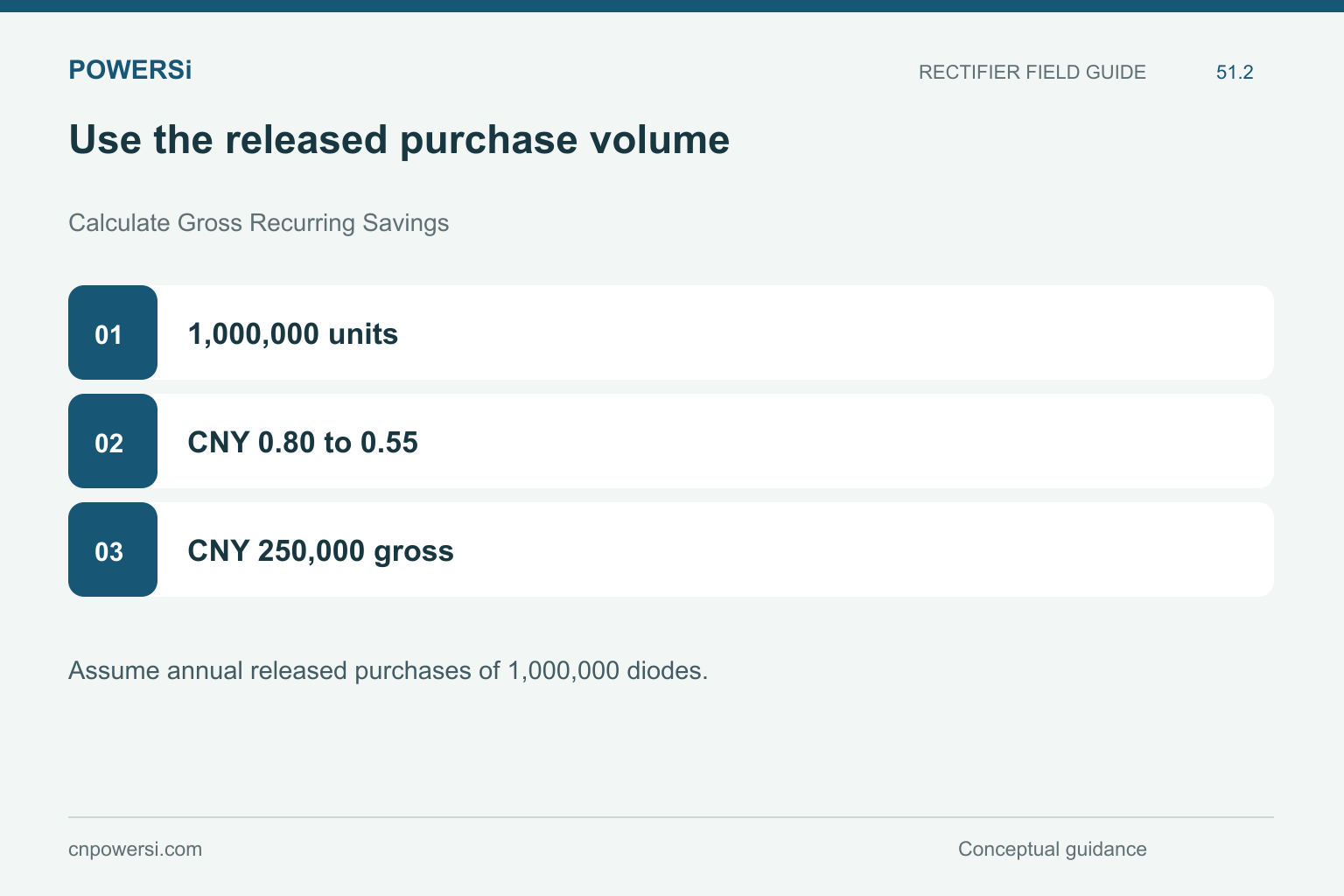
Use the released purchase volume.
Calculate Gross Recurring Savings
Assume annual released purchases of 1,000,000 diodes. The baseline unit price is CNY 0.80 and the approved candidate price is CNY 0.55 on the same commercial basis. The unit difference is CNY 0.25, giving hypothetical gross annual component savings of CNY 250,000.
This result uses actual diode purchase quantity, not power-supply quantity unless each assembly uses exactly one diode. Keep freight, taxes and other commercial treatment consistent between prices. Do not add the same cost difference again in a separate savings line.
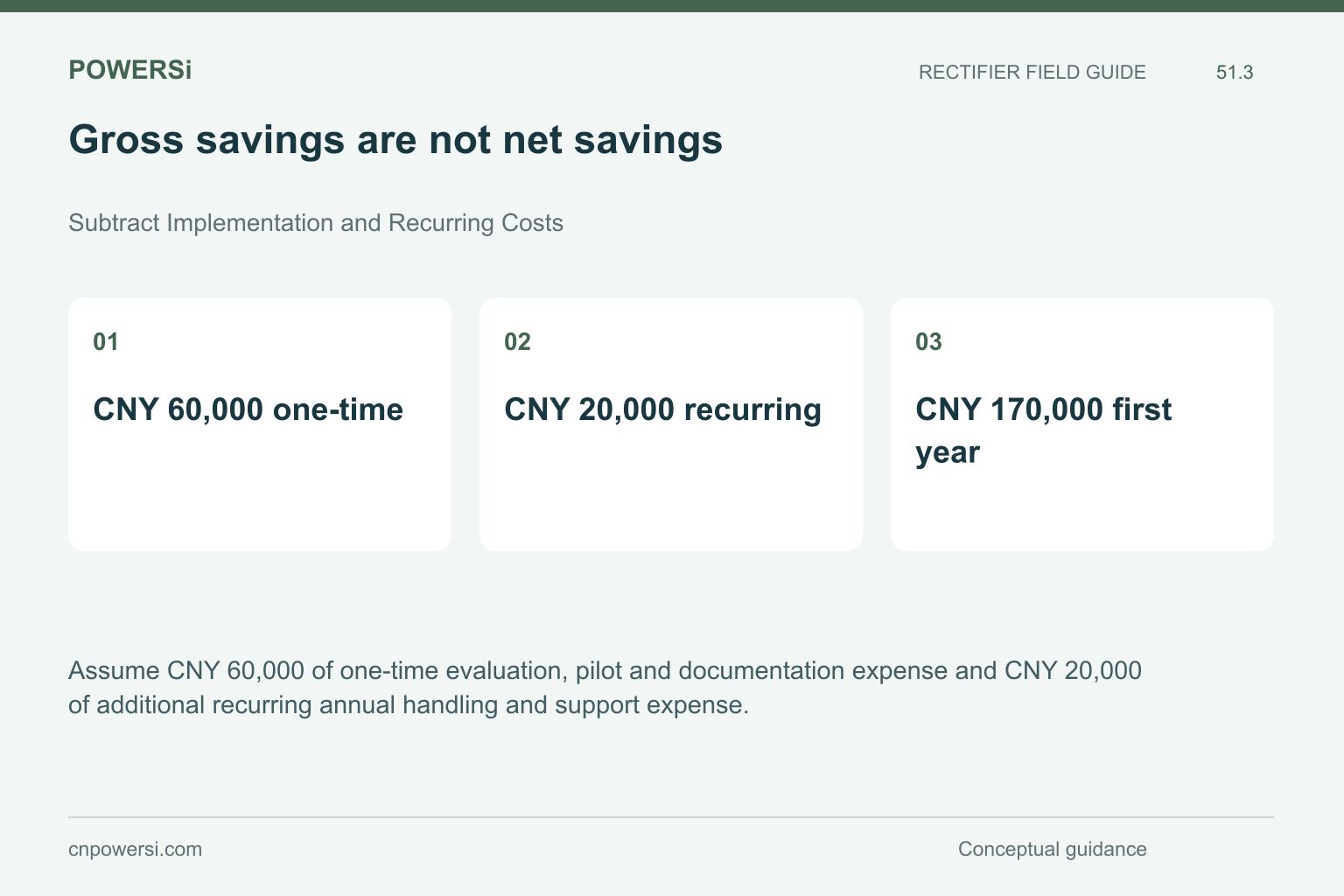
Gross savings are not net savings.
Subtract Implementation and Recurring Costs
Assume CNY 60,000 of one-time evaluation, pilot and documentation expense and CNY 20,000 of additional recurring annual handling and support expense. Under these assumptions, first-year net savings equal CNY 250,000 minus CNY 60,000 minus CNY 20,000, or CNY 170,000.
Later-year net savings would be CNY 230,000 if volume, prices and recurring costs stayed unchanged and no additional one-time costs arose. These are arithmetic scenarios, not a promise that operational costs or prices will remain constant.
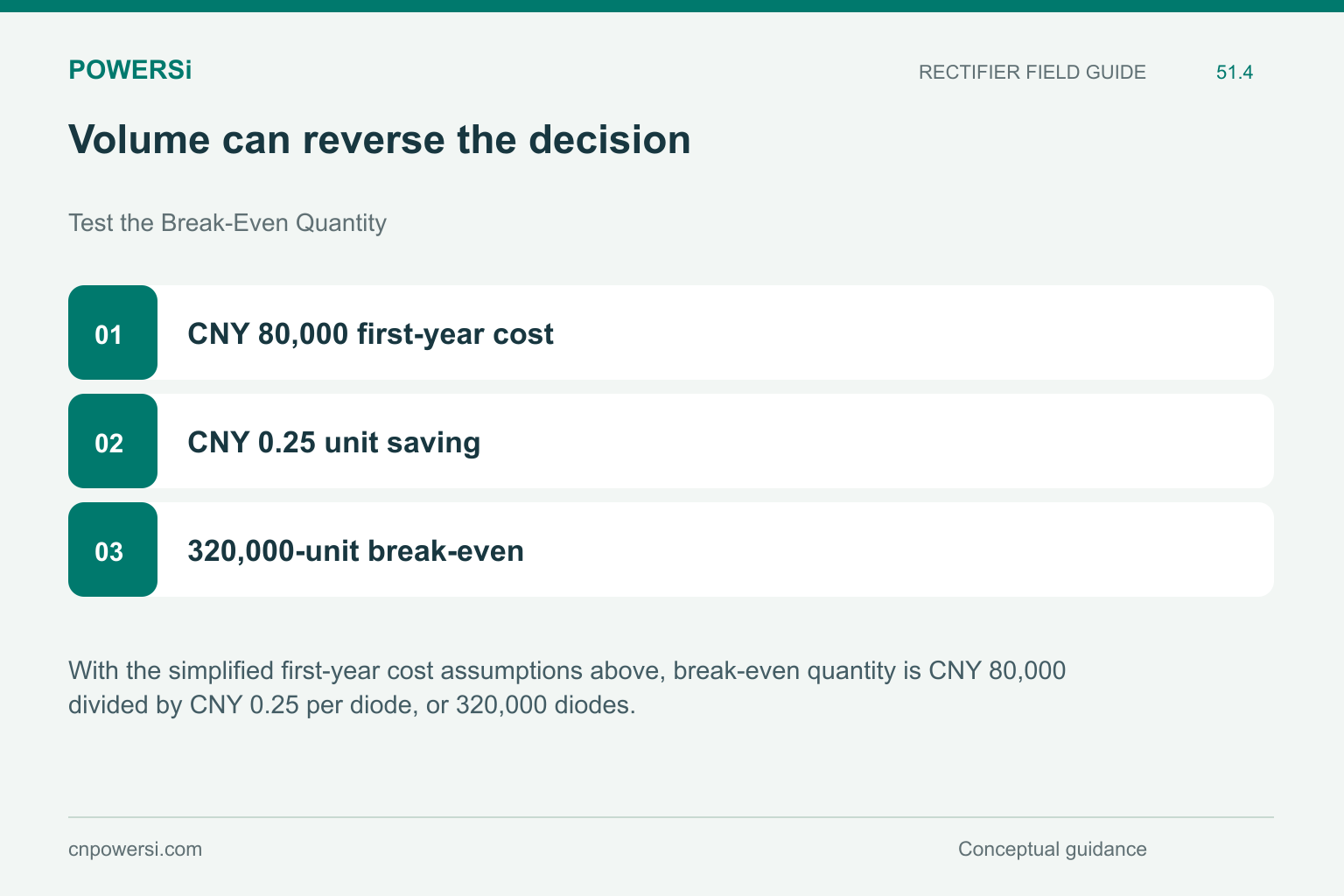
Volume can reverse the decision.
Test the Break-Even Quantity
With the simplified first-year cost assumptions above, break-even quantity is CNY 80,000 divided by CNY 0.25 per diode, or 320,000 diodes. Below that quantity, the modeled first-year saving becomes negative. This assumes the CNY 20,000 recurring expense is fixed over the evaluated range.
Recalculate if costs vary with volume, if qualification delays reduce released purchases, or if the price difference changes. A project approved late in the year should not claim a full year’s volume merely because that was the original forecast.
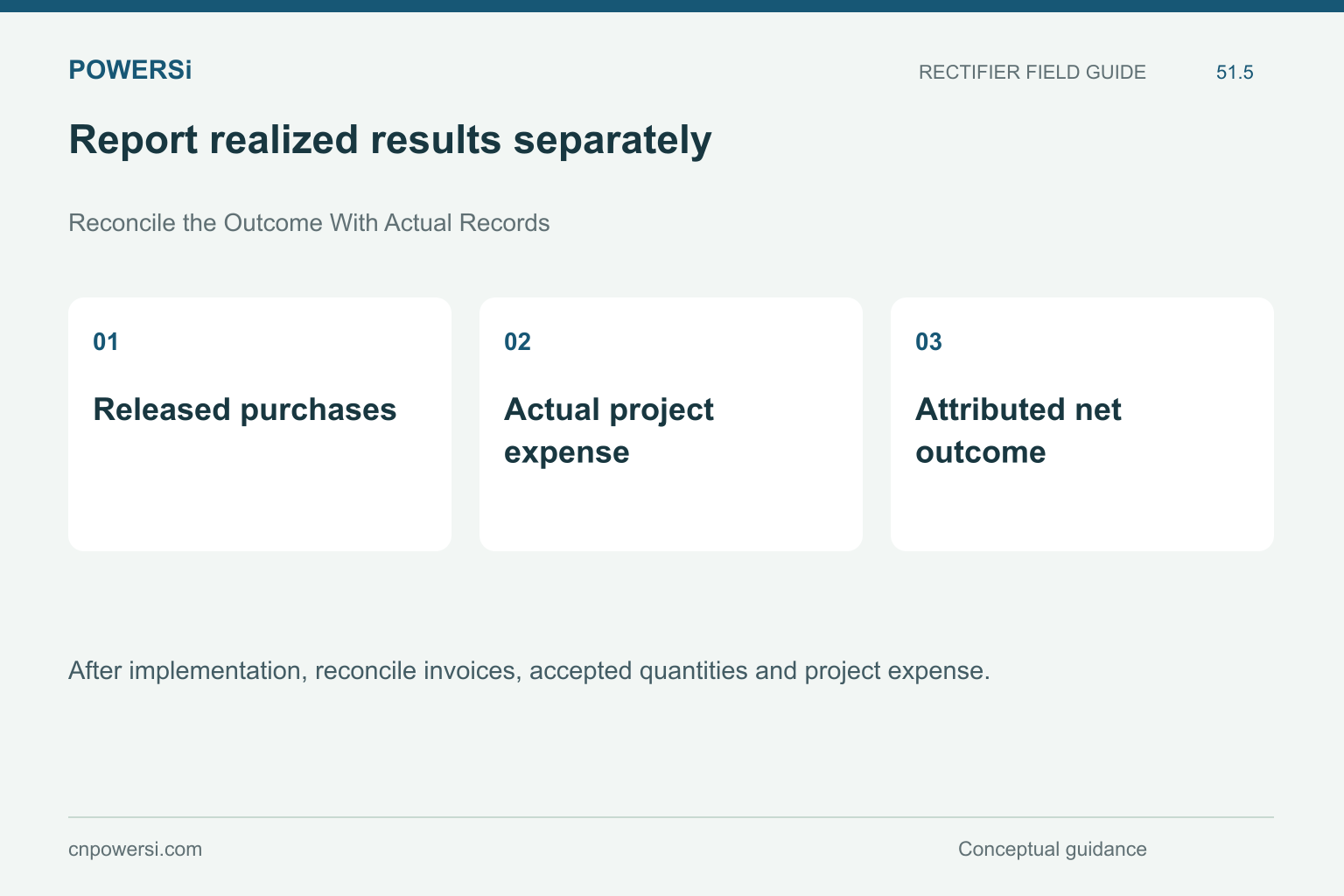
Report realized results separately.
Reconcile the Outcome With Actual Records
After implementation, reconcile invoices, accepted quantities and project expense. Separate forecast savings from realized savings and explain material differences. Include obsolete inventory or extra freight where they are attributable to the change.
Do not attach a million-yuan headline to a smaller calculated result. A credible case study requires an actual customer scope, permission where appropriate and verifiable outcomes. Until those exist, a clearly labeled worked example is more useful than an invented success story.
Key Takeaways
- This is a hypothetical calculation.
- Gross savings are not net savings.
- Report realized results separately.
Conclusion
Use transparent assumptions before requesting a cost-reduction decision. Ask POWERSi for an order-specific quotation after defining the technical candidate and purchase basis.
FAQs
Is this a real POWERSi customer case?
No. All commercial inputs are hypothetical and used only to explain the calculation.
What is the modeled first-year net saving?
CNY 170,000 after the stated CNY 60,000 one-time and CNY 20,000 recurring expenses.
What is the simplified first-year break-even volume?
320,000 diodes under the stated fixed-cost and unit-price assumptions.
Does UF in the part number establish an alternate?
No. The exact device and operating conditions require technical qualification.
When can savings be called realized?
When actual released purchases and attributable costs have been reconciled.