Skip to content
Diode Supply-Chain Localization: Trace Each Manufacturing Stage
Last Updated: 2026-10-08
Quick Answer
Diode supply-chain localization should be evaluated stage by stage, from material and wafer processing to assembly, testing and release. Brand location alone cannot establish the origin or control of every operation. Build a dated process map, distinguish owned and outsourced activities, and verify the dependencies relevant to the purchasing requirement.
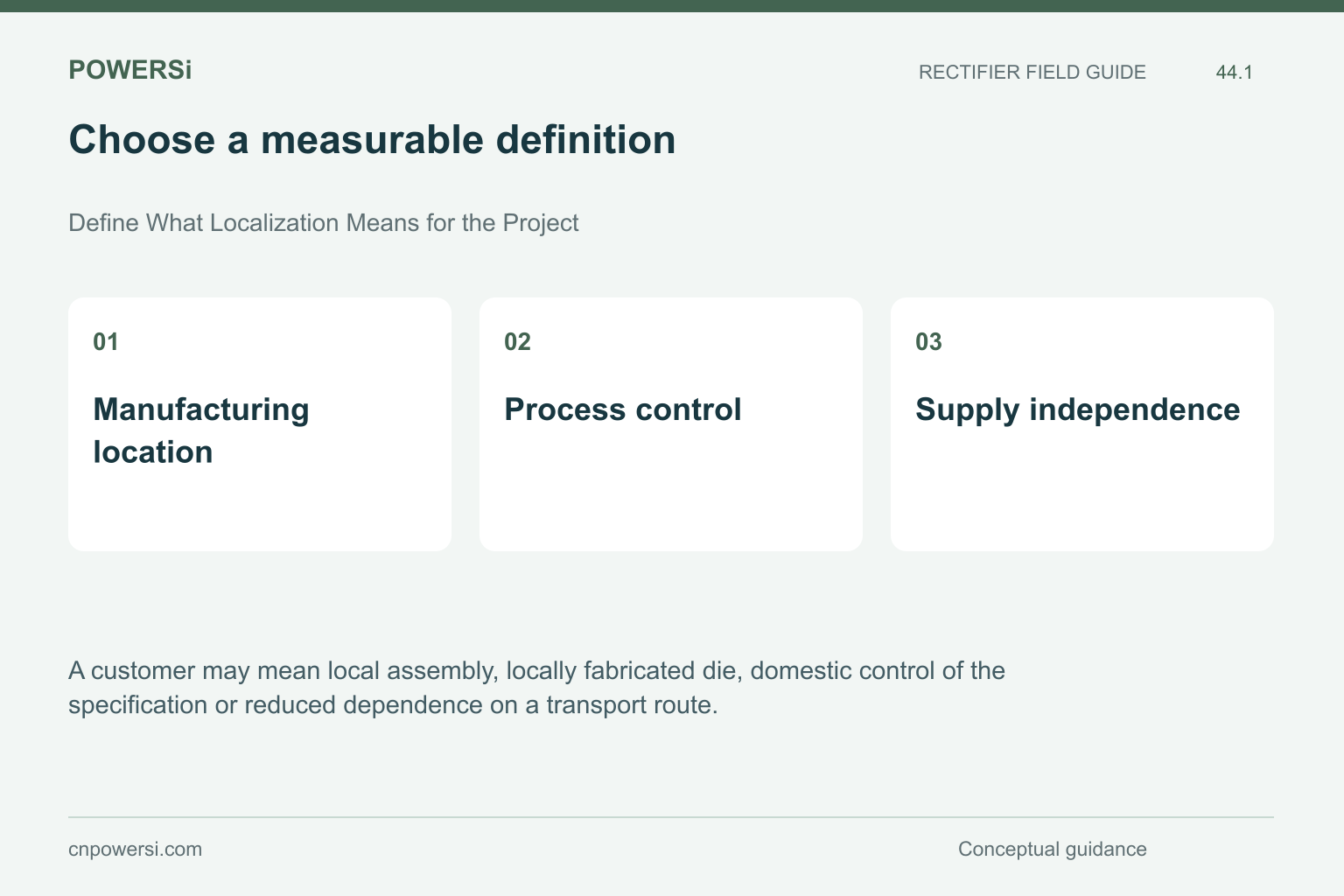
Choose a measurable definition.
Define What Localization Means for the Project
A customer may mean local assembly, locally fabricated die, domestic control of the specification or reduced dependence on a transport route. These are different objectives. Ask for the intended definition before requesting evidence.
Avoid describing a supply chain as fully localized without an agreed scope. Even when all named manufacturing sites are domestic, materials, equipment, intellectual property or service dependencies may remain elsewhere. The project should identify which dependencies matter rather than rely on a broad slogan.
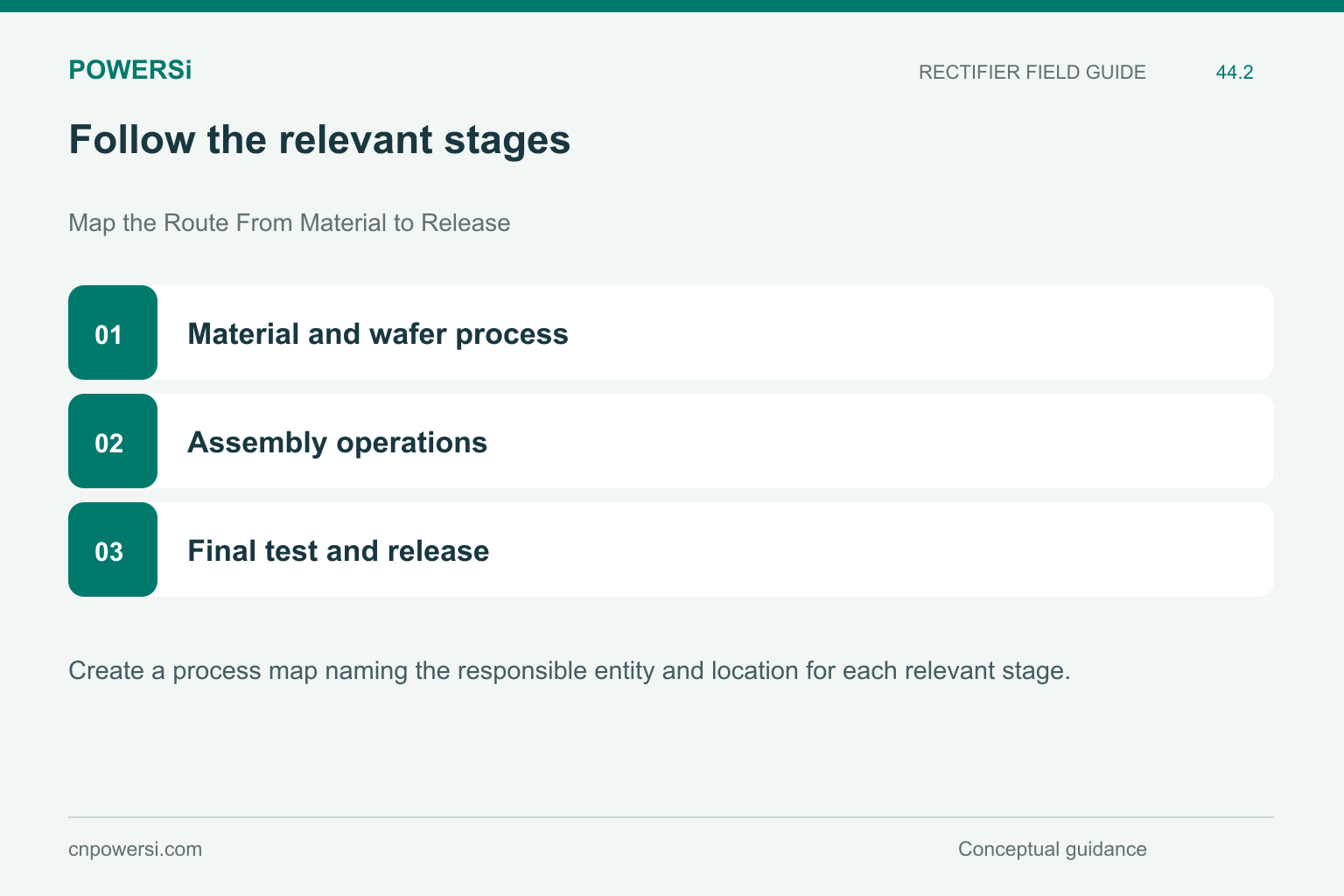
Follow the relevant stages.
Map the Route From Material to Release
Create a process map naming the responsible entity and location for each relevant stage. Depending on the product, this may include substrate or wafer procurement, device processing, wafer probing, die preparation, assembly and final electrical testing.
Keep the map tied to an actual product family and production route. A company’s capability in one stage does not prove that the offered lot used it. Where multiple approved sites exist, record the alternatives and how the delivered lot can be connected to the route used.
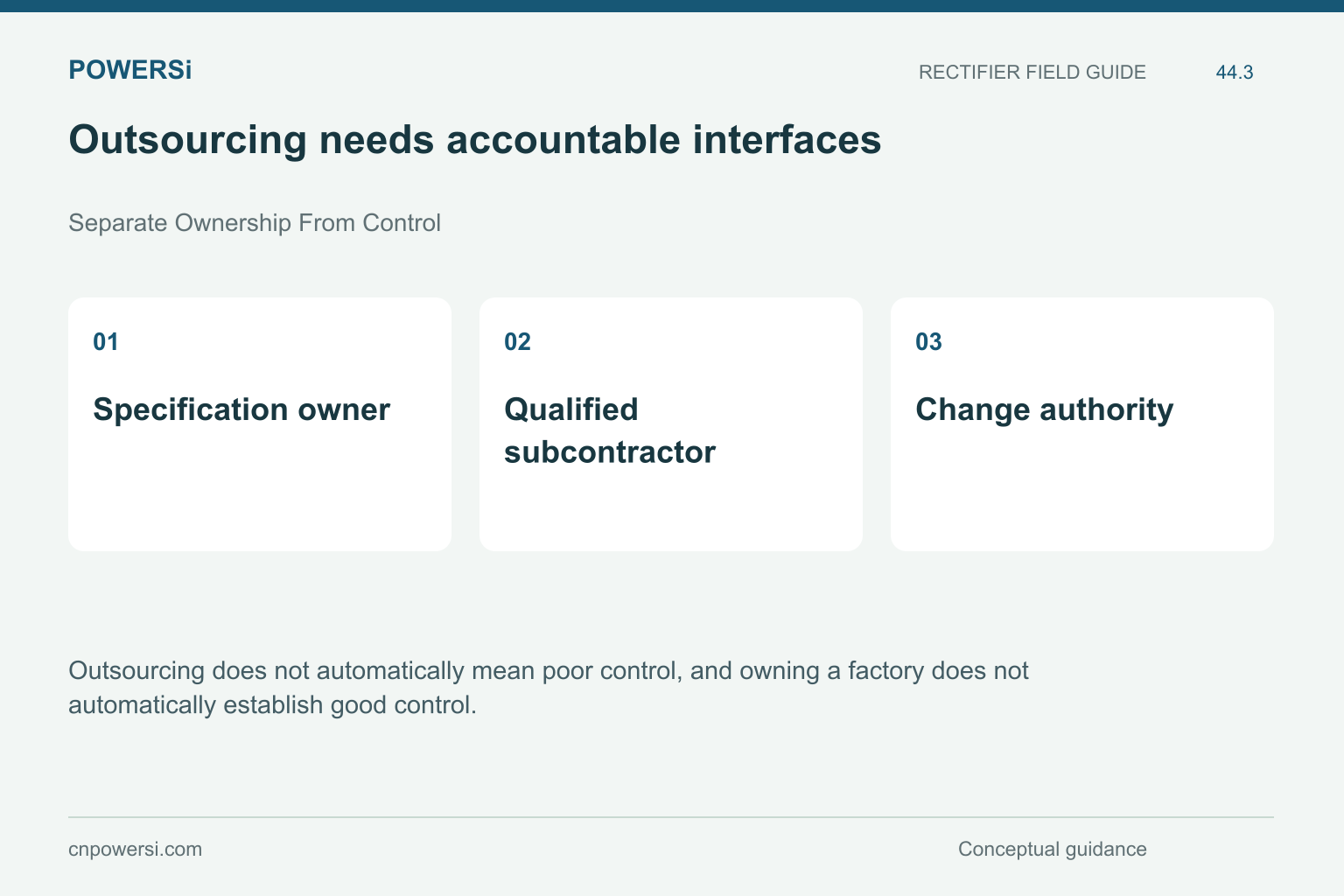
Outsourcing needs accountable interfaces.
Separate Ownership From Control
Outsourcing does not automatically mean poor control, and owning a factory does not automatically establish good control. Determine who sets requirements, approves subcontractors, releases changes and retains manufacturing records.
Ask how discrepancies between stages are detected and resolved. For example, who decides whether a wafer-source change requires additional evaluation? An accountable interface is more useful to a buyer than an unsupported statement that every activity is performed internally.
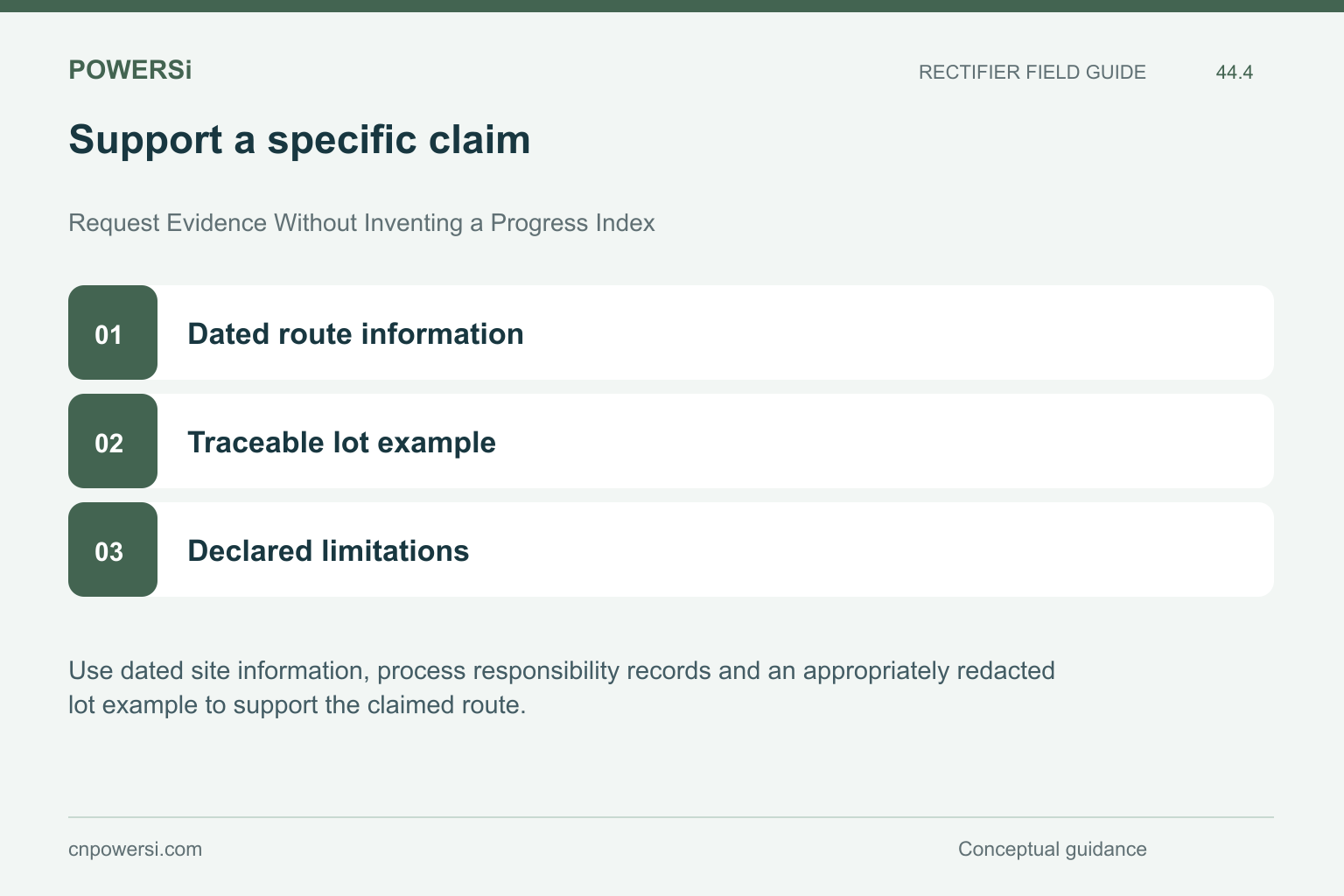
Support a specific claim.
Request Evidence Without Inventing a Progress Index
Use dated site information, process responsibility records and an appropriately redacted lot example to support the claimed route. Confidentiality may limit detail, but the remaining evidence should still answer the customer’s stated requirement.
Do not extrapolate one manufacturer’s route into a national localization percentage. Nor should a packaging investment be reported as proof of wafer-fabrication capability. Industry progress requires a defined dataset and time period; product sourcing needs evidence for the particular supply option under consideration.
Localization can change over time.
Maintain the Map After Qualification
Agree which changes must be communicated and how the customer will reassess them. A previously acceptable route may no longer satisfy a location or independence requirement after a source change.
Keep the process map with the approved product record and review it when new lots or commercial arrangements introduce material changes. This creates a defensible localization claim without pretending that geography alone establishes electrical performance, quality or continuity.
Key Takeaways
- Choose a measurable definition.
- Outsourcing needs accountable interfaces.
- Localization can change over time.
Conclusion
Define the required manufacturing scope before requesting a localization statement. Discuss product-specific responsibilities with POWERSi and retain the dated evidence.
FAQs
Does a Chinese brand prove local wafer fabrication?
No. Verify the relevant manufacturing route for the offered product.
Is outsourced assembly automatically unacceptable?
No. Evaluate control, traceability and the customer requirement.
Can one lot establish the route for every future delivery?
No. Confirm approved alternatives and change communication.
Should equipment origin always be included?
Include it when it is relevant to the project definition or dependency analysis.
Can a supplier map prove national industry progress?
No. A broader industry claim requires a separate defined dataset.