Skip to content

Rectifier Lead-Time Comparison: Audit the Promise Against Actual Orders
Last Updated: 2026-10-08
Quick Answer
A rectifier lead-time comparison needs equivalent order conditions and recorded milestones. Separate quoted lead time from actual performance, and compare the exact part, quantity, destination and approval state. Seven-day and thirty-day offers are not comparable until their starting events, shipment responsibilities and delivery endpoints are defined on the same basis.
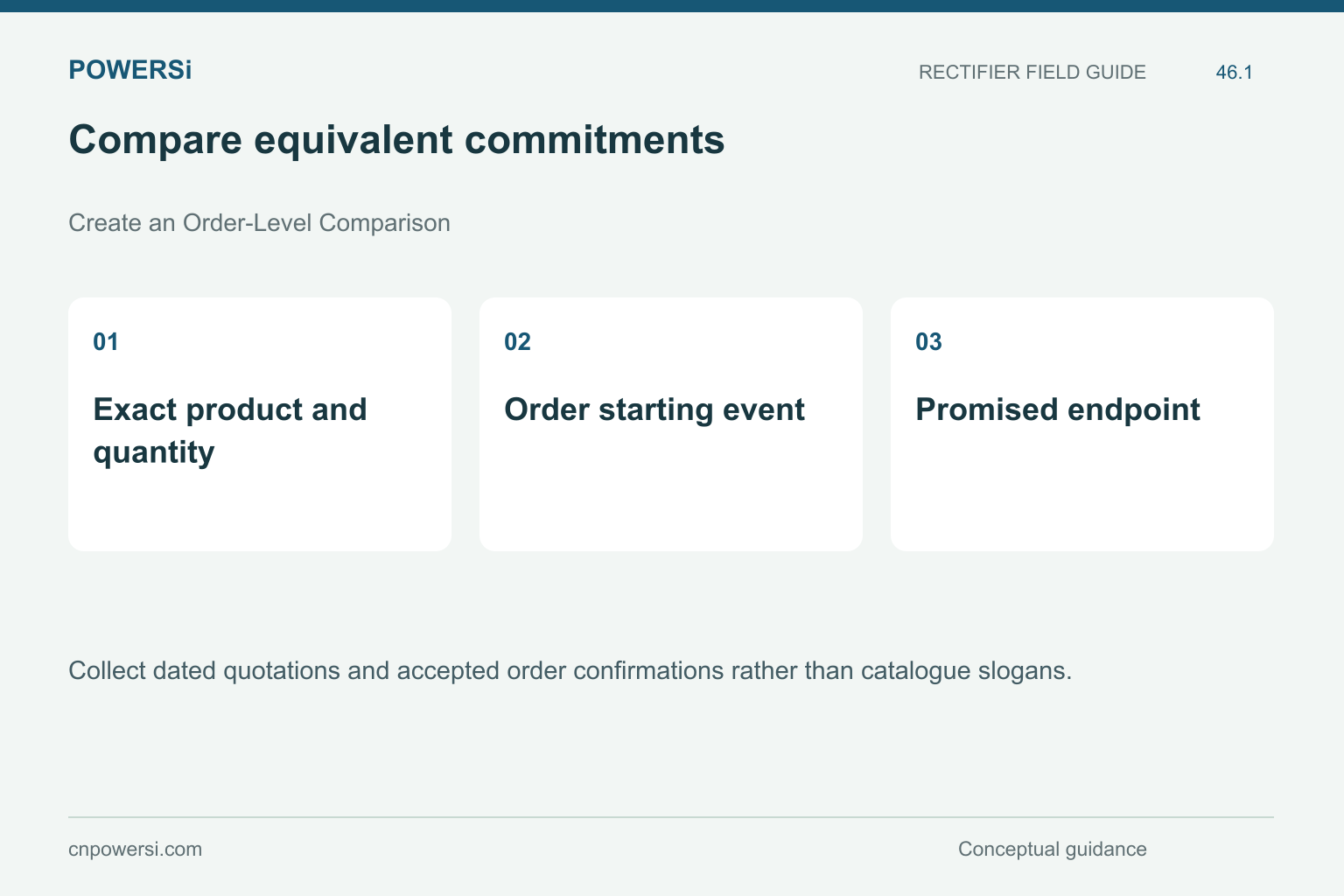
Compare equivalent commitments.
Create an Order-Level Comparison
Collect dated quotations and accepted order confirmations rather than catalogue slogans. Record the product option, quantity, packing, destination and whether stock is reserved. Identify the event that starts the clock: order acceptance, payment, technical release or another agreed milestone.
Separate sample offers from production orders. A short sample lead time cannot be used to claim the same performance for a large replenishment. Likewise, a production lead time that includes manufacturing is not directly comparable with a distributor’s shipment of existing stock.
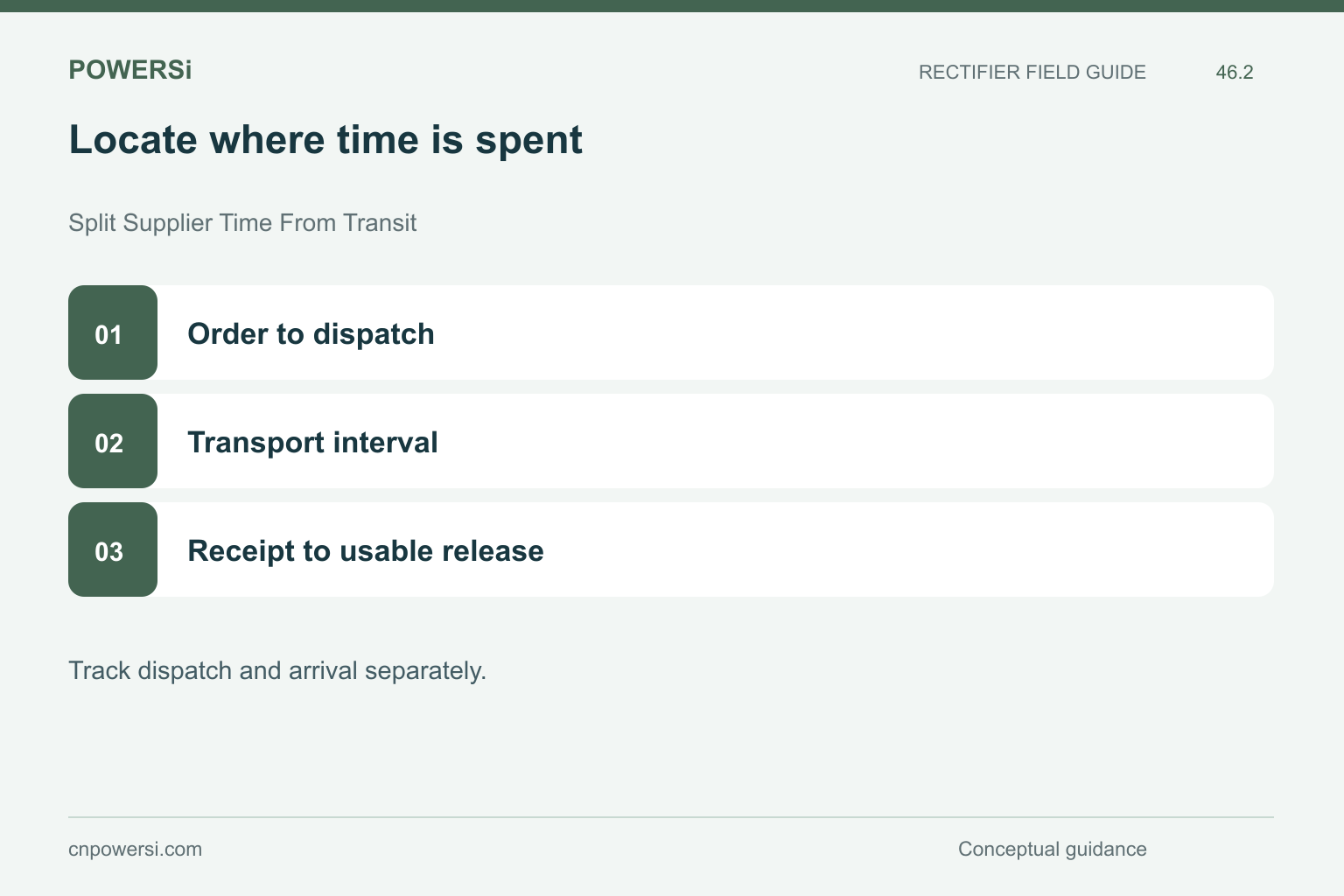
Locate where time is spent.
Split Supplier Time From Transit
Track dispatch and arrival separately. Then identify any incoming inspection or qualification time before the parts can enter production. A quick shipment may still produce a late usable receipt if the order arrives without required documents or contains an unapproved option.
When comparing offers, use the same endpoint and explain any remaining differences. Avoid assigning all delay to the manufacturer when the order was held for customer clarification, transport or receiving disposition. The purpose is to understand the full path, not protect one party’s headline number.
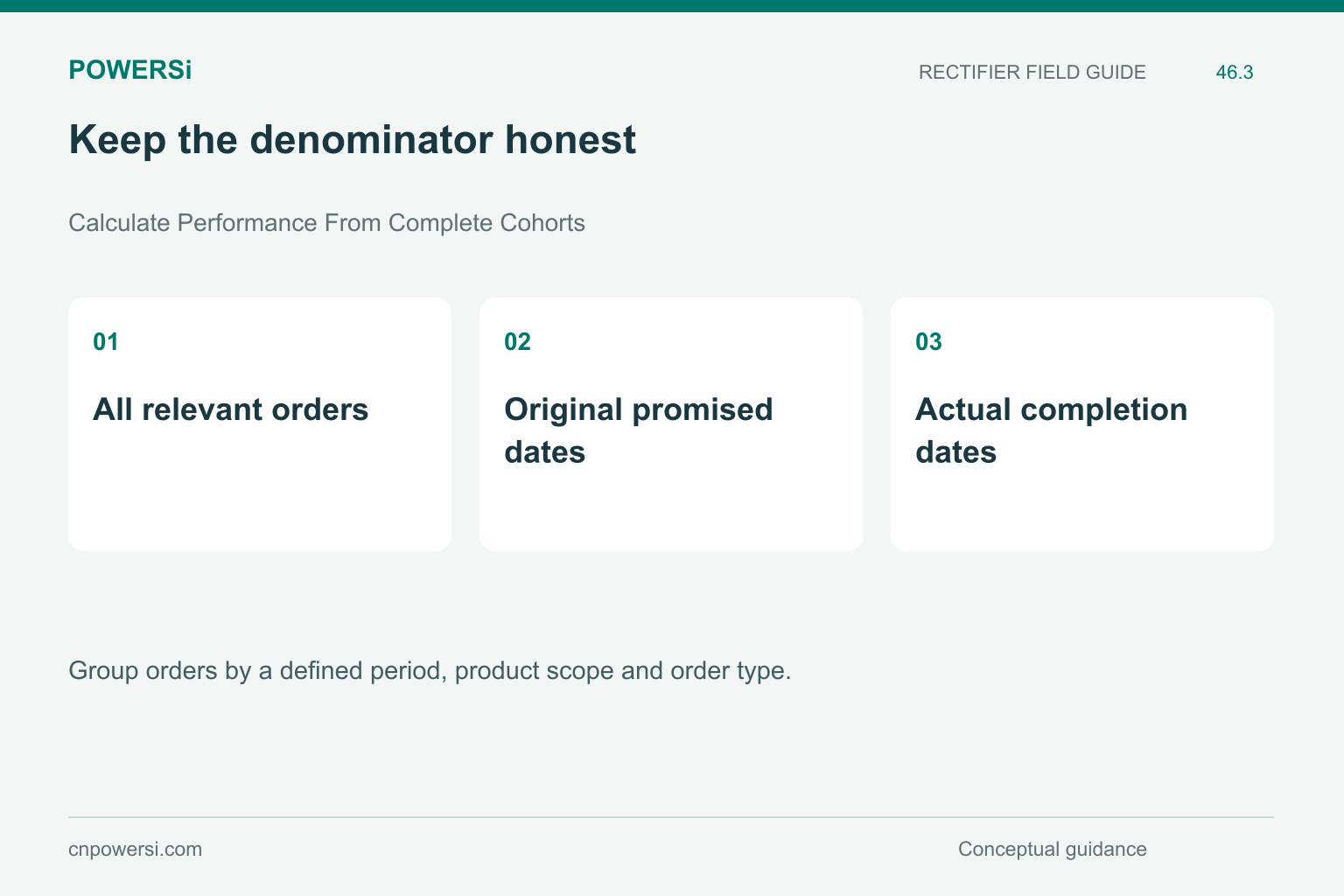
Keep the denominator honest.
Calculate Performance From Complete Cohorts
Group orders by a defined period, product scope and order type. Retain late and still-open orders so the comparison does not include only successful deliveries. Report the number of orders and how rescheduled promises are treated.
An on-time percentage can look better when the promise date is repeatedly moved. Preserve the original commitment alongside approved changes. For open orders, show current age and status rather than pretending the final lead time is already known.
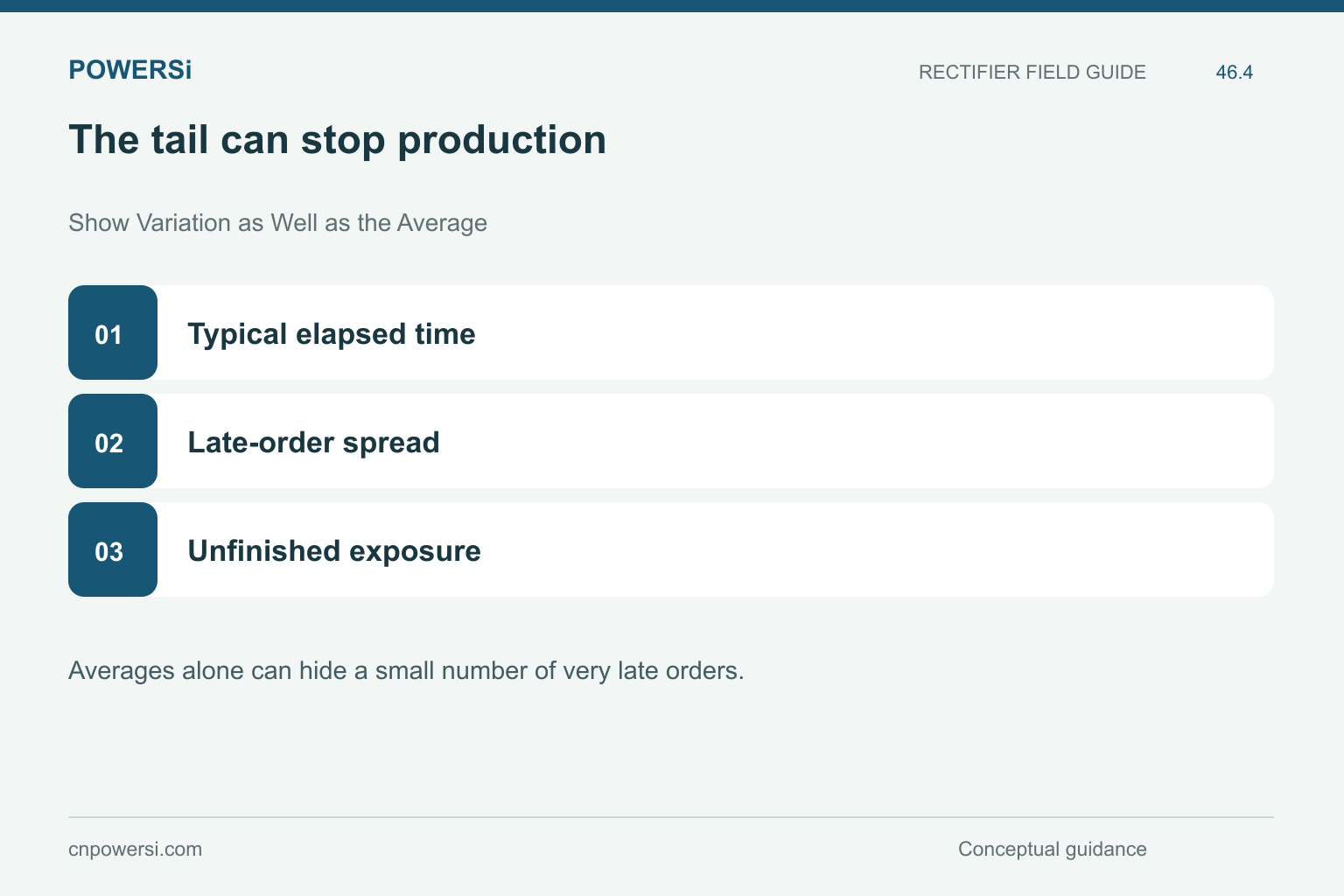
The tail can stop production.
Show Variation as Well as the Average
Averages alone can hide a small number of very late orders. Show the distribution or a practical range, with the sample count and scope. Segment unusually urgent orders or special configurations if their conditions differ materially from normal replenishment.
Do not call a small pilot history representative of every future order. Use it as one input alongside capacity discussions and the intended demand pattern. A supplier with a fast average may still require buffer planning if its delivery variation is high.
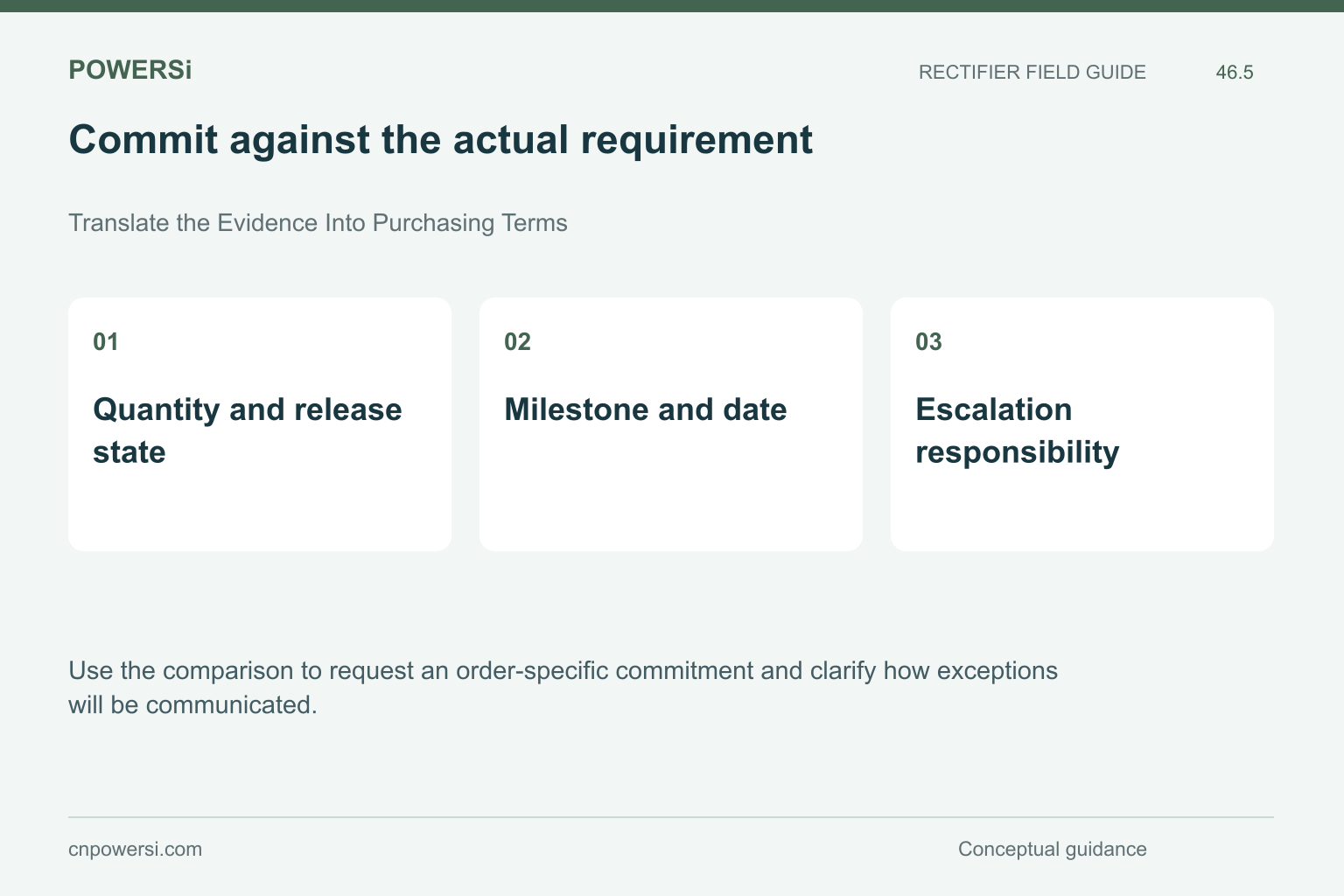
Commit against the actual requirement.
Translate the Evidence Into Purchasing Terms
Use the comparison to request an order-specific commitment and clarify how exceptions will be communicated. Define the documents and approved product identity required at delivery, not just the number of cartons shipped.
There is no universal seven-day domestic versus thirty-day imported result. A defensible comparison names its order population and conditions. Recheck the evidence when quantities, manufacturing options or logistics arrangements change rather than reuse an old marketing contrast.
Key Takeaways
- Compare equivalent commitments.
- Keep the denominator honest.
- Commit against the actual requirement.
Conclusion
Ask for a dated commitment, then measure the same milestone. Send POWERSi the exact code, quantity, destination and required usable date.
FAQs
Can sample and production lead times be compared directly?
Only if the differing scope is explicit; they should normally be separate groups.
Does dispatch mean the parts are usable?
No. Transit, receiving and technical release may still be required.
Should late open orders be excluded?
No. Show their age and unresolved status without inventing final dates.
Why retain the original promised date?
It prevents rescheduling from concealing missed commitments.
Can this method prove a national delivery advantage?
No. It supports a comparison of the defined suppliers and order conditions.