Skip to content
High-Voltage FRED and SiC Opportunities: Track Design-Ins, Not Hype
Last Updated: 2026-10-08
Quick Answer
High-voltage FRED and SiC opportunities should be assessed through identifiable converter designs, component roles and qualification progress. Growth in IGBT usage does not automatically translate into demand for separately packaged rectifiers. Track whether the diode function is discrete, integrated or replaced by another topology, then connect credible design-ins to realistic production demand.
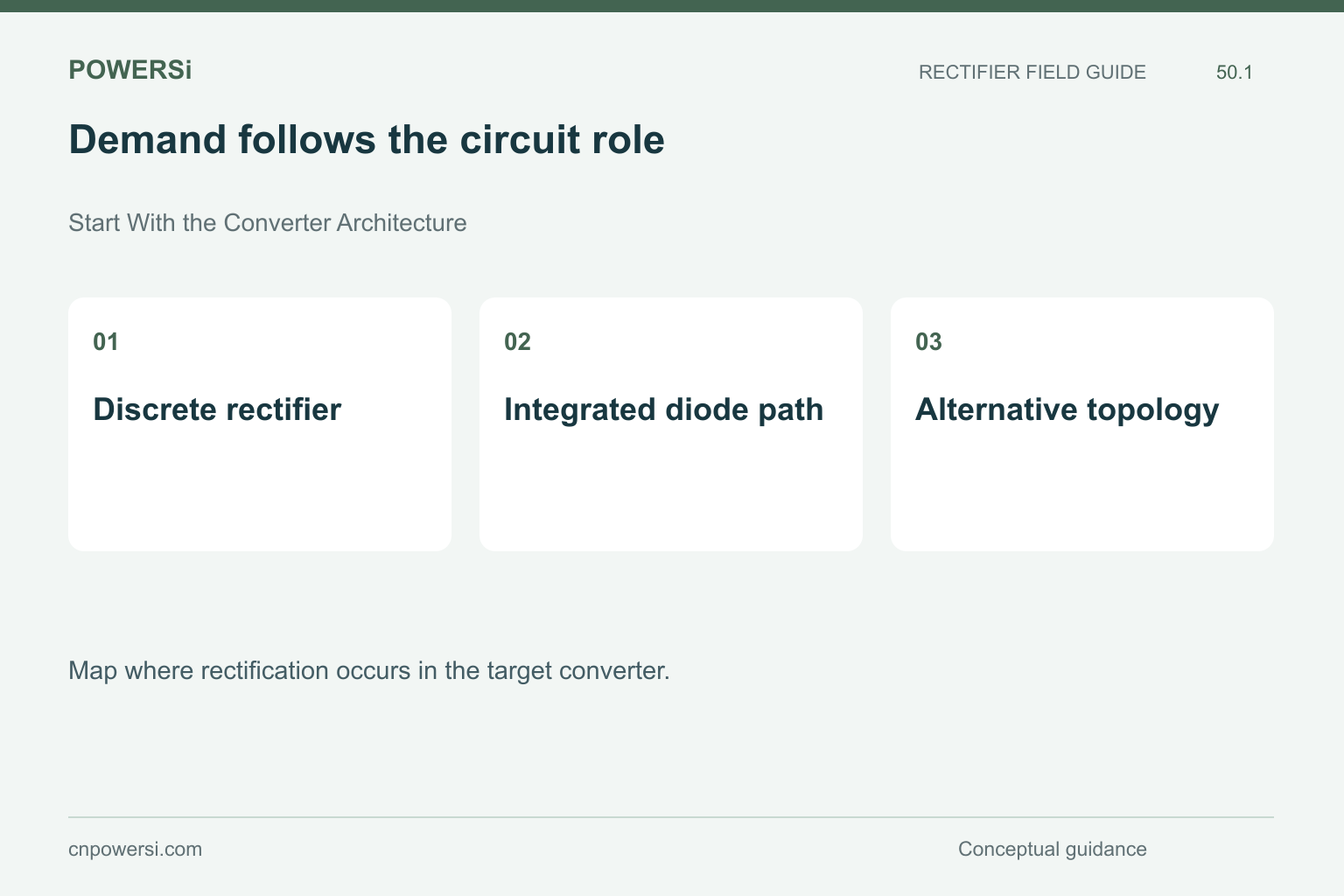
Demand follows the circuit role.
Start With the Converter Architecture
Map where rectification occurs in the target converter. A design can use a discrete fast-recovery diode, a diode integrated with a switch, a power module or synchronous rectification. These choices create different purchasing opportunities even when the system power rating is similar.
Do not multiply a general IGBT shipment estimate by an assumed diode count without checking the architecture. Identify the actual bill-of-material position and whether it remains independently sourced in the customer’s next design revision.
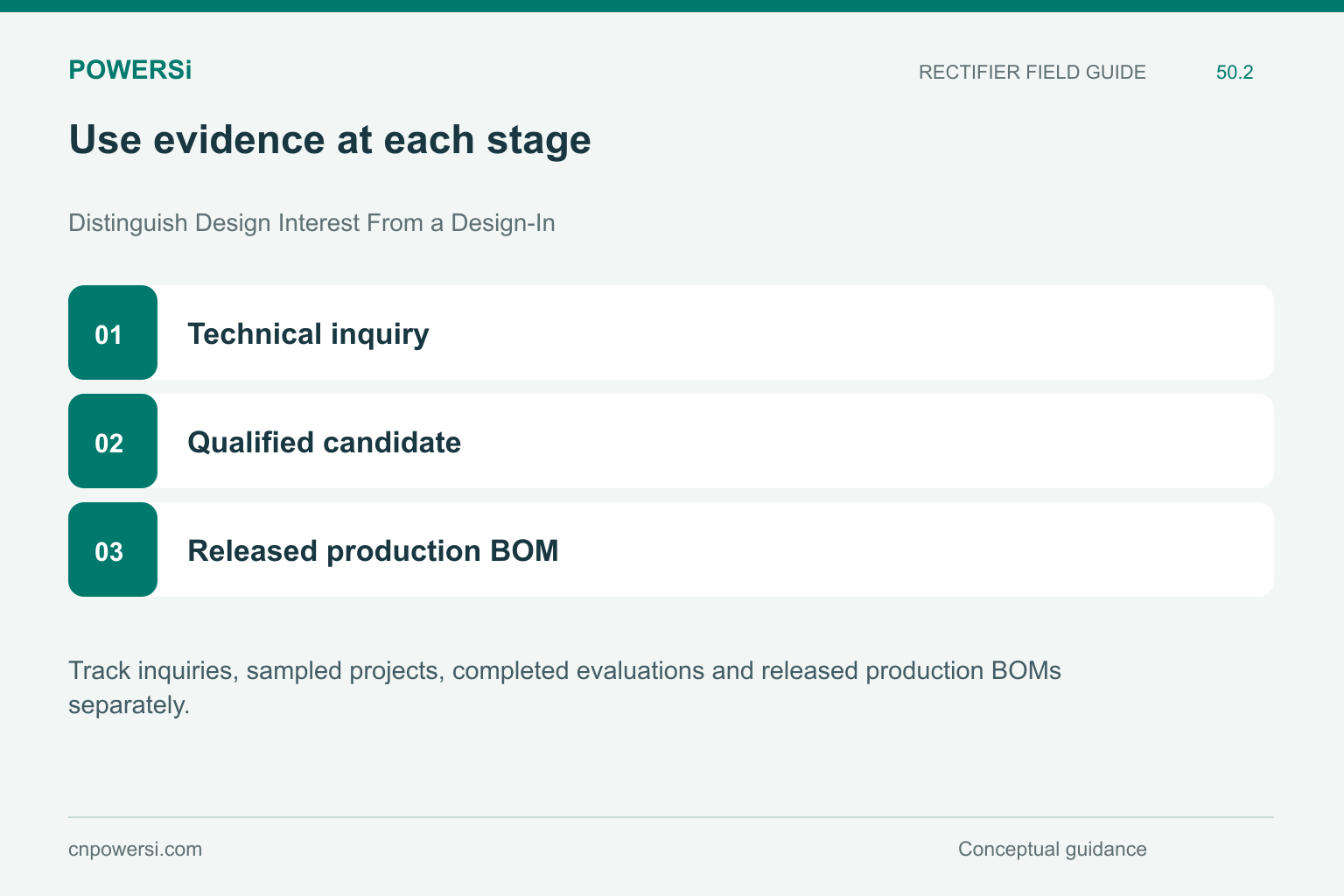
Use evidence at each stage.
Distinguish Design Interest From a Design-In
Track inquiries, sampled projects, completed evaluations and released production BOMs separately. Each stage carries a different probability of future orders. A sample request shows interest, not a production award.
Record the customer schedule, unresolved technical issues and competing architectures. If a design changes from a diode-based path to synchronous rectification, update the opportunity rather than keep it in the forecast because samples were already shipped. A disciplined pipeline is more useful than an optimistic market headline.
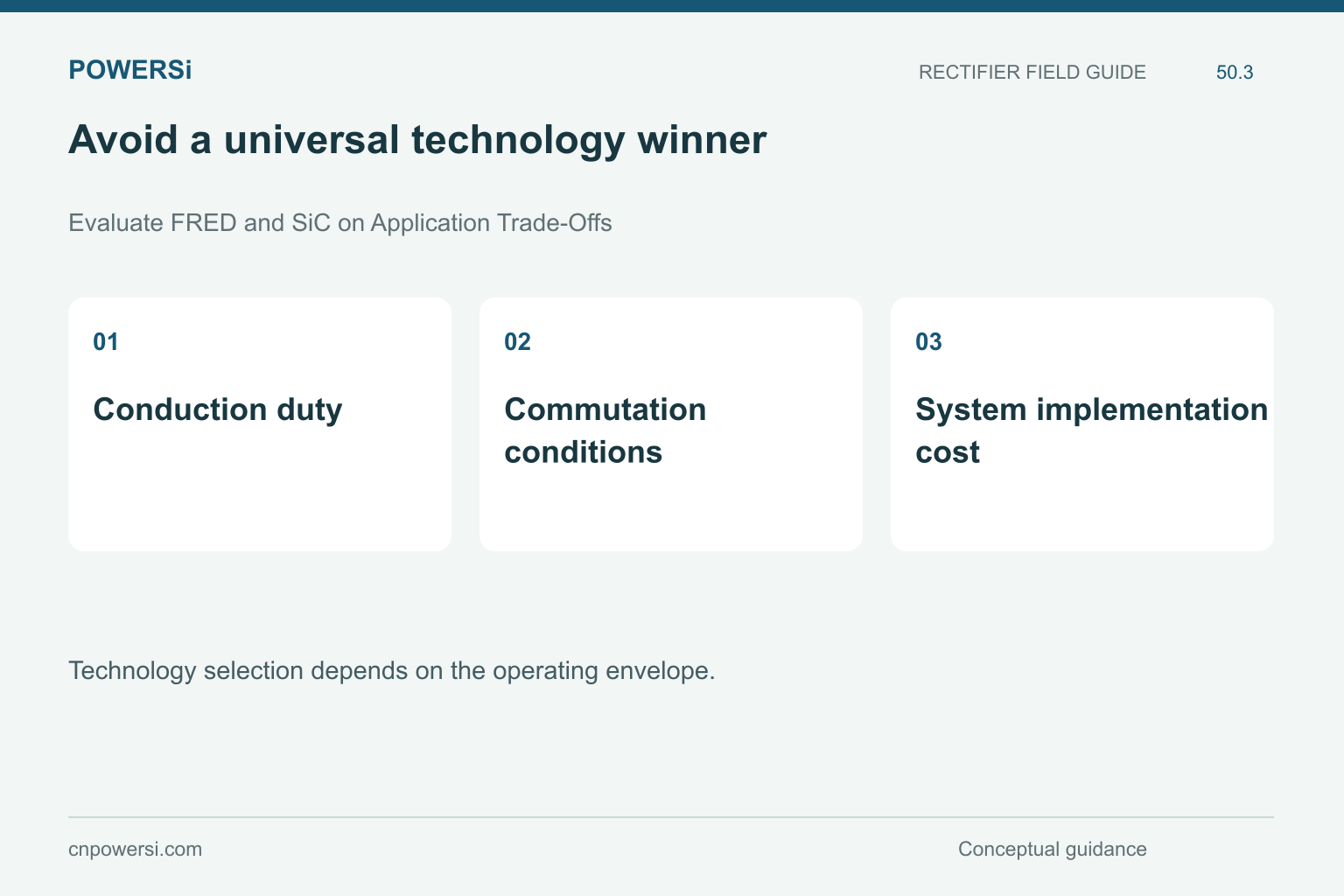
Avoid a universal technology winner.
Evaluate FRED and SiC on Application Trade-Offs
Technology selection depends on the operating envelope. Compare conduction behavior, switching-cell effects, thermal requirements and the cost of the complete implementation. A favorable dynamic characteristic does not eliminate conduction loss or qualification work.
Separate the question “Can this technology improve the converter?” from “Can this supplier deliver a qualified device?” The first is an architecture decision; the second requires product evidence, process control and supply readiness. Neither can be settled by country of origin alone.
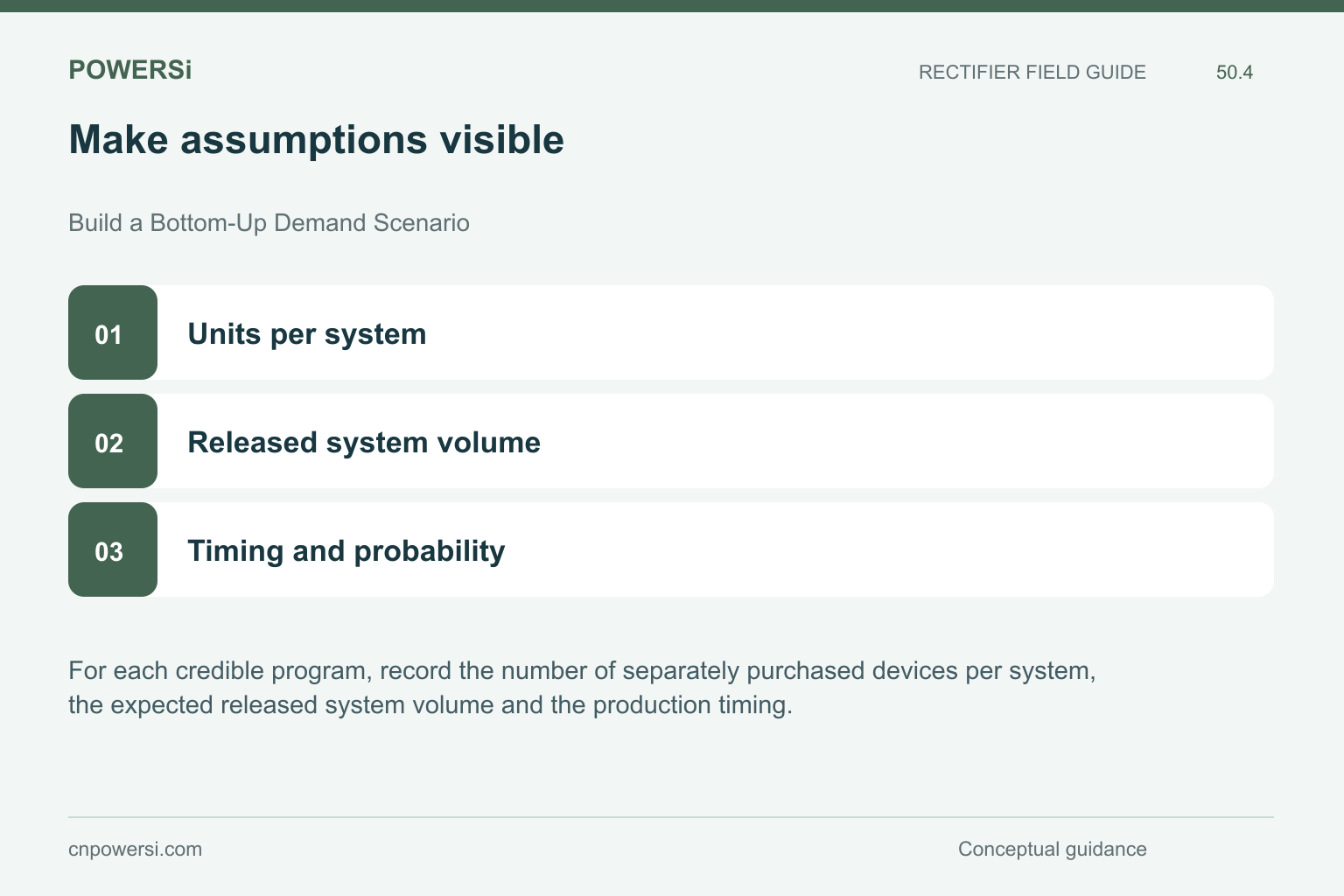
Make assumptions visible.
Build a Bottom-Up Demand Scenario
For each credible program, record the number of separately purchased devices per system, the expected released system volume and the production timing. Use scenarios where those inputs remain uncertain. Avoid presenting the highest scenario as committed revenue.
Account for qualification delays and inventory already held by the customer. A large design-in may produce little near-term demand if the project launch moves. State the period and evidence behind the estimate so sales and operations can reconcile it later.
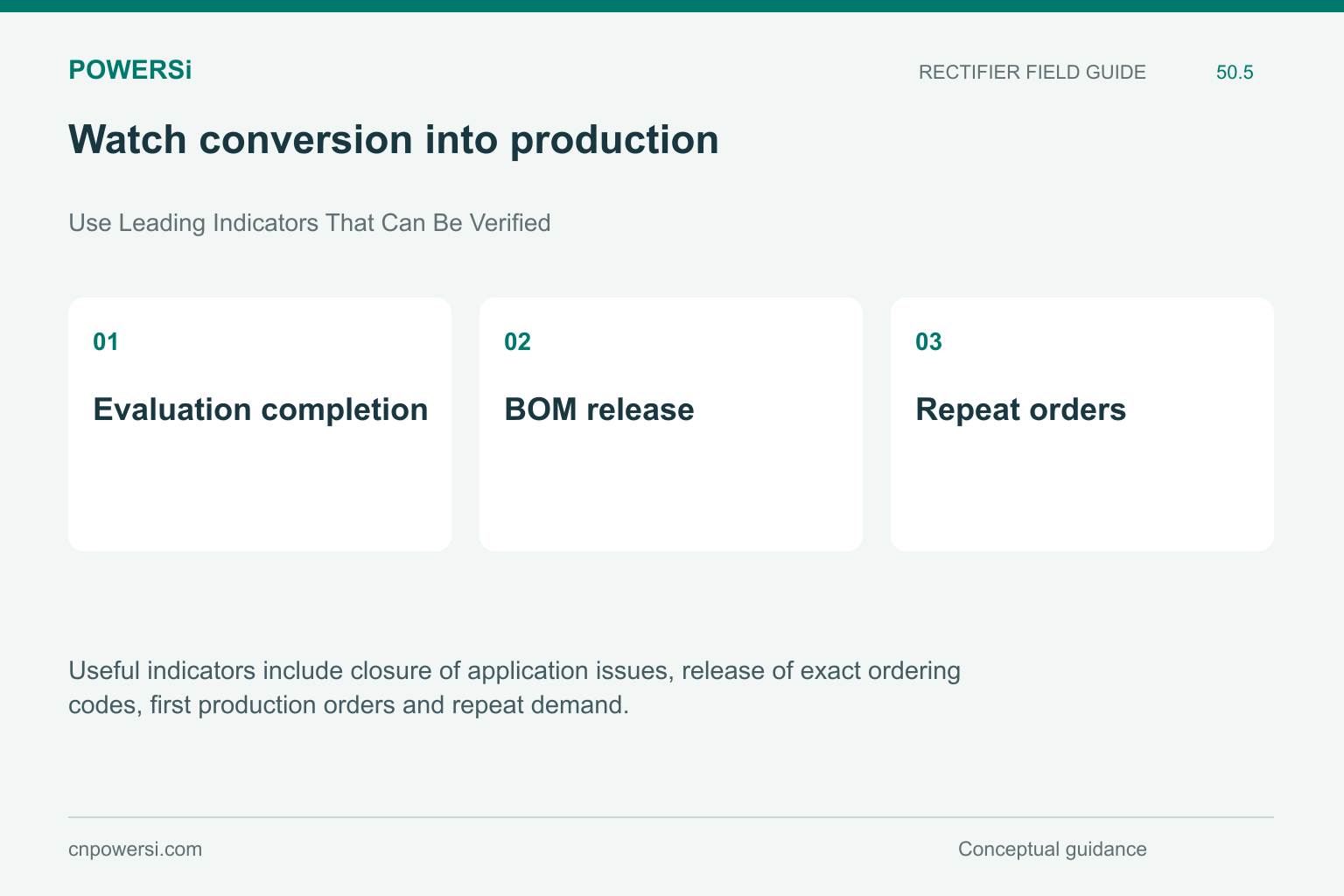
Watch conversion into production.
Use Leading Indicators That Can Be Verified
Useful indicators include closure of application issues, release of exact ordering codes, first production orders and repeat demand. Compare these signals with support effort and supply capacity to decide where to invest.
This approach does not forecast a guaranteed national market boom. It gives distributors and manufacturers a way to identify defensible opportunities in high-voltage FRED and SiC devices while respecting the uncertainty between technical interest and sustained production.
Key Takeaways
- Demand follows the circuit role.
- Avoid a universal technology winner.
- Watch conversion into production.
Conclusion
Plan around specific circuit positions and credible programs. Discuss high-voltage candidate requirements with POWERSi before converting interest into a supply forecast.
FAQs
Does more IGBT demand guarantee more discrete diodes?
No. The diode function may be integrated or implemented differently.
Is a sample request a design win?
No. Track evaluation and production release separately.
Is SiC always the best commercial choice?
No. Application performance, qualification and implementation cost determine the decision.
What belongs in a bottom-up forecast?
Device count, credible system volume, timing and explicit uncertainty.
Which indicator is stronger than an inquiry count?
A released production BOM followed by repeat orders provides stronger evidence of realized demand.