Skip to content

Diode Supplier Capability Audit: Follow One Product Through the Factory
Last Updated: 2026-10-08
Quick Answer
A diode supplier capability audit is strongest when it follows one relevant product from specification ownership through process control, testing and issue resolution. Ask staff to demonstrate connected records rather than unrelated equipment photographs. Distinguish in-house work from controlled subcontracting, and record what the evidence establishes for the proposed product.
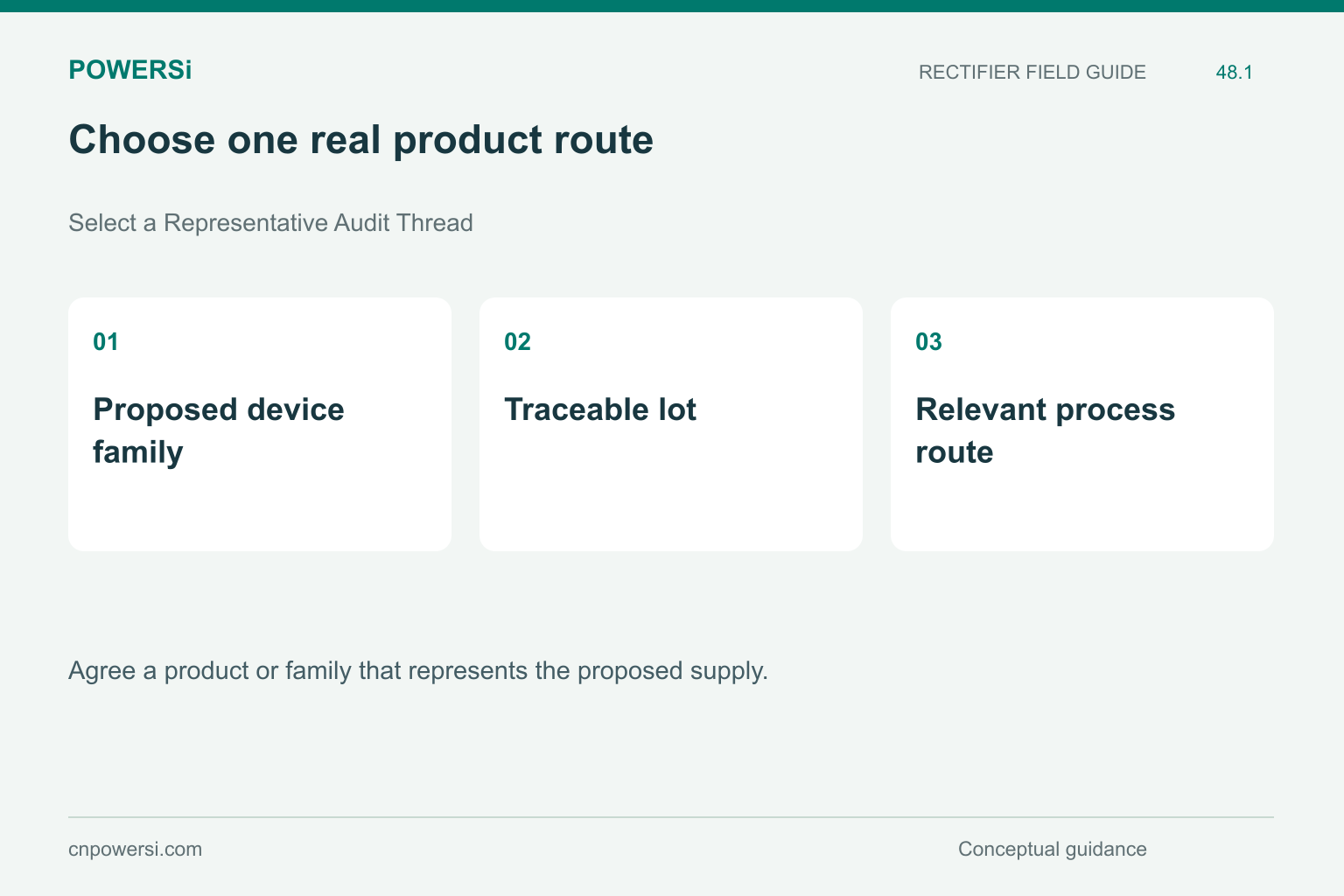
Choose one real product route.
Select a Representative Audit Thread
Agree a product or family that represents the proposed supply. Ask the supplier to select a traceable lot whose records can be discussed without exposing another customer’s confidential information. The audit should connect records across functions, not collect isolated presentations.
Set the scope in advance: design support, assembly, electrical testing or another claimed capability. An audit of packaging operations cannot establish wafer-fabrication capability. Record any stage outside the visit or unavailable to the review so conclusions remain proportionate.
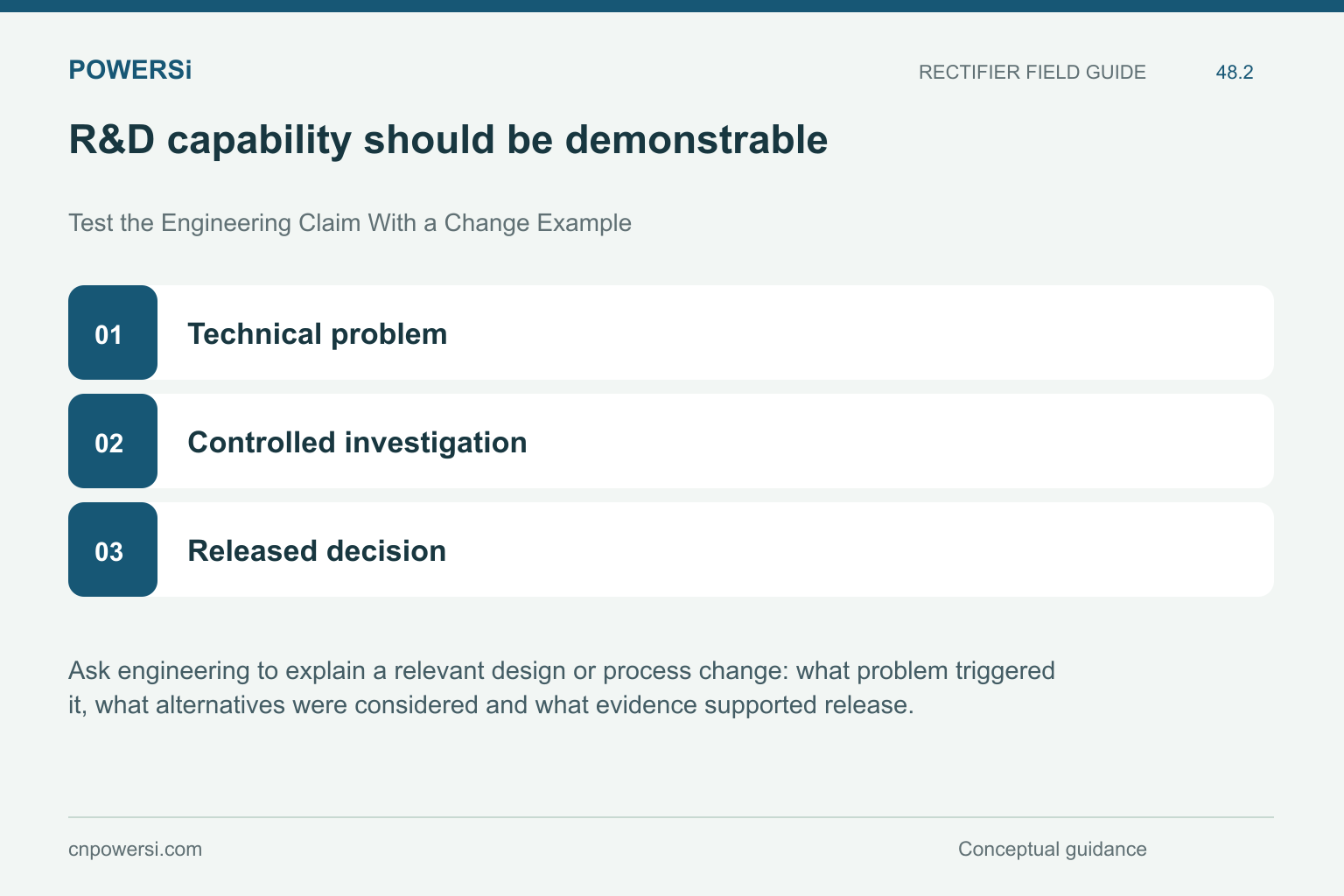
R&D capability should be demonstrable.
Test the Engineering Claim With a Change Example
Ask engineering to explain a relevant design or process change: what problem triggered it, what alternatives were considered and what evidence supported release. The example can be anonymized, but it should connect analysis with an actual controlled decision.
Look for clear ownership of specifications and test conditions. A company may offer strong application support without owning every fabrication step. Describe that capability accurately rather than force all suppliers into the same integrated-manufacturer label.
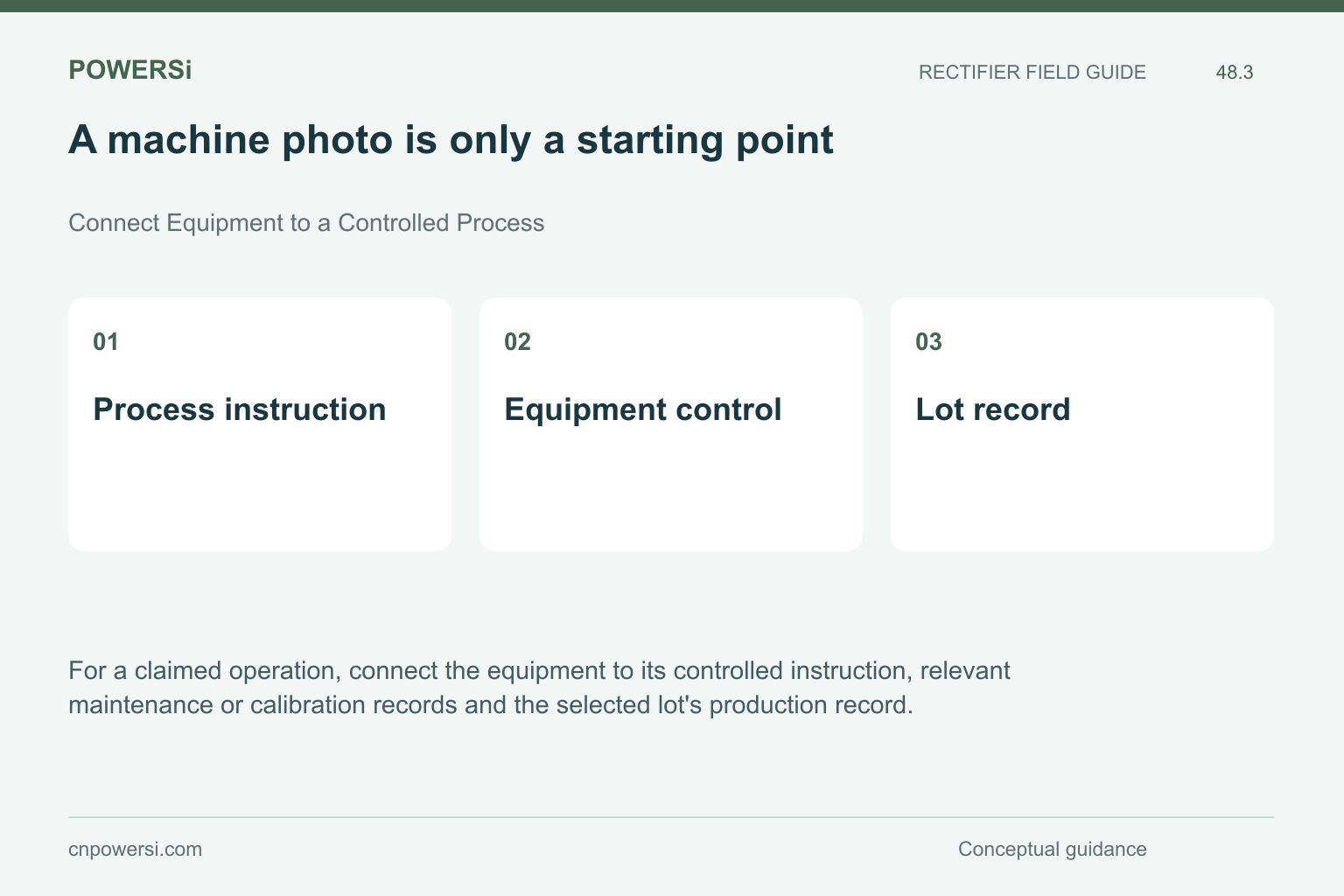
A machine photo is only a starting point.
Connect Equipment to a Controlled Process
For a claimed operation, connect the equipment to its controlled instruction, relevant maintenance or calibration records and the selected lot’s production record. Observe how operators handle a deviation and how product status is kept visible.
Avoid using the number of machines as a direct capacity or quality measure. Capacity depends on product mix, cycle time, utilization and constraints elsewhere in the route. If capacity matters to the order, request a product-specific explanation rather than infer it from the size of the room.
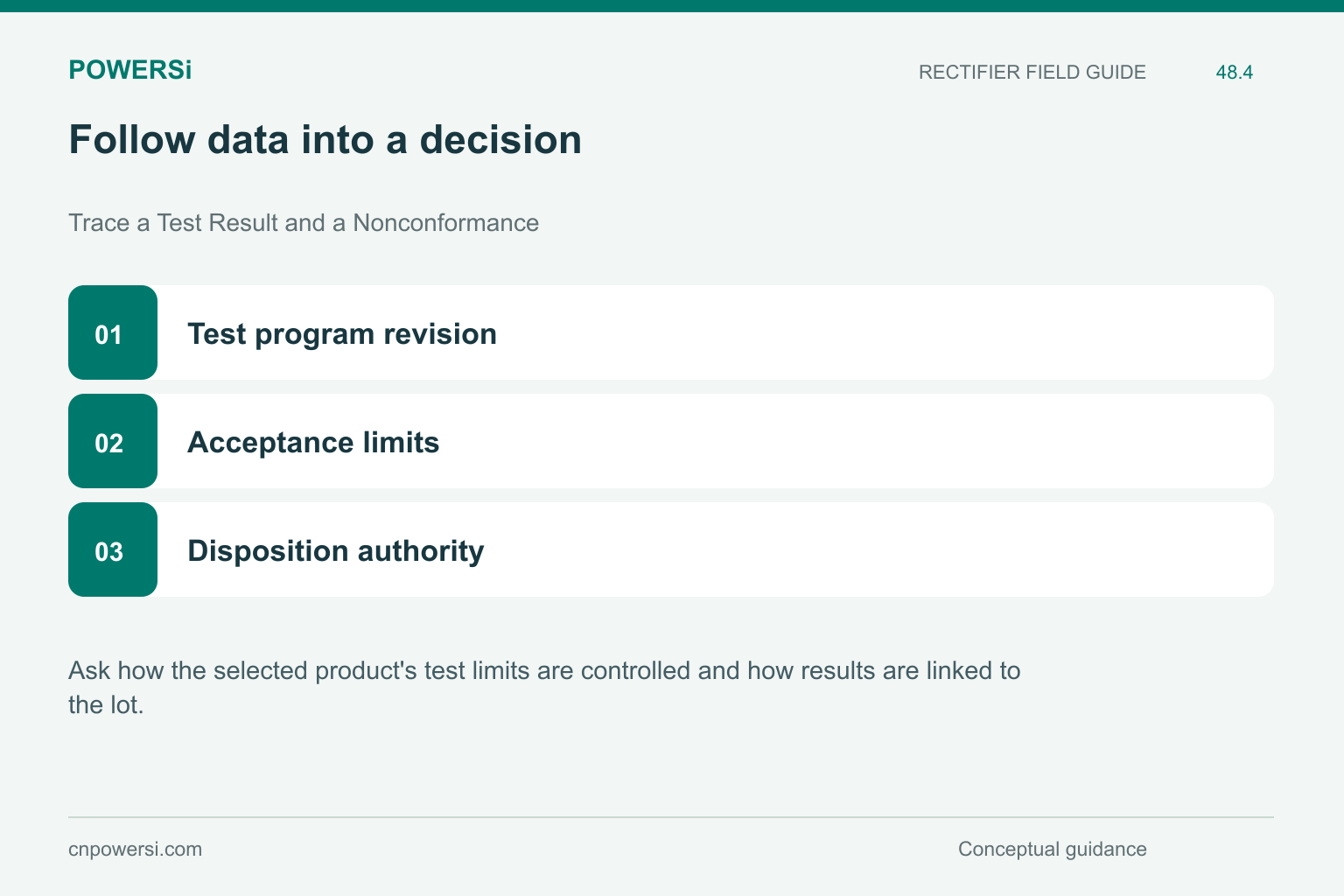
Follow data into a decision.
Trace a Test Result and a Nonconformance
Ask how the selected product’s test limits are controlled and how results are linked to the lot. Review an appropriately redacted example of a nonconformance, including containment and final disposition. The goal is to understand who can release product and on what basis.
Check how rework or retest is identified in the record. A final passing result without its history may conceal useful process information. Audit evidence should reveal the control system, not require access to unrelated proprietary test software.
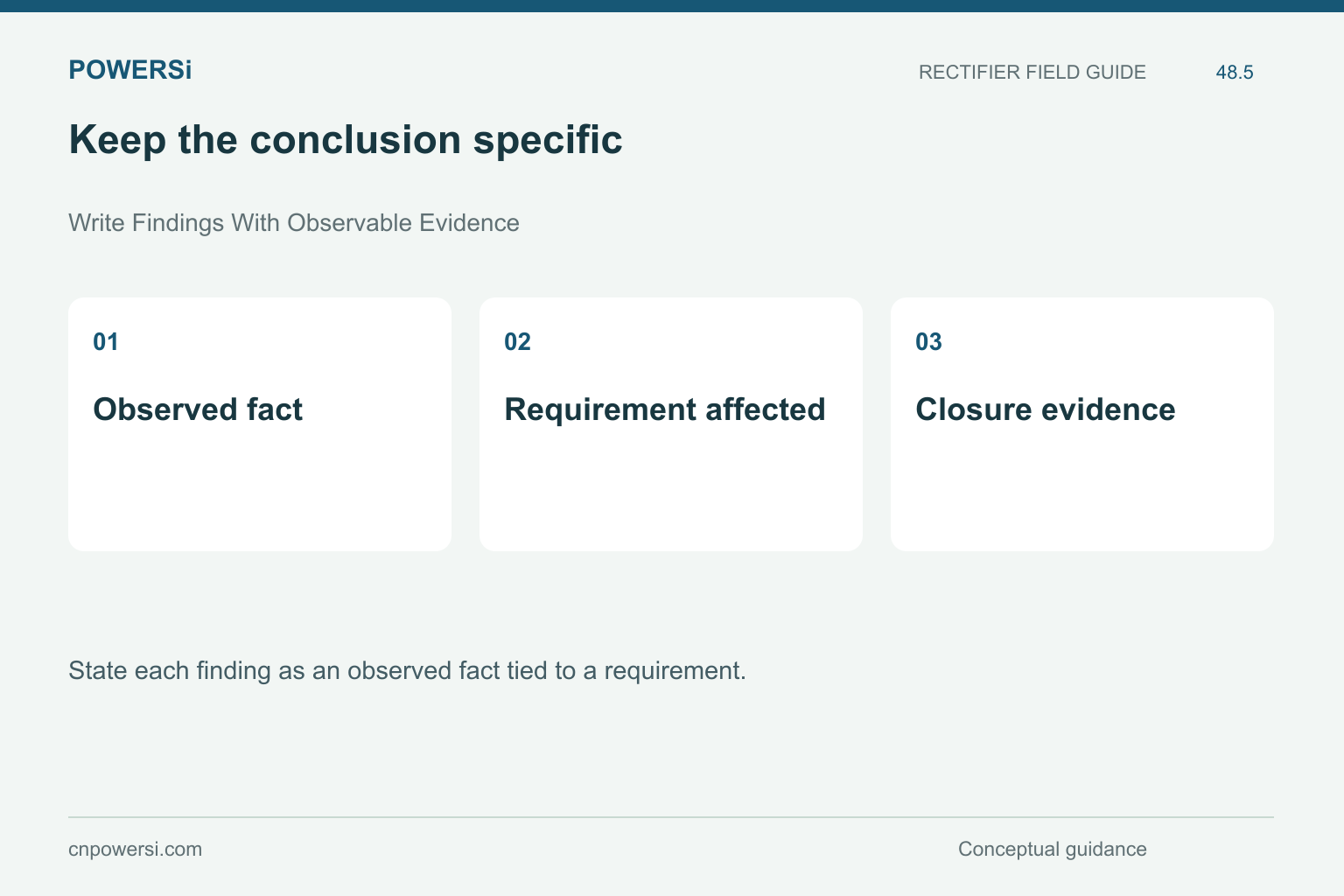
Keep the conclusion specific.
Write Findings With Observable Evidence
State each finding as an observed fact tied to a requirement. Separate a confirmed gap from an unanswered question or an activity outside the audit scope. Assign closure evidence and responsibility where action is needed.
An audit does not approve every product made at the site. Carry relevant findings into the candidate qualification and supply decision. Retain the audited route and date so later changes can be assessed against the actual review rather than a permanent approved-factory label.
Key Takeaways
- Choose one real product route.
- A machine photo is only a starting point.
- Keep the conclusion specific.
Conclusion
Follow a connected product record to understand capability. Arrange a focused discussion with POWERSi around the operations relevant to your supply requirement.
FAQs
Are equipment photos enough to prove capability?
No. Connect equipment to controlled processes, personnel and traceable output.
Must the audit expose other customers?
No. Use redacted records or a suitable demonstration with clear scope.
Can an assembly audit prove wafer fabrication?
No. That stage needs its own evidence.
Does an audit replace product qualification?
No. It supports the supplier assessment but does not establish application performance.
How should unavailable evidence be recorded?
As a defined scope limitation or unresolved question, not an assumed pass.