Skip to content

Answering “Can We Use a Chinese Diode?” With a Decision Brief
Last Updated: 2026-10-08
Quick Answer
When a customer asks whether a Chinese diode can be used, answer for the exact circuit and candidate rather than for a country. A concise decision brief should state the requirement, established evidence, material gaps and proposed next step. Give engineering and purchasing separate decisions instead of promising suitability before evaluation.
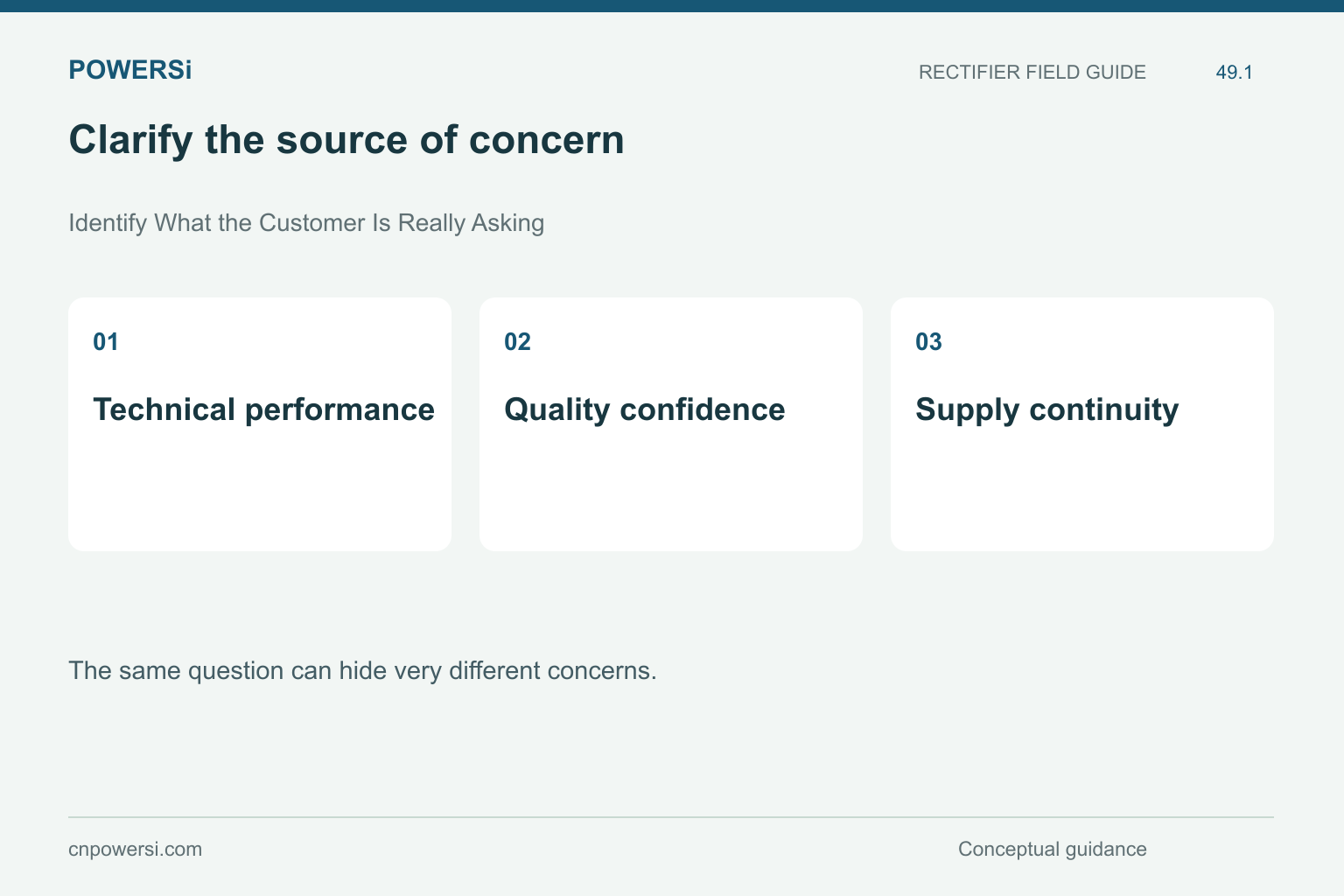
Clarify the source of concern.
Identify What the Customer Is Really Asking
The same question can hide very different concerns. Engineering may worry about recovery behavior, quality may need traceability, and purchasing may fear an interruption. Ask which decision is blocked and who needs to make it.
Capture the original code, candidate and assembly before responding. A broad assurance about domestic technology does not tell the customer whether this device will survive this circuit. A useful conversation narrows the uncertainty enough to define the next piece of evidence.
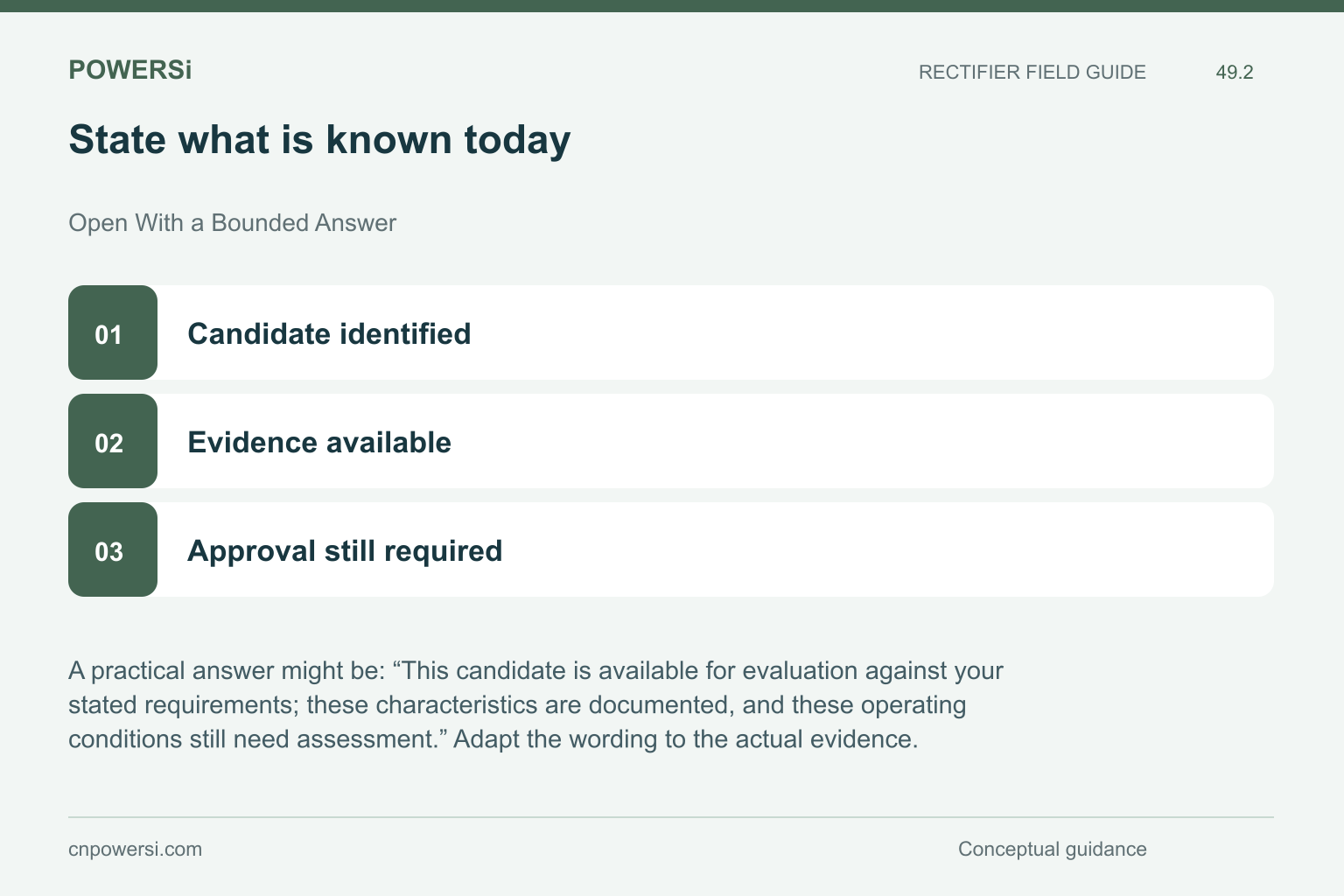
State what is known today.
Open With a Bounded Answer
A practical answer might be: “This candidate is available for evaluation against your stated requirements; these characteristics are documented, and these operating conditions still need assessment.” Adapt the wording to the actual evidence. Do not say the device is approved when it has only been proposed.
Name any immediate mismatch plainly. If the package or circuit function differs, explain the effect before discussing price. This helps the customer distinguish a credible alternate project from a sales promise.
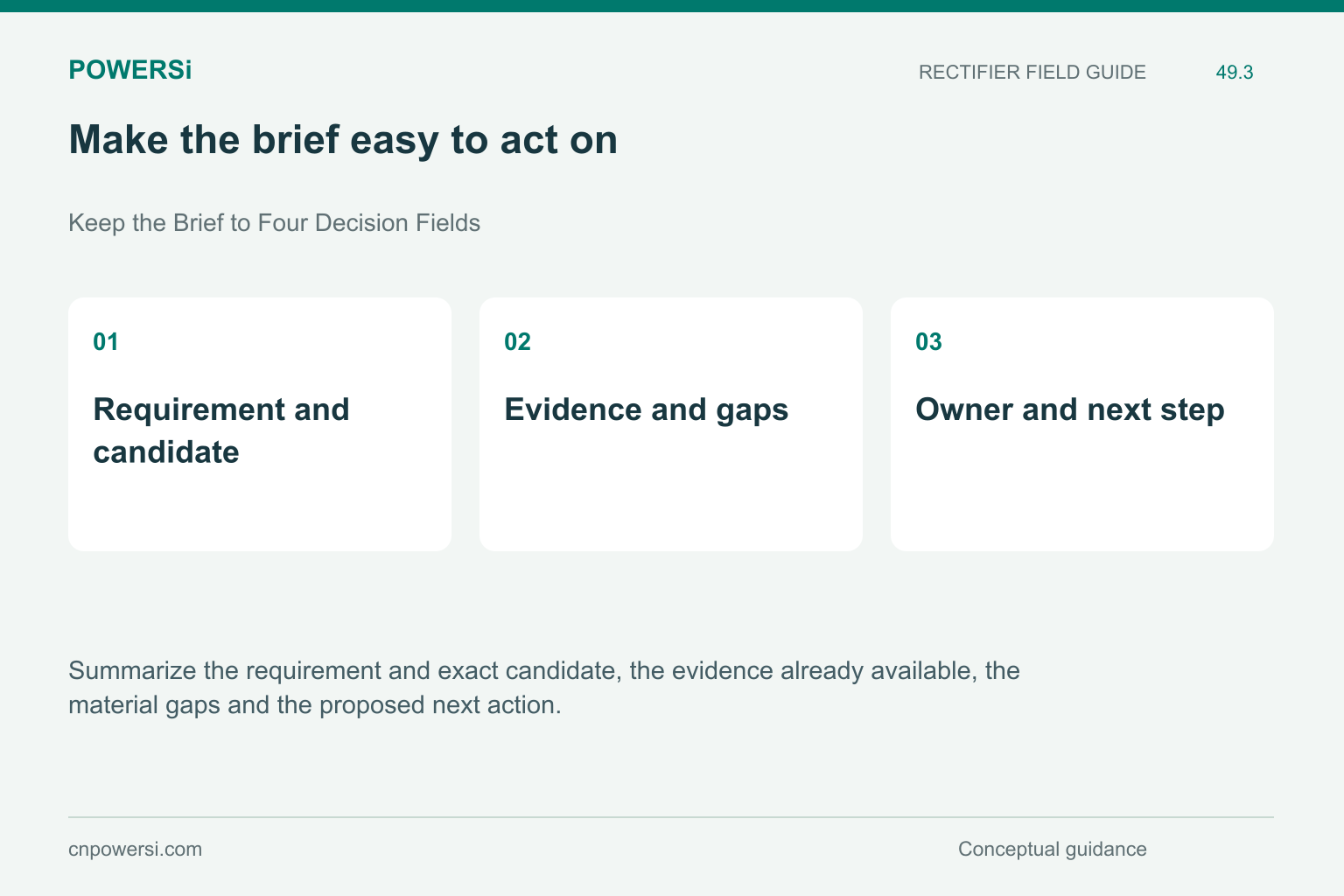
Make the brief easy to act on.
Keep the Brief to Four Decision Fields
Summarize the requirement and exact candidate, the evidence already available, the material gaps and the proposed next action. Add an owner and target date for each action. Link detailed reports instead of burying the decision in pages of unrelated parameters.
Use distinct statuses such as proposed, under evaluation, conditionally accepted and released. Keep status changes tied to actual decisions. The brief should let a buyer understand what can be ordered now and let an engineer see what still prevents production use.
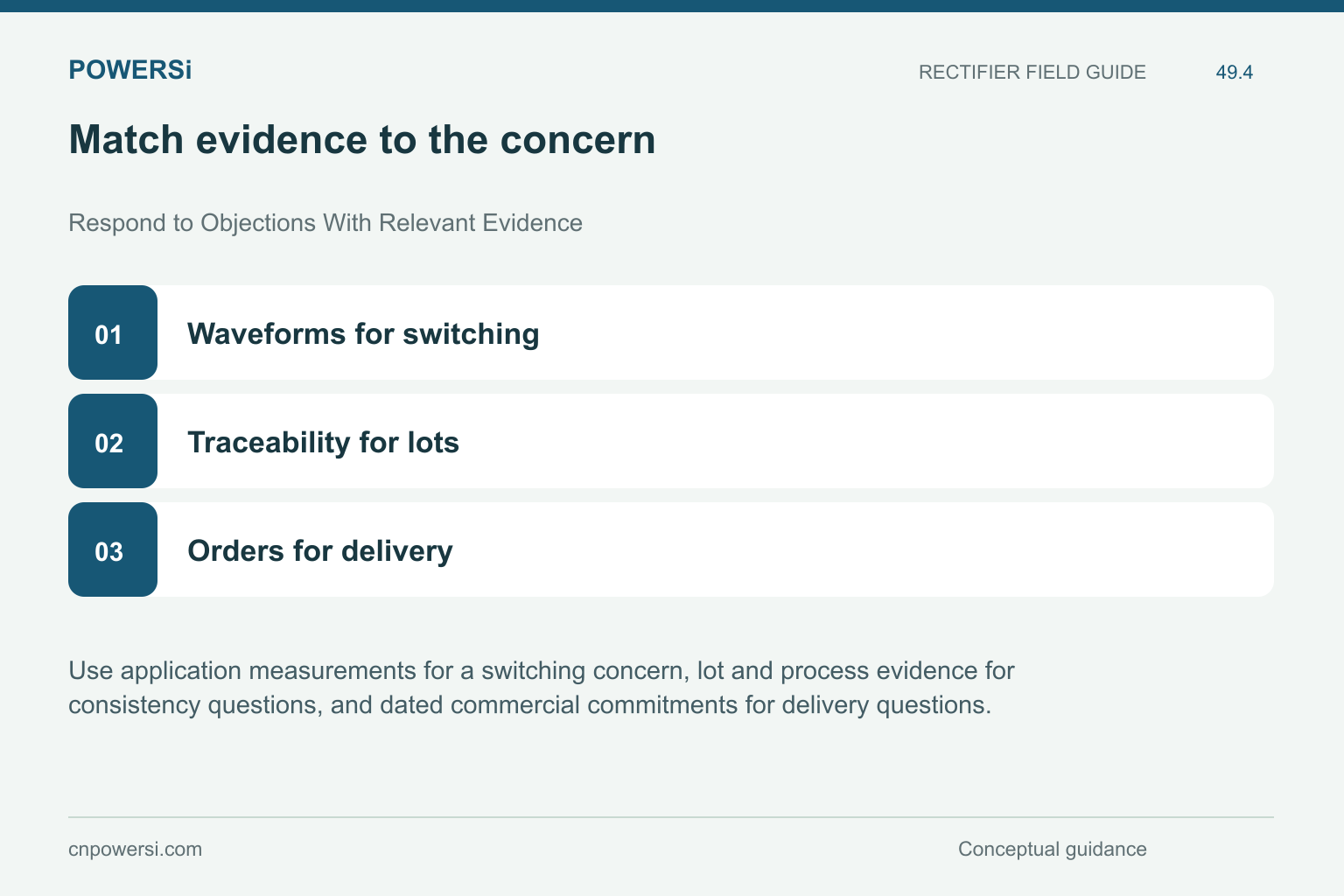
Match evidence to the concern.
Respond to Objections With Relevant Evidence
Use application measurements for a switching concern, lot and process evidence for consistency questions, and dated commercial commitments for delivery questions. A certificate about the quality system does not answer a missing electrical comparison.
If evidence is unavailable, define how it will be obtained or narrow the proposed scope. Do not substitute an unrelated success story. A customer may reasonably require more evidence than a previous buyer because its operating environment and consequence of failure are different.
Move the decision forward.
Close With One Authorized Next Step
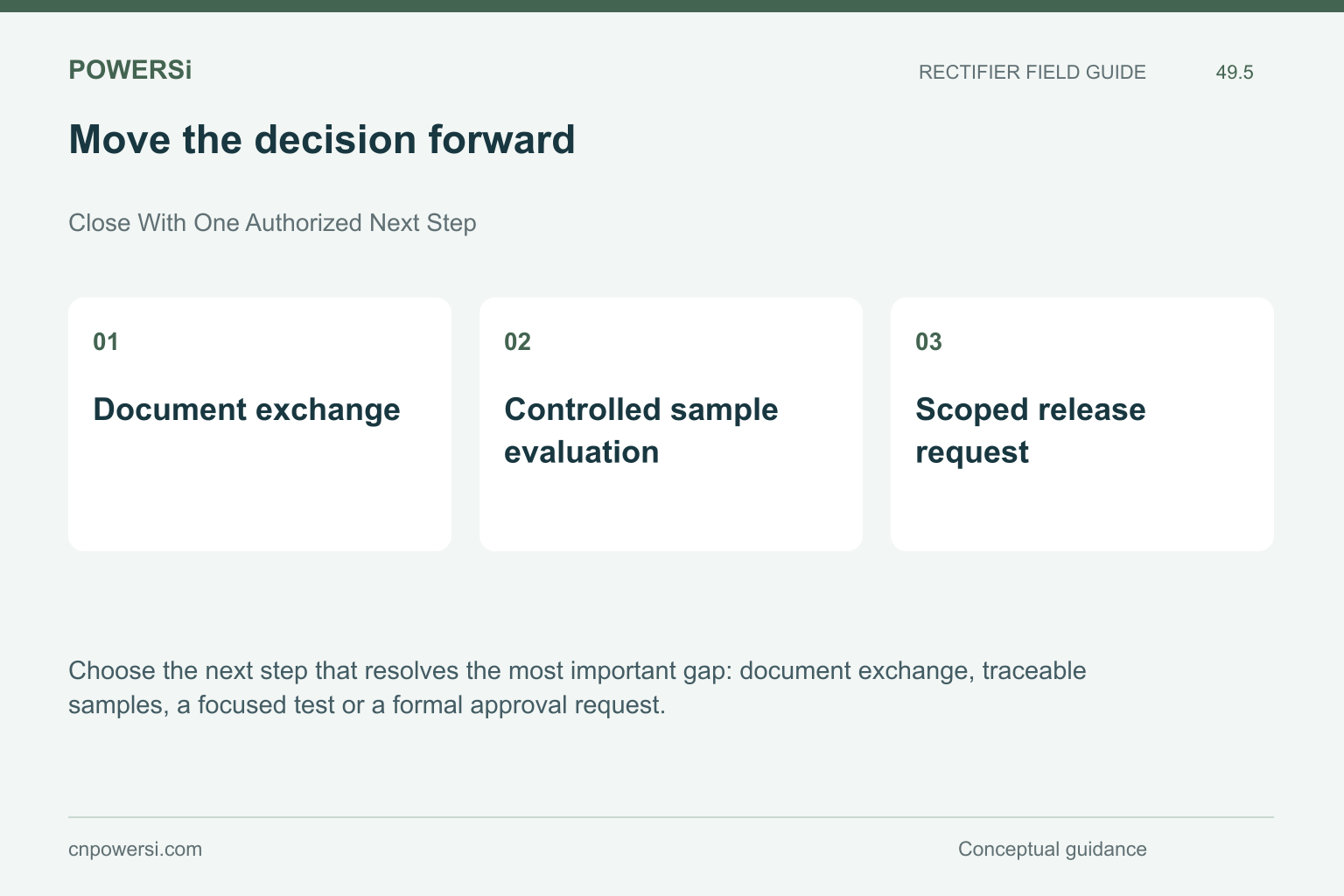
Choose the next step that resolves the most important gap: document exchange, traceable samples, a focused test or a formal approval request. Confirm what result will allow the project to proceed.
Keep the final answer consistent across sales, engineering and purchasing. If the evidence changes, update the brief rather than let an old email remain the apparent approval. Confidence comes from a clear decision path, not from insisting that all customer concerns are bias.
Key Takeaways
- Clarify the source of concern.
- Make the brief easy to act on.
- Move the decision forward.
Conclusion
Give the customer a clear, scoped decision path. For a candidate discussion, send POWERSi the original code and the concern that must be resolved first.
FAQs
Should the answer simply be yes?
Only an already established, scoped approval supports an unqualified acceptance for that use.
What if the customer is mainly worried about delivery?
Use order-specific supply evidence instead of an electrical performance argument.
Does a certificate answer every objection?
No. Evidence must address the particular concern.
How long should the brief be?
Short enough to show the decision, with links to the supporting detail.
What should happen after evidence changes?
Update the decision status and notify the relevant owners through the agreed process.