Skip to content
Comparing Chinese and Imported Diodes: Design a Fair A/B Evaluation
Last Updated: 2026-10-08
Quick Answer
A fair Chinese-versus-imported diode comparison controls the test conditions and separates measured results from purchasing preferences. Define the application question, select traceable samples and use the same fixture and operating points. Report variation, uncertainty and known differences; a comparison report supports a decision but does not replace qualification or customer approval.
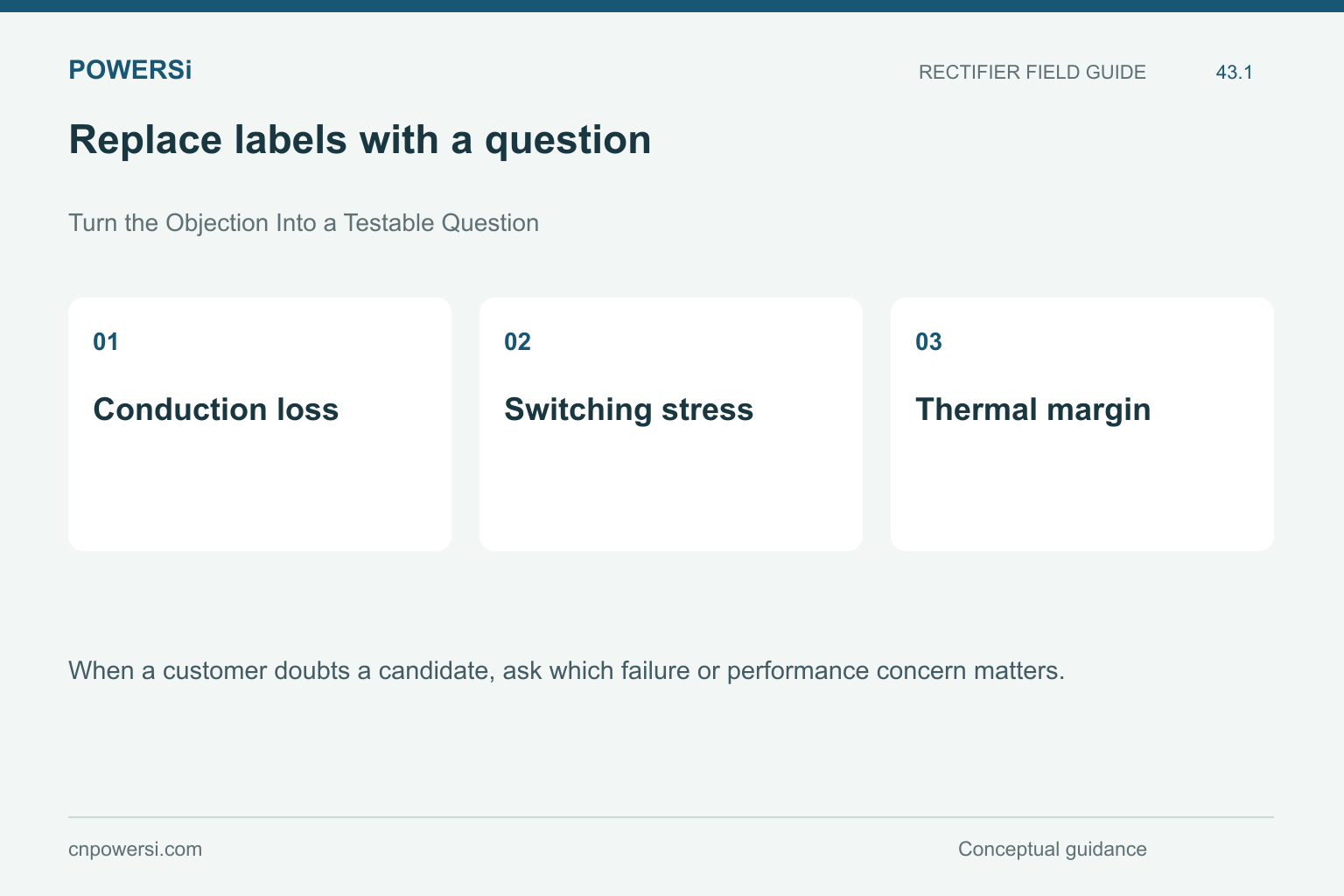
Replace labels with a question.
Turn the Objection Into a Testable Question
When a customer doubts a candidate, ask which failure or performance concern matters. Examples include hot leakage, startup survival or temperature rise at a defined load. Country of manufacture is not itself a measurement variable that answers those questions.
Agree the acceptance criterion before testing. A candidate can have a lower forward drop while producing an unacceptable switching transient. The evaluation should address the circuit’s limiting condition rather than whichever parameter makes one device look strongest.
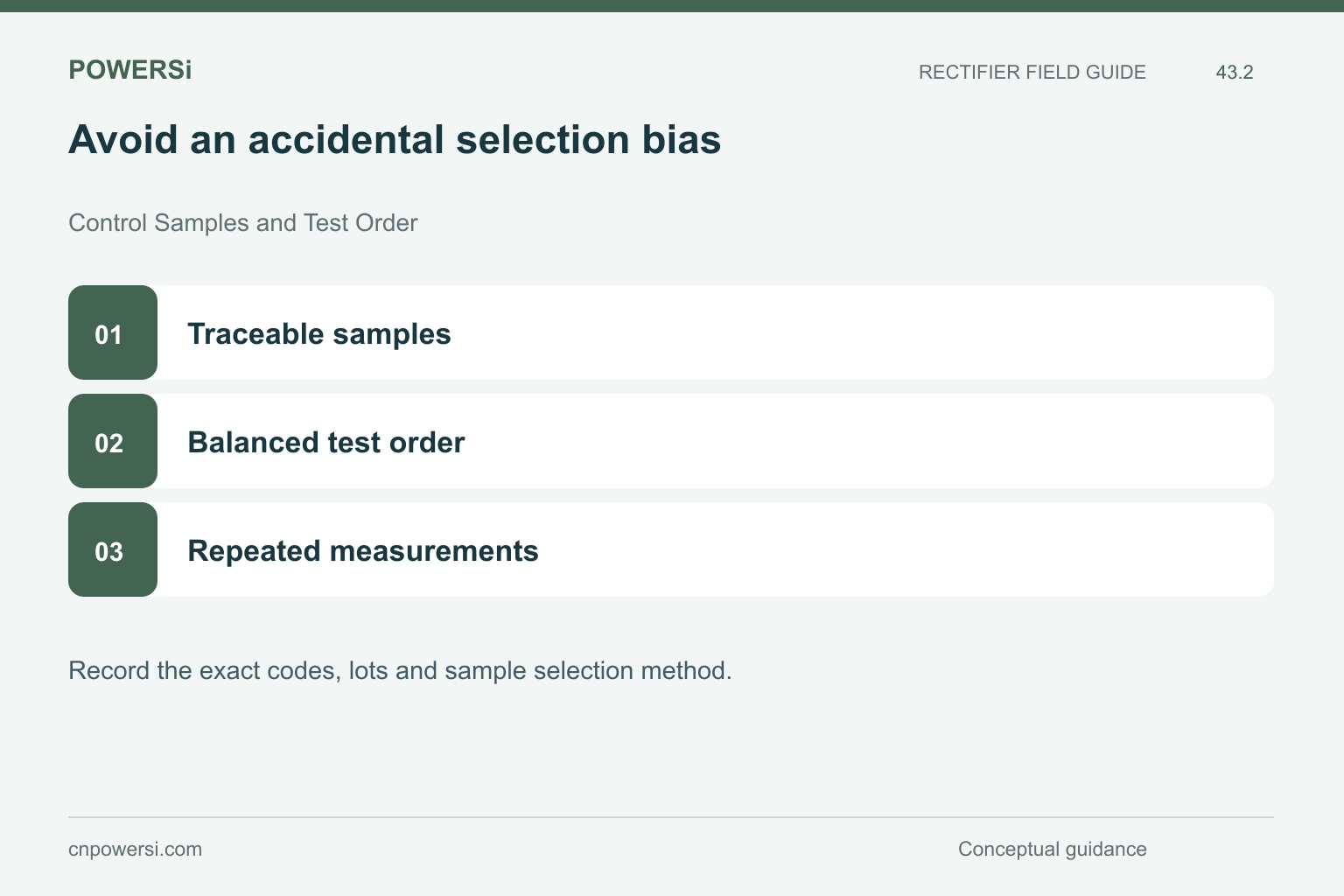
Avoid an accidental selection bias.
Control Samples and Test Order
Record the exact codes, lots and sample selection method. Do not compare a specially selected candidate against an unidentified old part from a repair drawer. Include enough evidence for the intended decision and explain the limits of the sample population.
Alternate or randomize test order where drift could matter, and repeat relevant measurements. Stabilize temperature and inspect fixture contact. If the sample counts differ, report that difference rather than present the results as equally representative of both products.
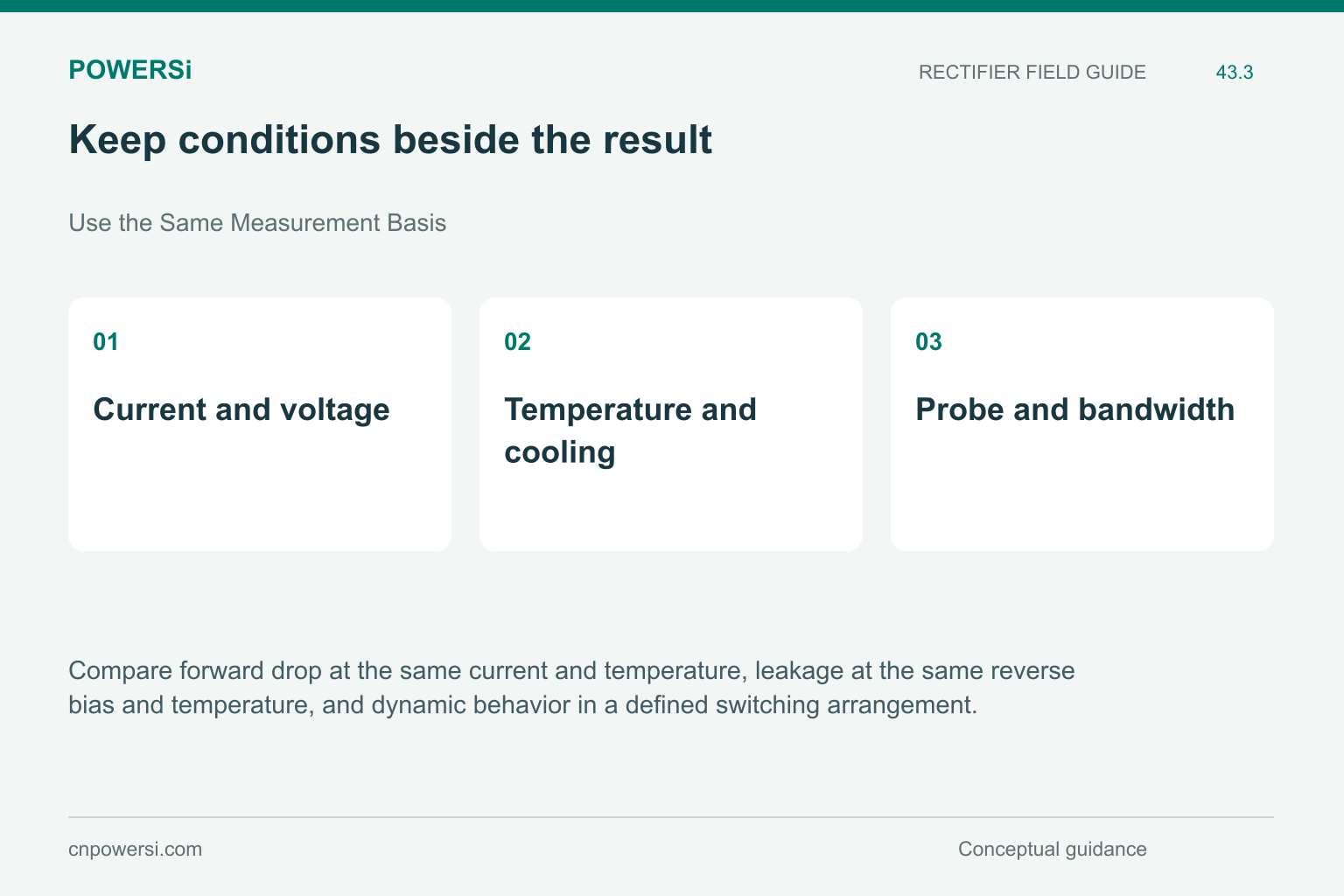
Keep conditions beside the result.
Use the Same Measurement Basis
Compare forward drop at the same current and temperature, leakage at the same reverse bias and temperature, and dynamic behavior in a defined switching arrangement. Record the cooling and mounting conditions for temperature measurements.
For fast waveforms, probe placement, bandwidth and fixture parasitics can alter the apparent result. Keep the measurement method consistent and state its limitations. A visually sharper oscilloscope trace is not automatically more accurate, and readings from different fixtures should not be combined into a single ranking without justification.
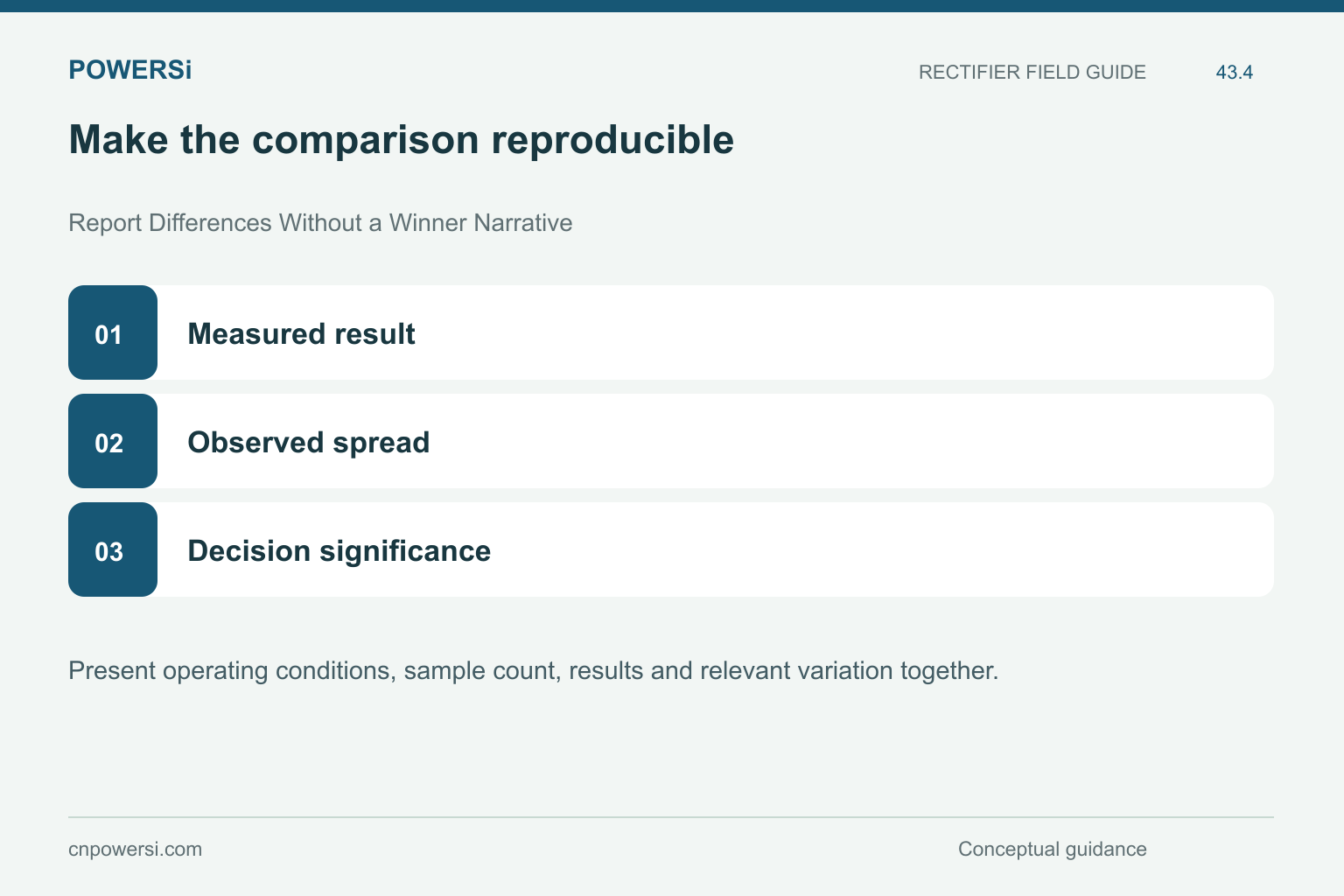
Make the comparison reproducible.
Report Differences Without a Winner Narrative
Present operating conditions, sample count, results and relevant variation together. Distinguish measured data from manufacturer specifications and from calculated estimates. Explain whether the observed difference is large enough to matter for the application.
Include unfavorable findings for the proposed candidate. If results are inconclusive, describe the next test needed. An objective report is more persuasive when it makes its limits clear than when every chart appears designed to support a predetermined substitution.
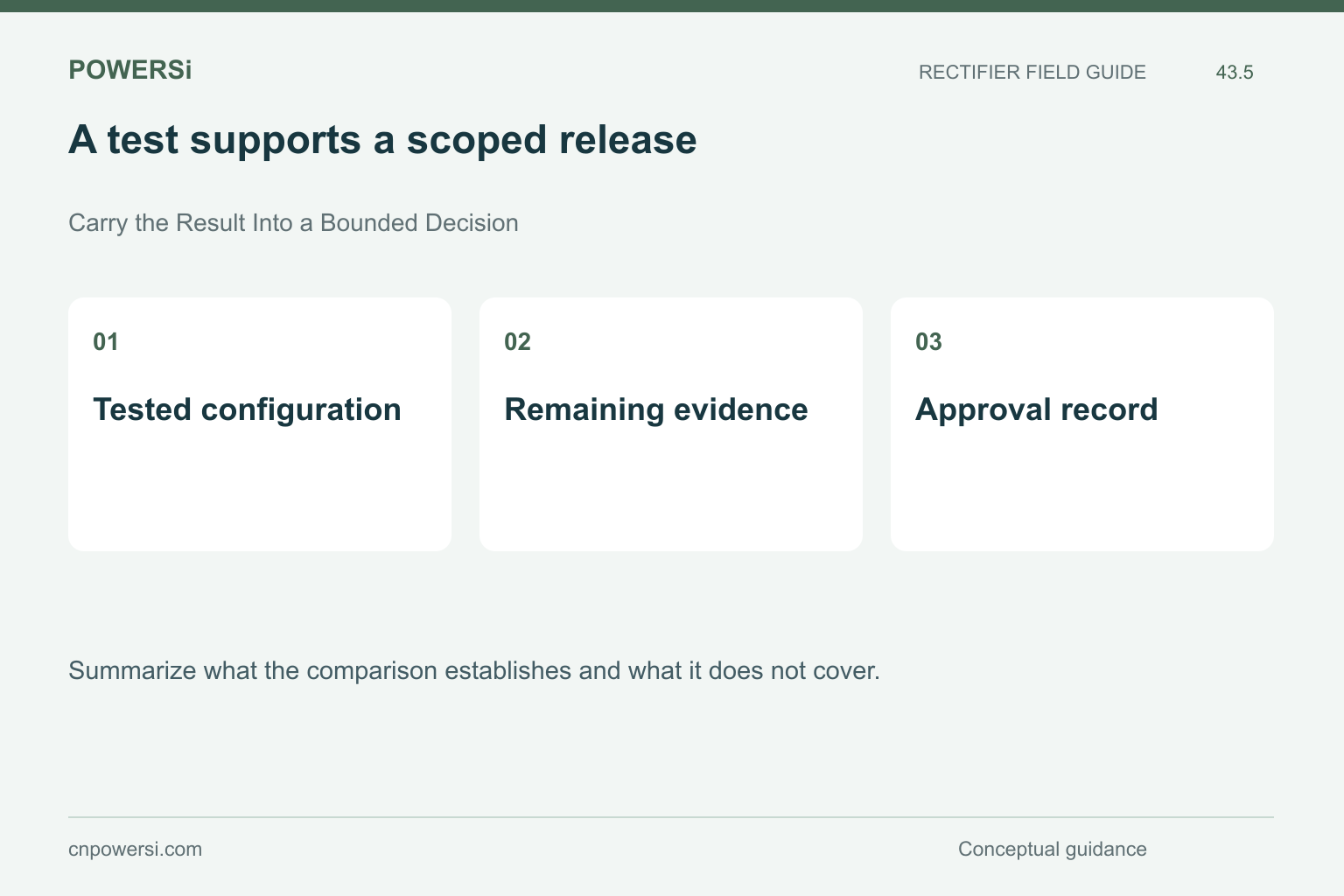
A test supports a scoped release.
Carry the Result Into a Bounded Decision
Summarize what the comparison establishes and what it does not cover. A successful bench test on one board does not establish long-term reliability across all operating environments. Connect the result to the remaining qualification and customer requirements.
Retain sample identity and test files with the final decision. If the candidate or assembly changes, assess whether the comparison remains valid. This turns an argument about origin into an evidence-based engineering discussion without promising that one report resolves every customer concern.
Key Takeaways
- Replace labels with a question.
- Keep conditions beside the result.
- A test supports a scoped release.
Conclusion
Start with a shared test question, not a country-level verdict. Request candidate information from POWERSi and agree the evaluation conditions with the application owner.
FAQs
Should the candidate always win every parameter?
No. The decision depends on meeting application requirements and evaluating relevant trade-offs.
Can room-temperature results settle hot operation?
No. Test or otherwise establish the relevant elevated-temperature behavior.
Why balance the test order?
It helps distinguish device differences from fixture or temperature drift.
Should unfavorable results be included?
Yes. They are necessary for a credible scoped decision.
Does an A/B test establish lifetime?
Not by itself. Reliability evidence and the mission profile require separate consideration.