Skip to content

Server Power Rectification: Schottky or Synchronous?
Last Updated: 2026-11-10
Quick Answer
Server power rectification should be selected from the output voltage, current waveform and operating profile. Low forward voltage helps a diode stage, but high-current outputs may benefit more from synchronous rectification. Compare complete losses, control complexity and thermal margin across the load range before choosing an output architecture.

Start With the Output Architecture
A high-efficiency server supply does not automatically require Schottky output rectifiers. A low-voltage rail can make a diode’s forward drop a large fraction of the delivered voltage. Synchronous rectification replaces the passive conduction path with controlled MOSFETs, introducing a different balance of conduction loss, gate-drive consumption and timing requirements.
Separate the main output from auxiliary rails and protection functions. A passive diode may be reasonable in a lower-current auxiliary supply even when the main output uses synchronous rectification. The efficiency classification of the complete supply does not identify which device technology belongs at every position.
Understand What the Product Photo Establishes
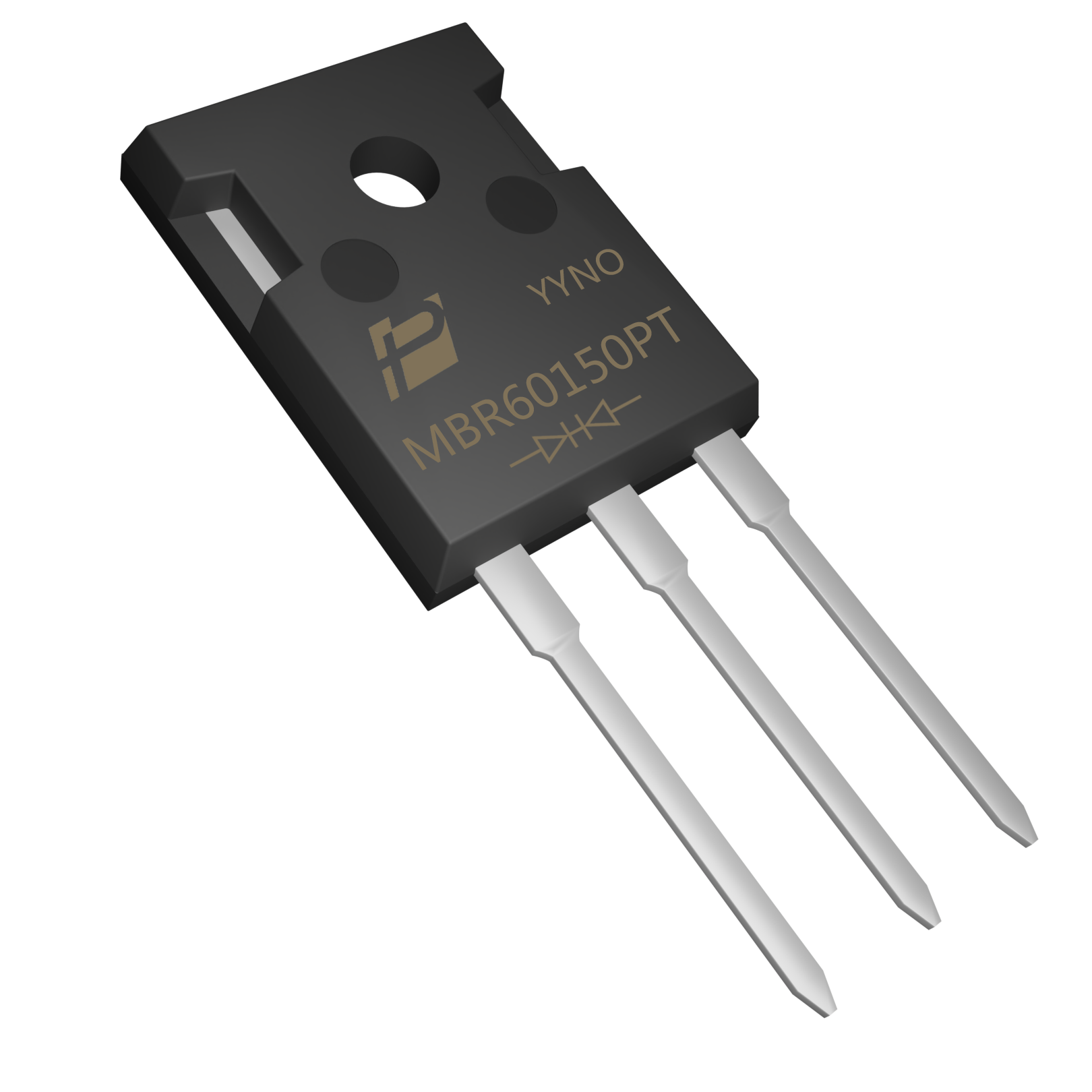
The POWERSi MBR60150PT image below identifies a specific physical product. It is an example for a component discussion, not a recommendation for an unspecified server output.
Selection still requires the reverse-voltage envelope, branch current, junction temperature, mechanical interface and circuit connection. In a dual-diode package, distinguish the current in each junction from a headline package rating. A part with generous voltage capability can still be inefficient or unnecessarily large for a particular rail.
Compare Losses Over the Actual Current Waveform
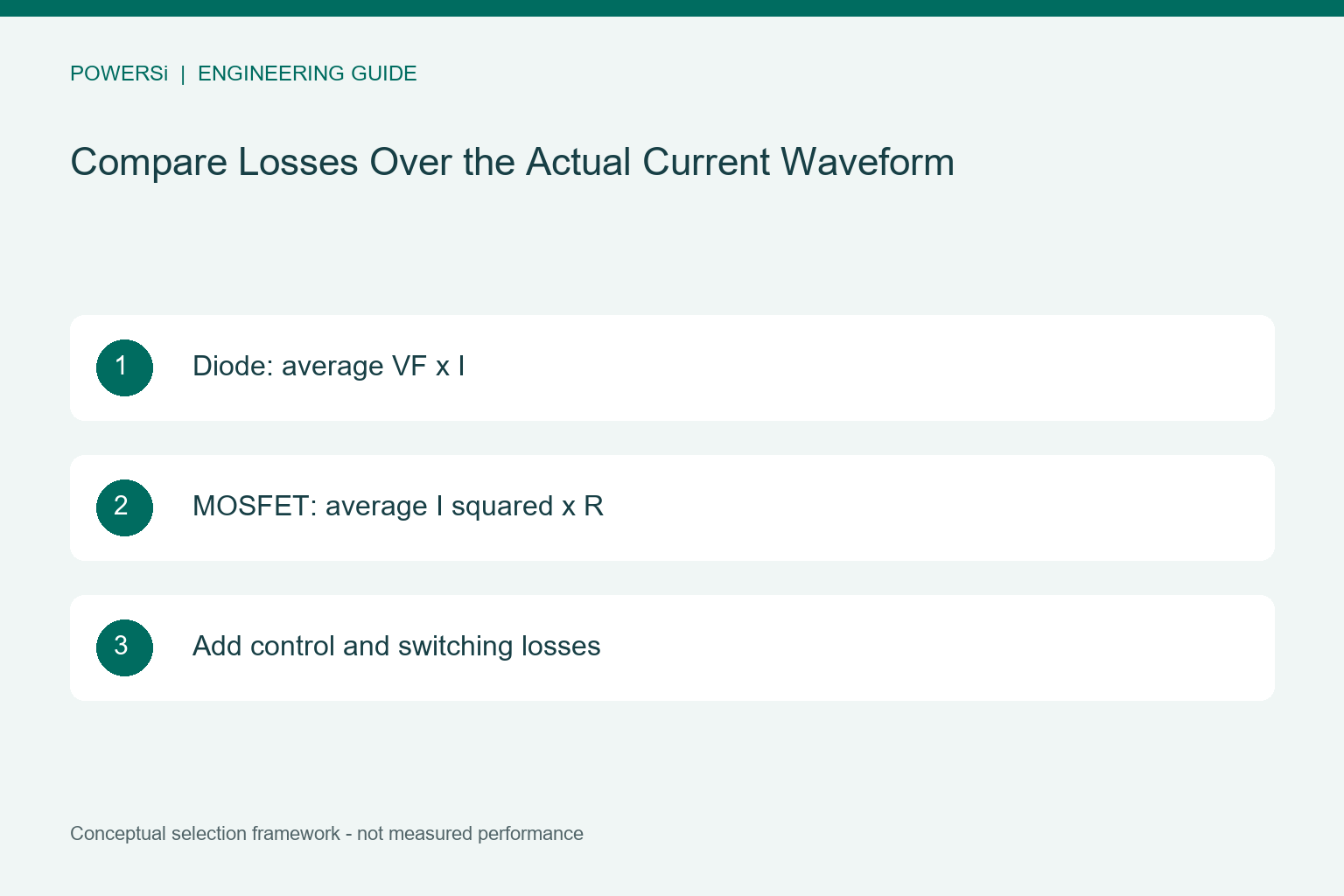
For a diode, integrate instantaneous forward voltage multiplied by current over its conducting intervals. Include reverse leakage and capacitive effects where relevant. For a synchronous path, integrate current squared multiplied by on-resistance at operating temperature, then add drive, switching and dead-time losses.
As an illustrative calculation, a 0.10 V reduction in forward drop at a constant 30 A would reduce conduction loss by 3 W during continuous conduction. This is not a product measurement, and a pulsed waveform requires time averaging. The equivalent MOSFET comparison must use RMS current and hot resistance, not average current and a room-temperature resistance alone.
Evaluate More Than Full Load
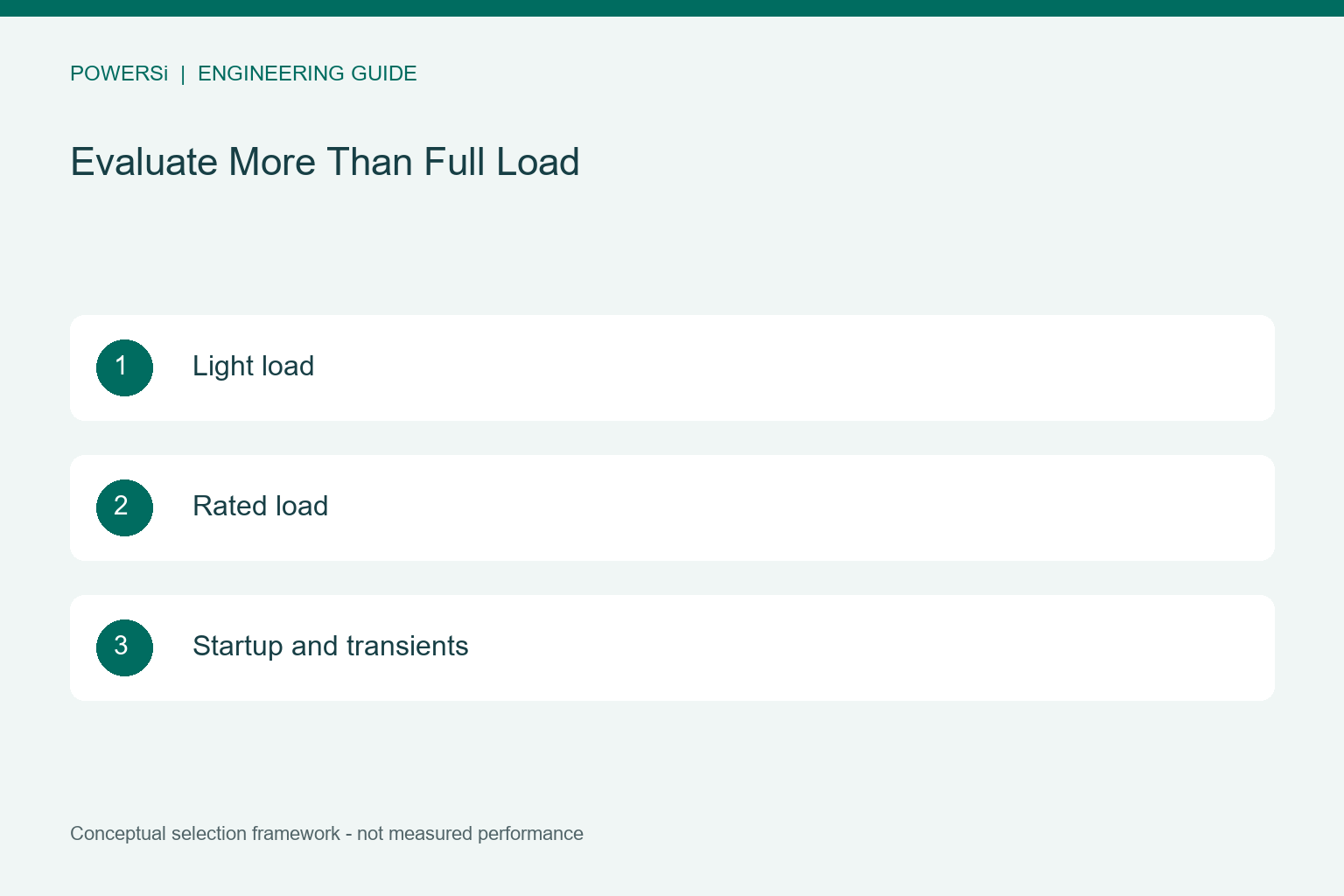
An architecture that wins at rated load may lose some advantage when gate-drive overhead dominates at light load. Measure the complete supply with the same airflow, inlet temperature and output wiring. Record standby, light-load operation, normal service load and rated load separately.
During startup, load steps and shutdown, verify that synchronous timing does not create reverse current or overlap. TI provides synchronous rectifier controllers for this class of function. Their availability does not remove the need to validate the chosen controller and power stage together.
Make the Procurement Decision Reproducible
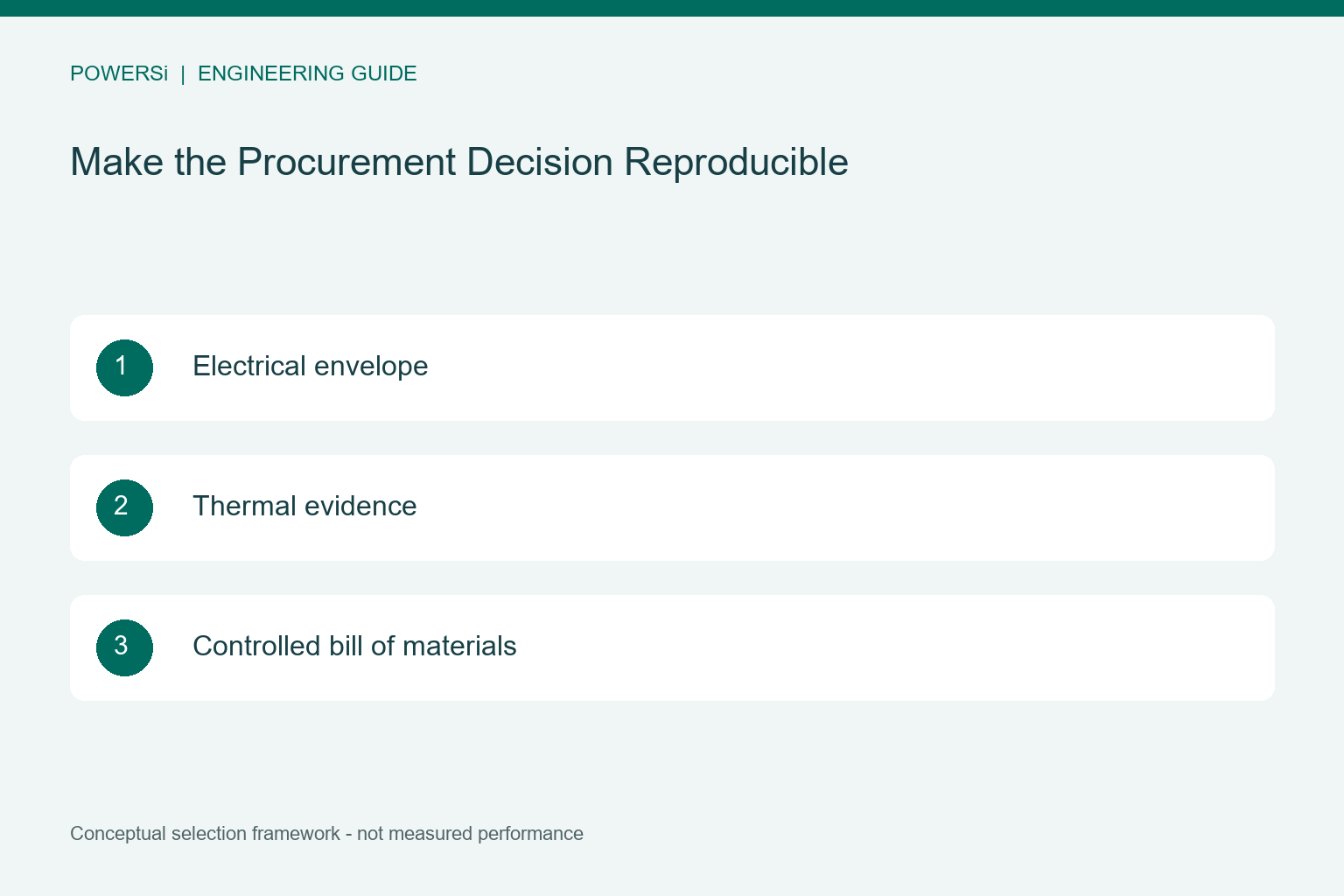
A useful sourcing brief states the topology, rail voltage, measured waveforms, allowable loss and cooling arrangement. It also records package restrictions and the tested controller configuration when synchronous rectification is used.
Compare total implementation cost, including driver components, assembly, heatsinking and verification work. Keep qualification evidence tied to the exact ordering code. A lower unit price or lower nominal forward voltage alone is not a sufficient release criterion.
Key Takeaways
- Start With the Output Architecture.
- Compare Losses Over the Actual Current Waveform.
- Make the Procurement Decision Reproducible.
Conclusion
Choose the rectification approach from the measured operating conditions and the complete system requirements. Contact POWERSi with your circuit role, voltage and current waveforms, thermal limits and package constraints to discuss a suitable component candidate.
FAQs
Does a high-efficiency server supply always use Schottky diodes?
No. The output architecture and loss budget determine the choice.
Why does output voltage matter?
The same forward drop consumes a larger share of power on a lower-voltage rail.
Is synchronous rectification always better?
Its conduction advantage must outweigh drive, timing and switching overhead.
Can the pictured part be selected from appearance?
No. Package identity does not establish electrical suitability.
What should a sourcing request contain?
Include the circuit role, operating waveforms, temperature limits and mechanical constraints.