Skip to content
Diode Lead Materials: Silver Plating, Copper Alloys and Reliability Evidence
Last Updated: 2026-09-26
Quick Answer
Diode lead material cannot be evaluated from the phrases “silver-containing” or “pure copper” alone. A terminal can have a copper-alloy base and a separate plated finish, while silver may also appear in internal joining materials. Compare the specified material stack, geometry, solderability, thermal path and reliability evidence of the complete component.
A silver-colored terminal does not reveal its elemental composition. Nor does a declaration containing silver show that the entire lead is made from silver. Procurement needs to identify where each material is used before comparing cost or performance.
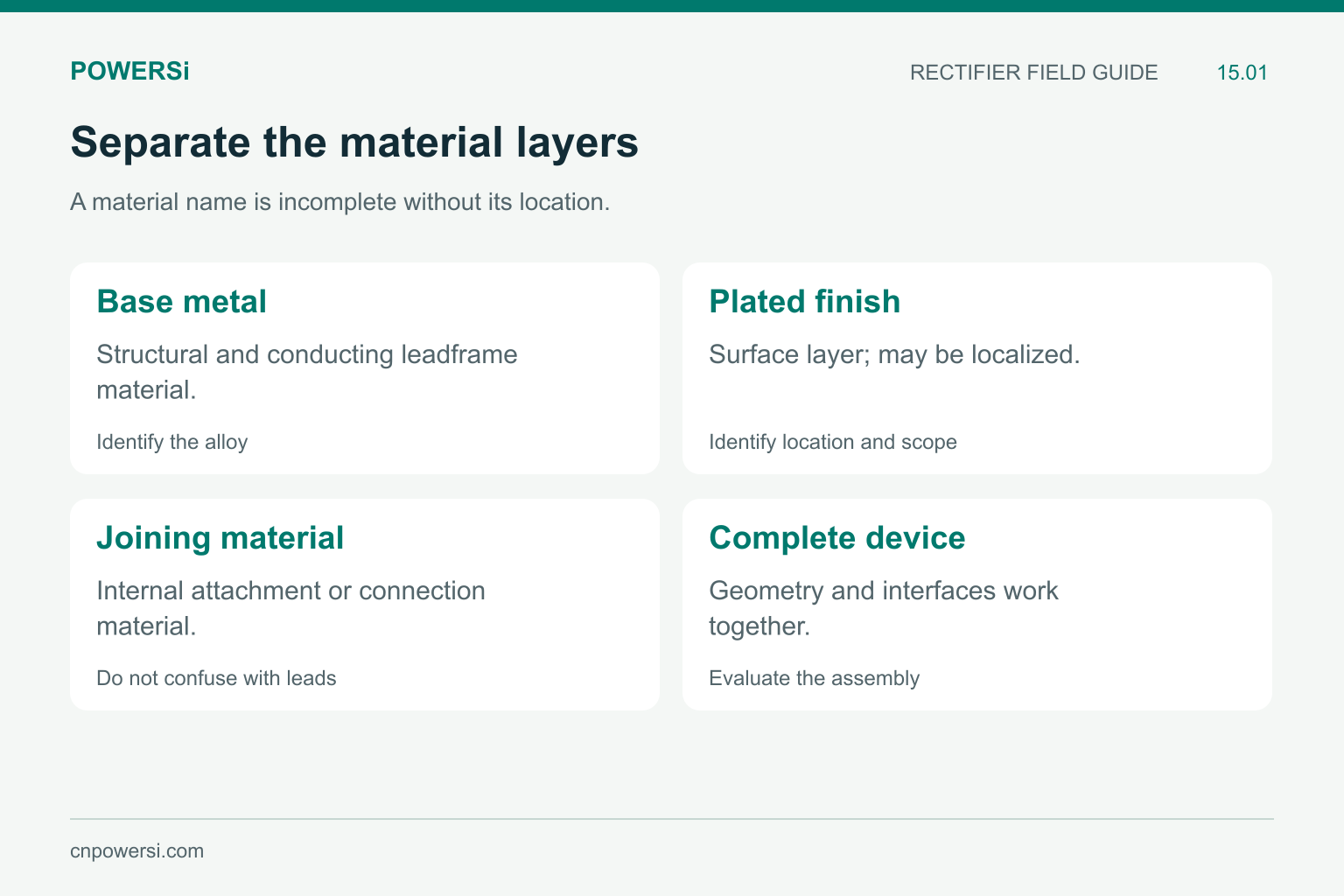
Silver content does not establish a solid-silver terminal.
Separate Base Metal, Plating and Joining Material
The leadframe provides structural support and electrical paths. Plating serves surface-related functions and may be localized. Internal joining materials connect parts of the assembly. These categories can contain different metals without contradicting one another.
For a concrete external example, Nexperia’s BAS316 material declaration lists copper alloy, a silver layer and tin post-plating in different entries. This illustrates the need to read material location as well as elemental names. It does not describe the construction of a POWERSi model.
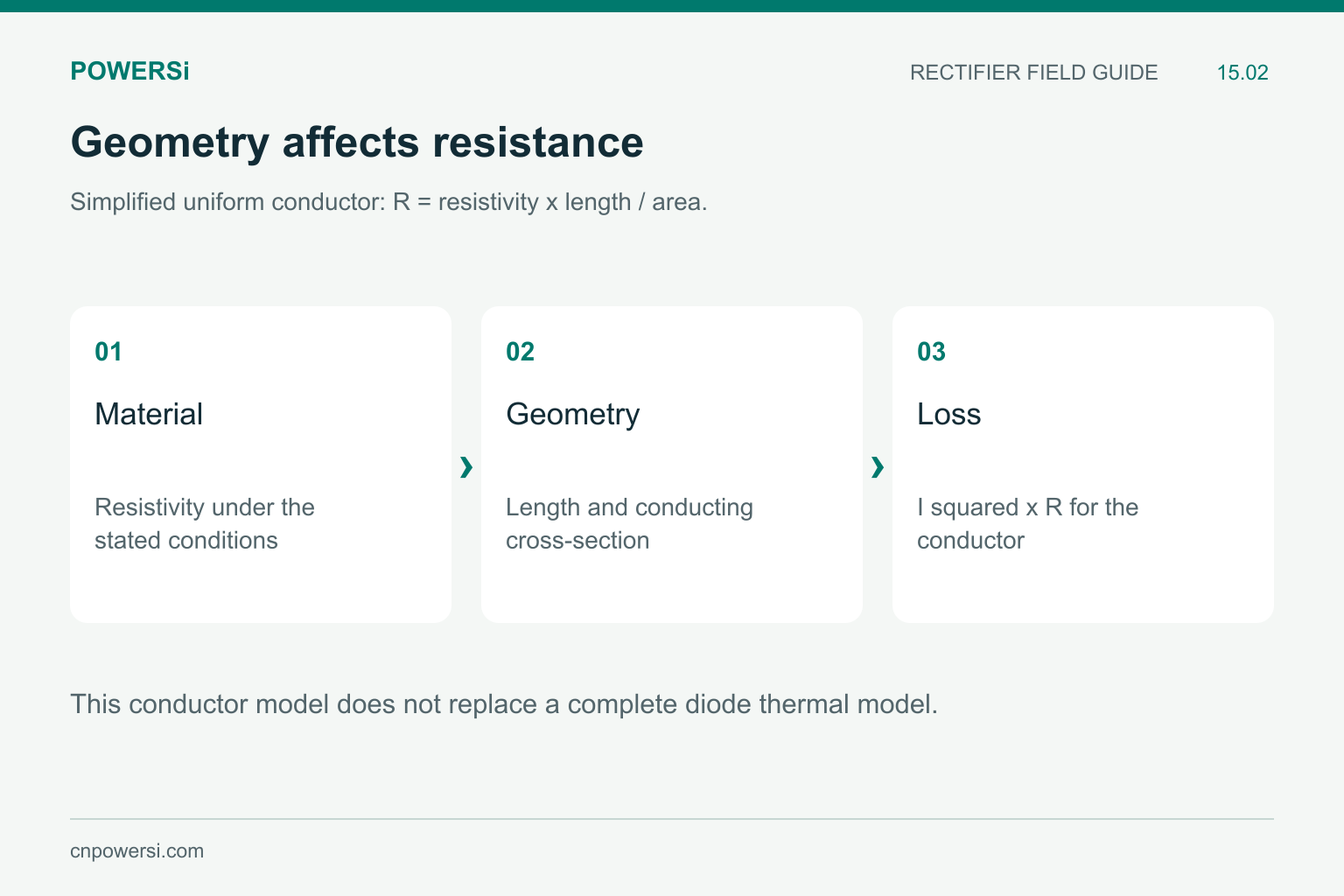
A material comparison needs comparable geometry.
Why Bulk Conductivity Does Not Set Package Temperature
For a simplified uniform conductor, electrical resistance is proportional to resistivity times length divided by cross-sectional area. Its resistive loss is I squared times R. A material comparison is incomplete if the two leads have different length, thickness or connection geometry.
Thermal behavior is also a network problem. Heat may pass through the die attachment, leadframe, body, case interface and board. Changing one material does not guarantee that the dominant thermal resistance has changed. A thin plated layer should not be assigned the thermal performance of a solid conductor made from that metal.
Copper alloys can balance conductivity, mechanical strength and manufacturability. “Pure copper” is therefore not a universal reliability grade. Ask for the base alloy and specified properties when those details are part of the design requirement, then evaluate the assembled component rather than ranking materials by name.
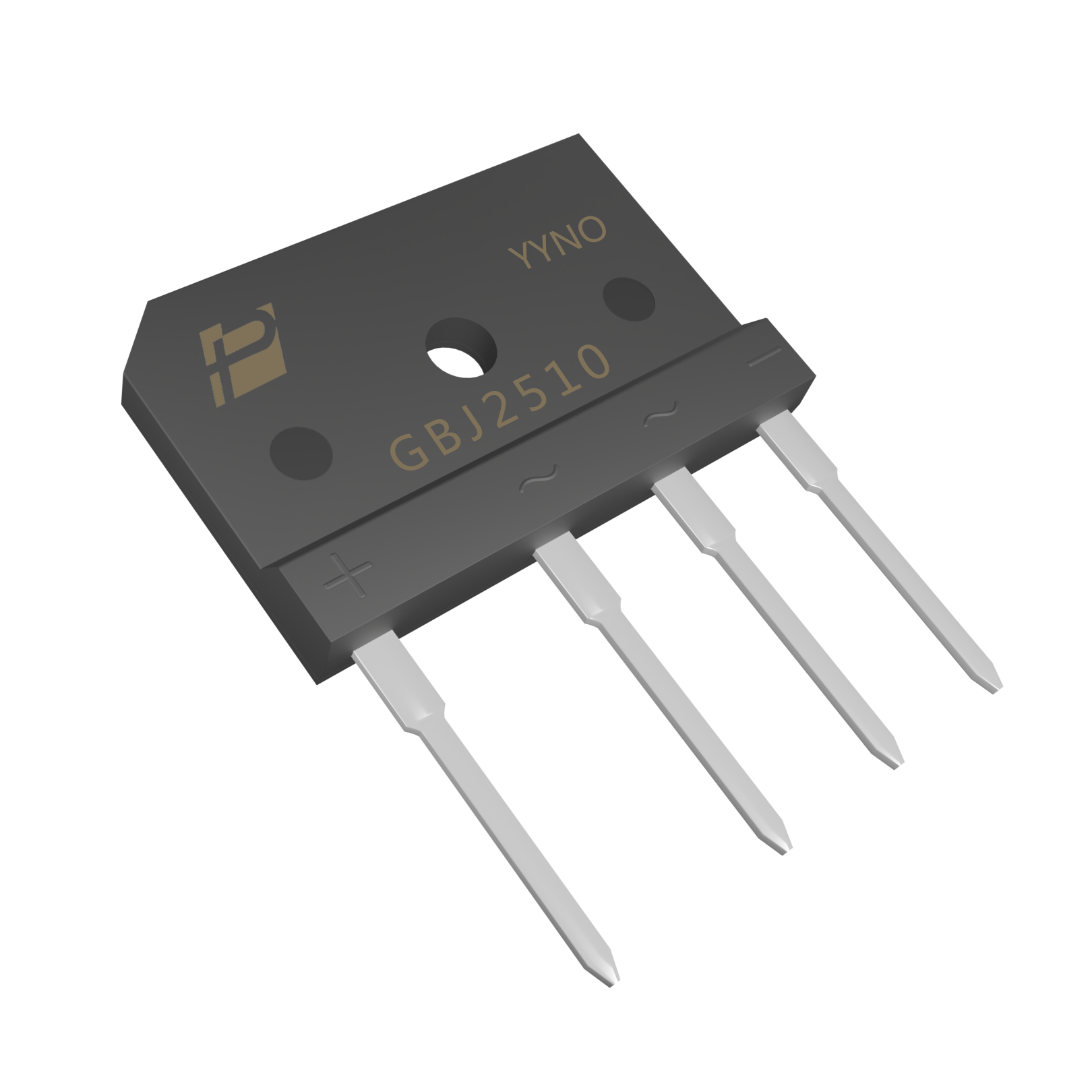
GBJ2510 appearance does not reveal its hidden base alloy; its mechanical data specify tin-plated leads.
Distinguish Visible Finish From Hidden Composition
The POWERSi GBJ2510 V2.0 mechanical data identify tin-plated leads. That is useful information about the terminal finish, but it does not establish an exact hidden base alloy or a silver content. The product image shows the external geometry and markings; it cannot measure composition beneath the surface.
Do not use color, gloss or a magnet alone to certify the full material stack. Surface analysis can identify elements within its measurement depth, but coating and substrate signals require appropriate interpretation. If a base-material claim matters, agree the analytical method, sampling location and acceptance limits with the supplier or test laboratory.
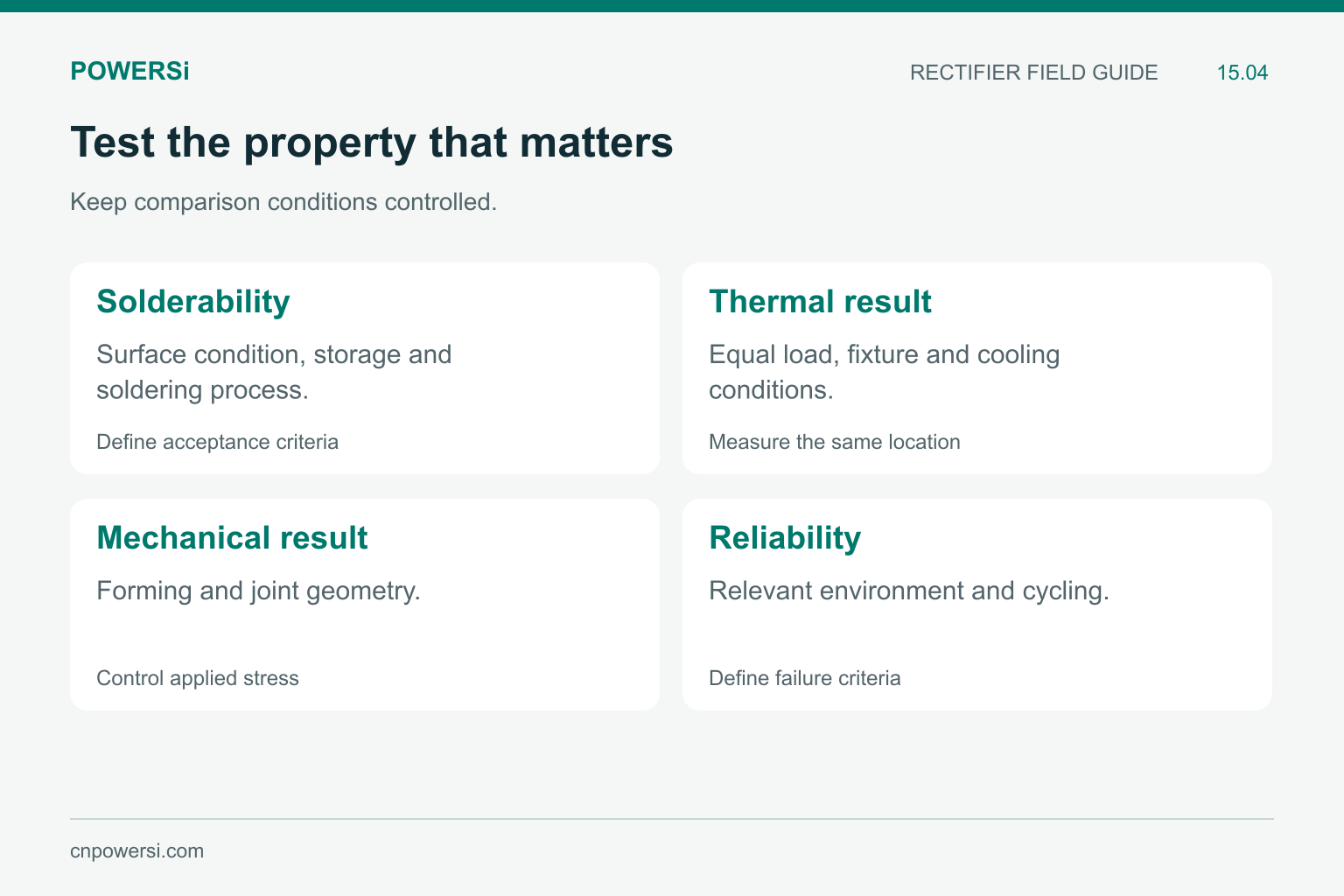
A room-temperature resistance test does not cover every failure mechanism.
Evaluate Assembly and Reliability Together
Solderability depends on the terminal surface, storage and soldering process. Mechanical reliability also depends on forming, joint geometry and the stresses applied to the package. A successful room-temperature resistance measurement says little about every long-term failure mechanism.
Build the evidence around the use case. For a soldered assembly, include the approved soldering profile and wetting or joint criteria. For a thermal comparison, hold the fixture, mounting pressure, interface and electrical load constant. Where environmental or cycling requirements apply, define the stresses and failure criteria before comparing samples.
Do not claim a universal percentage improvement from silver content or a base-metal change. Report the measured quantity and conditions: for example, temperature at a defined point under the same load and fixture. If the result changes, investigate whether the material, geometry or assembly process caused it.
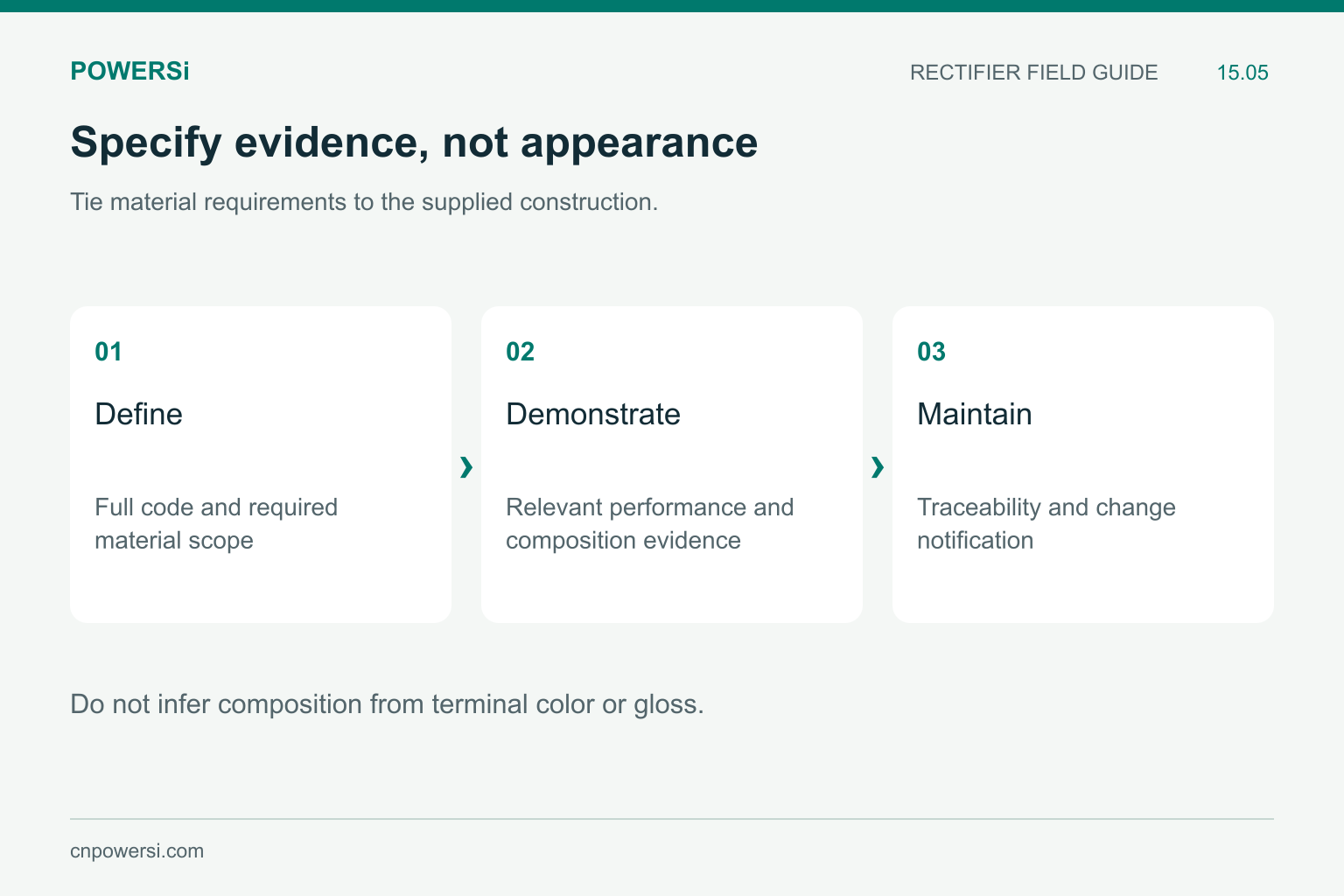
Keep the approved evidence connected to the supplied part.
Put Material Requirements Into the Purchase Specification
Identify the exact part and construction revision. Separate the required base material, terminal finish, applicable compliance declaration and assembly performance criteria. When proprietary construction details are unavailable, agree evidence that directly addresses the performance requirement rather than inventing a composition from appearance.
Define what changes require notification. A material substitution can preserve the external shape while changing an internal interface. Tie the approved evidence to the supplied product and lot traceability so that purchasing, quality and engineering are working from the same definition.
Key Takeaways
- Base metal and plating are different parts of the material stack.
- Silver content does not establish a solid-silver lead or guaranteed cooling benefit.
- Geometry and complete thermal paths matter alongside material properties.
- Approve measurable assembly and reliability requirements for the exact component.
Conclusion
Ask where a material is used, what property it controls and how that property is demonstrated. When discussing a POWERSi product, state the assembly and reliability requirement along with the full model code so the evidence can address the actual concern.
FAQs
Does a silver-colored lead contain silver?
Color alone cannot identify the finish or underlying material. Use the declared construction and an appropriate analysis when composition matters.
Can a copper lead also be silver-plated?
Yes. Base metal and plated layers describe different parts of the same construction.
Does silver content guarantee lower junction temperature?
No. The location and amount of material, geometry and complete heat-flow path determine its effect.
Does tin plating identify the base alloy?
No. A terminal-finish declaration does not by itself specify the underlying leadframe alloy.
What makes a useful material comparison test?
Control the electrical load, temperature, fixture and assembly process, then measure the properties relevant to the intended application.