Skip to content
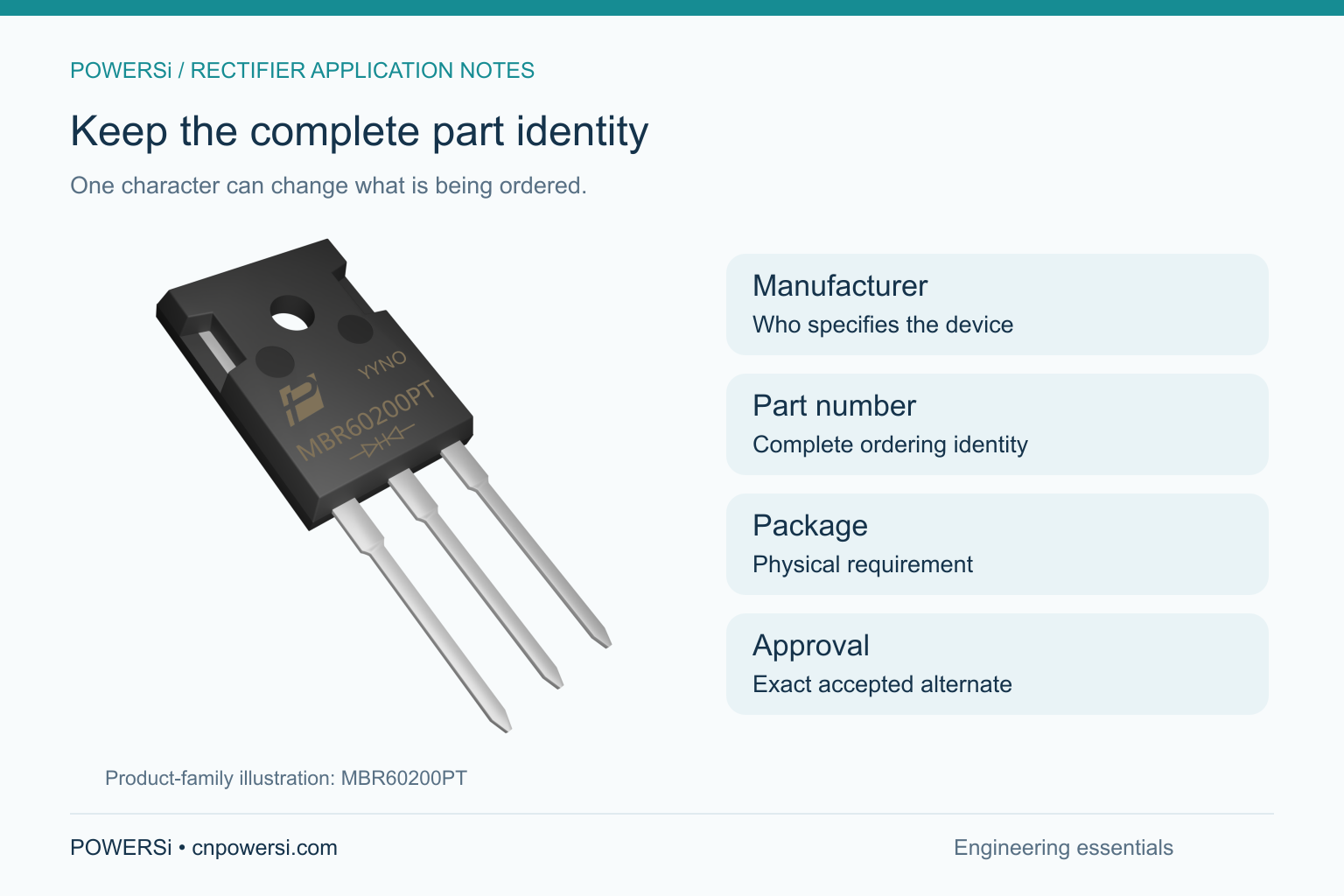
Rectifier part numbers identify more than a voltage and current class. A changed digit or suffix can identify a different device, connection, package or ordering option, depending on the manufacturer. Keep the full manufacturer part number in the BOM and distinguish an approved equivalent from an unreviewed substitution.
A buyer receives a quote with a part number that differs from the BOM by one character. The package looks right, and the voltage and current columns match. Should the order proceed?
The useful question is what that character changes. Treating it as a typing detail can disconnect the purchased component from the one engineering evaluated.
What a Part Number Can Tell You
Manufacturers use device designations and ordering codes to distinguish product variants and delivery options. The meaning of a letter or suffix belongs to that manufacturer's coding system; there is no universal decoder for every rectifier family.
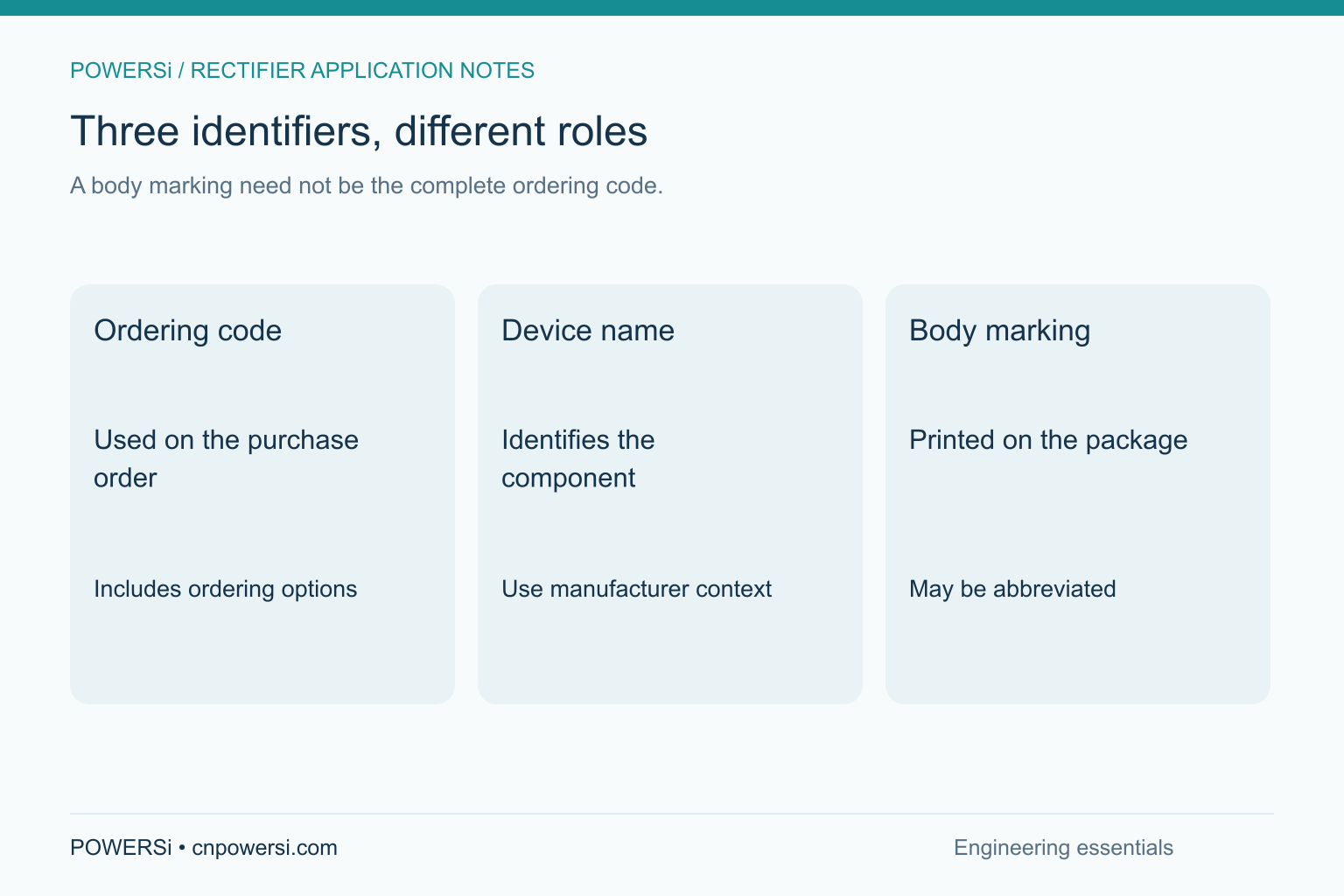
Separate three pieces of information: the manufacturer's full ordering code, the device designation, and the marking visible on the body. They may not be identical. A short body marking is useful for identification, but it need not contain every packaging or ordering detail.
Classify the Difference Before Approving It
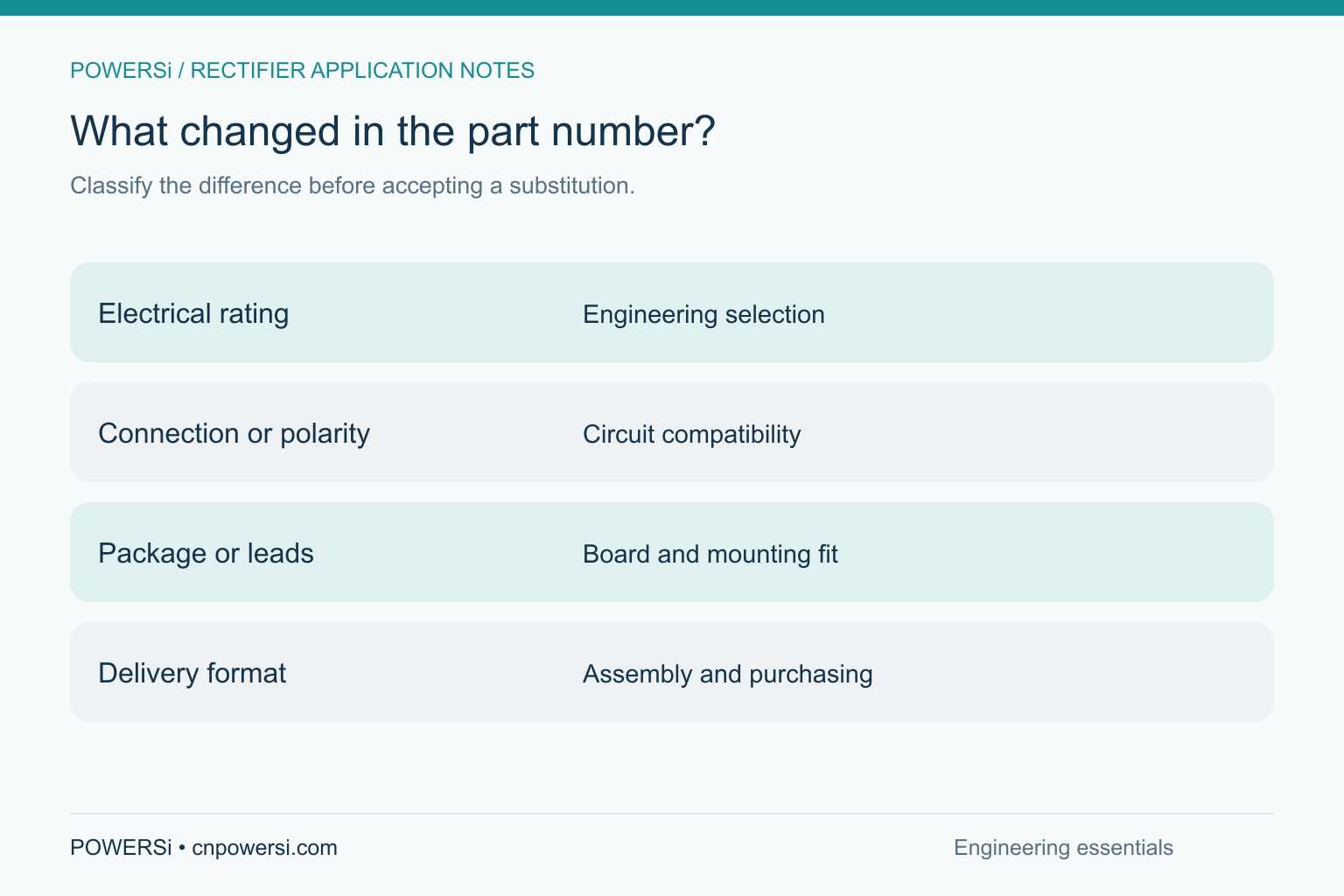
| Difference to investigate | Why it matters |
|---|---|
| Voltage or current variant | Changes the electrical selection basis |
| Internal connection or polarity | Can change the function despite a similar outline |
| Package or lead configuration | Affects mounting and board compatibility |
| Tape, reel, tube or bulk option | Affects production handling and ordering quantities |
| Manufacturer or product revision | Changes which specification and approval record apply |
A packaging difference may require only an assembly or purchasing decision. An electrical or connection difference requires engineering evaluation. Do not assume which category applies until the actual ordering information resolves it.
Put the Full Identity in the BOM
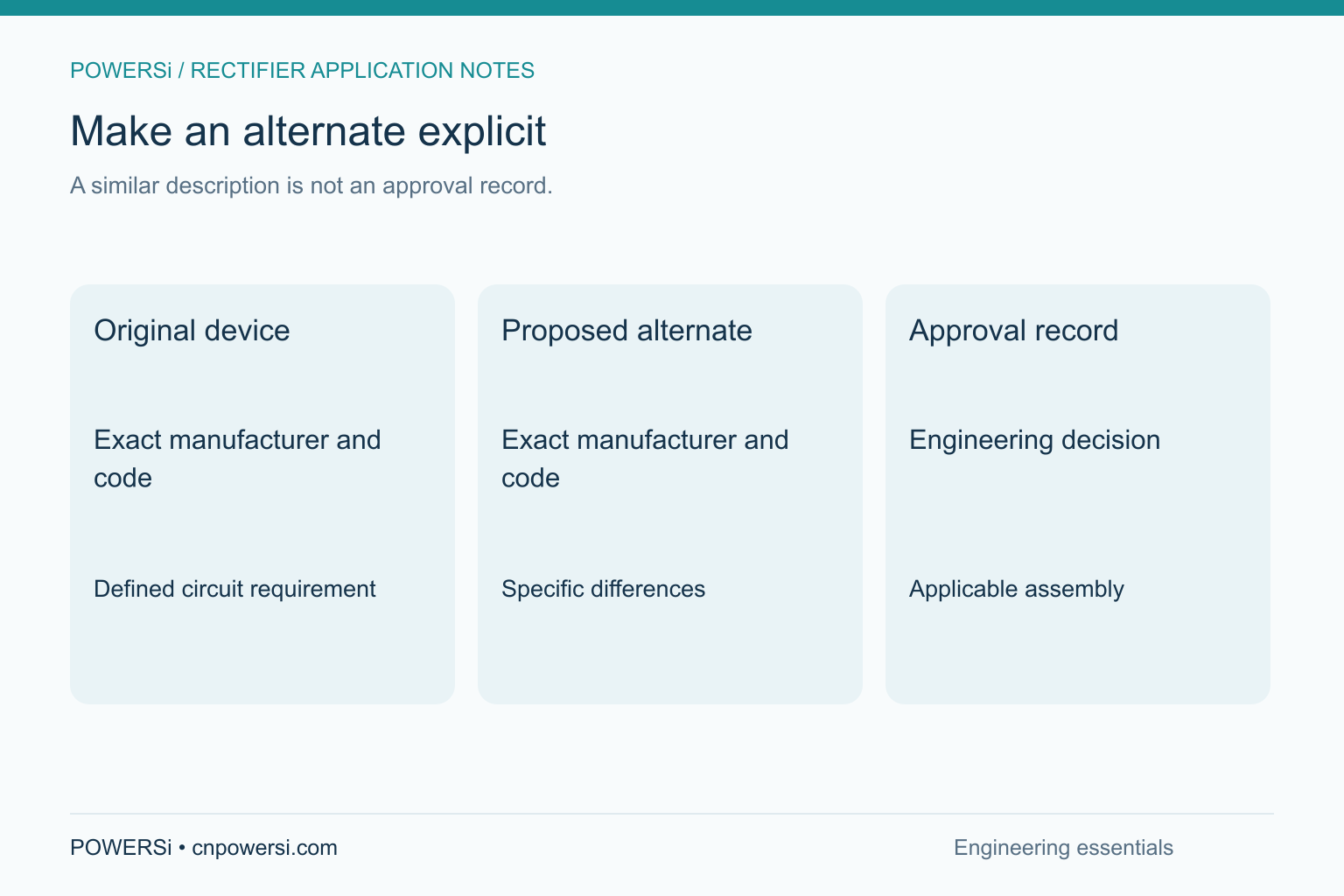
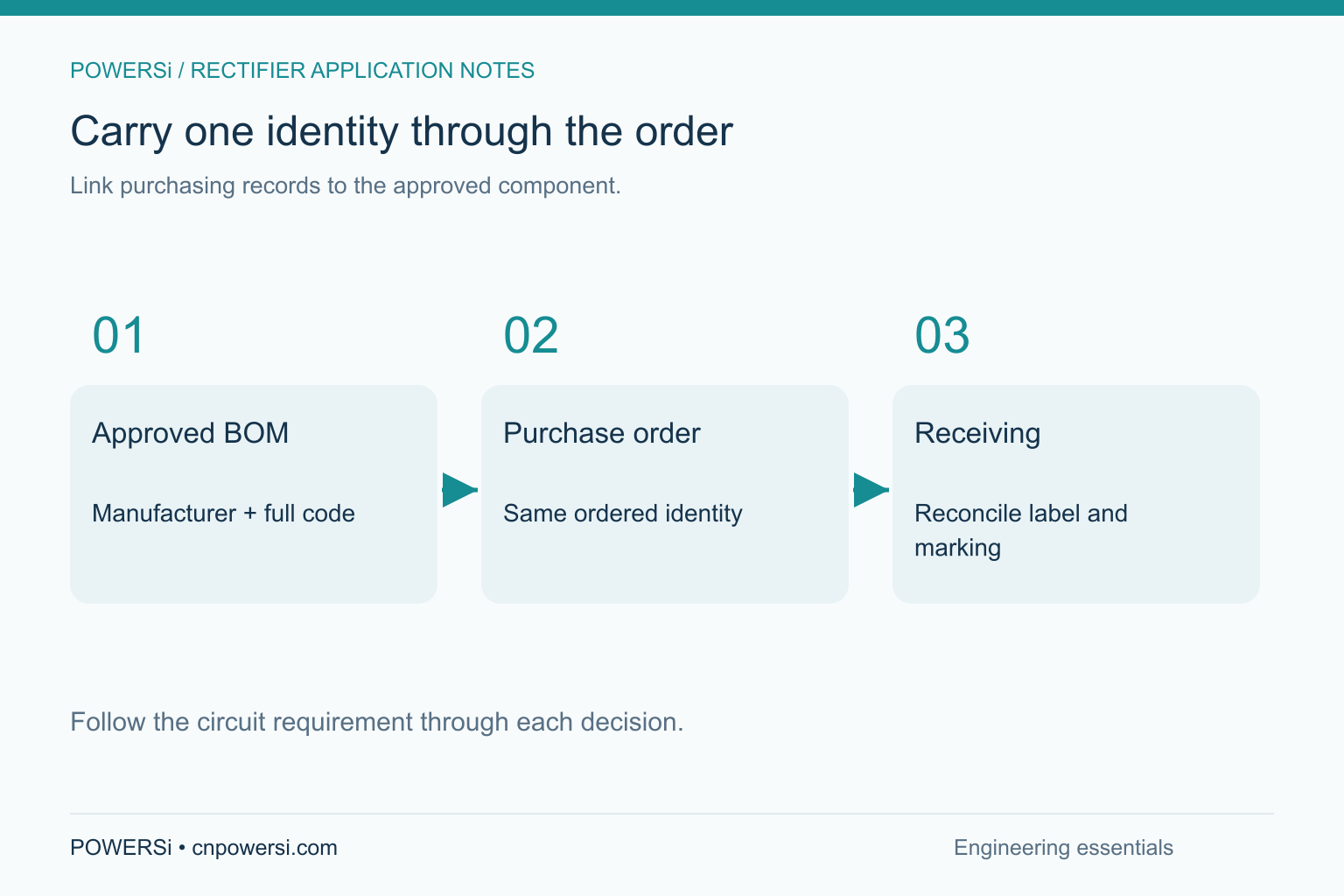
A useful BOM line connects an internal material code to the manufacturer, complete manufacturer part number and required package. Keep approved alternates in a separate, explicitly approved list rather than in an open-ended note such as 'or similar.'
For each alternate, record its own manufacturer part number. Attach the engineering approval to that exact identity. This avoids a situation in which one tested sample becomes informal approval for every part with a similar description.
Carry That Identity Through the Purchase
The supplier quotation, purchase order and shipment label should refer to the same ordered identity. If a supplier proposes a changed suffix, ask what it changes before updating the order.
At receiving, reconcile the labels, quantity and device marking with the ordered part. A marking difference needs an explanation linked to the manufacturer’s identification rules; appearance alone does not decide whether the shipment matches the order.
This process also helps separate a simple order-entry correction from a true product substitution. The former fixes a record; the latter changes the component being accepted.
Conclusion
Small differences in rectifier part numbers deserve a specific explanation, not an automatic rejection or acceptance. Preserve the complete identity from engineering selection through purchasing and receiving, and make substitutions explicit.
Explore the POWERSi product catalog or send the original part number and required package to [email protected] for a product inquiry.
FAQs
Does every suffix change electrical performance?
No. Some identify delivery options, while others can identify product differences. Use the specific manufacturer's ordering information.
Is the body marking enough to place an order?
Not always. The marking may be shorter than the complete ordering code. Use the full manufacturer part number for purchasing.
Can two manufacturers use similar part names?
Yes. Similar names do not establish identical specifications or approval. Record the manufacturer as part of the identity.
Should approved alternatives share one BOM description?
They can share a functional description, but each approved alternative needs its own exact manufacturer and ordering code.
What should accompany a substitution request?
Provide both full part numbers, the identified differences, the circuit requirements and the engineering evaluation needed for approval.