Fast Recovery Rectifier
Fast Recovery Rectifier
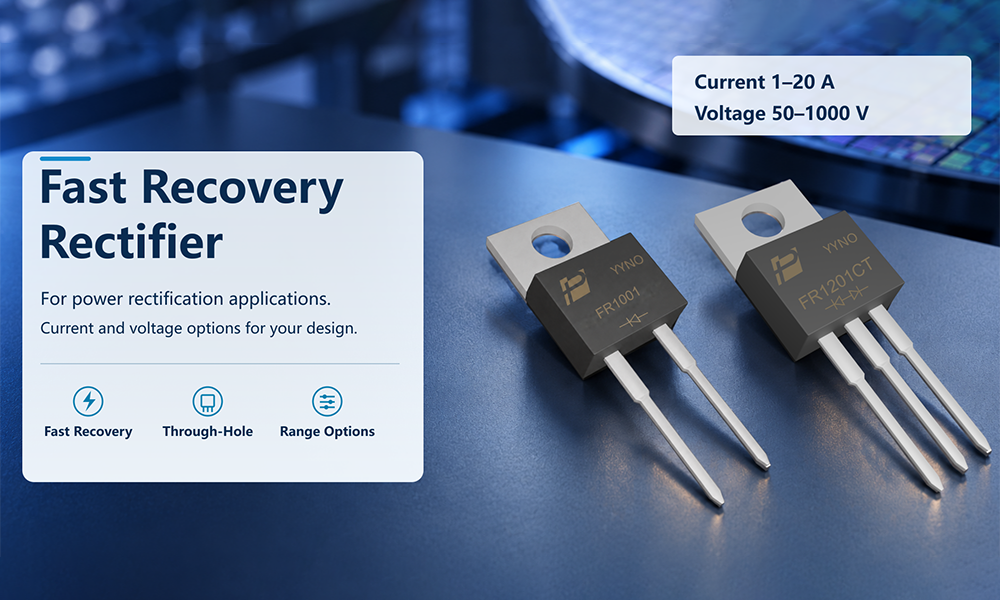
Fast Recovery Rectifiers are used in switched-mode power-supply rectification, freewheeling paths and certain clamp circuits that require frequent current commutation. Compared with general purpose rectifiers, their shorter reverse-recovery time enables a faster transition from forward conduction to reverse blocking.
POWERSi fast recovery rectifiers serve as rectifying devices or provide freewheeling paths in power-conversion circuits. Engineers can match devices to the circuit topology and load conditions by considering recovery characteristics, conduction losses and reverse-voltage requirements.
Fast Recovery Rectifier
Filter 205 products by Package, VRRM, IF, Configuration, IFSM_Max, VF_Max, Rated IF, Status, IR@125°C(uA), Tj, Trr_Max and IR@25°C(uA).
Fast Search
-
Package
-
VRRM(V)
-
IF(A)
-
VF_Max(V)
|
Product Name
|
Package
|
VRRM(V)
|
IF(A)
|
Configuration
|
IFSM_Max(A)
|
VF_Max(V)
|
Rated IF(A)
|
Status
|
IR@125°C(uA)
|
Tj(°C)
|
Trr_Max(ns)
|
IR@25°C(uA)
|
|---|---|---|---|---|---|---|---|---|---|---|---|---|
|
|
VRRM(V)
|
IF(A)
|
|
IFSM_Max(A)
|
VF_Max(V)
|
Rated IF(A)
|
|
(No data available)
|
Tj(°C)
|
Trr_Max(ns)
|
IR@25°C(uA)
|
|
| TO-220AC | 100 | 10 | Single Positive | 120 | 1.3 | 5 | Active | - | -55℃~+150℃ | 150 | 10 | |
| ITO-220AC | 100 | 10 | Single Positive | 120 | 1.3 | 5 | Active | - | -55℃~+150℃ | 150 | 10 | |
| TO-220AC | 200 | 10 | Single Positive | 120 | 1.3 | 5 | Active | - | -55℃~+150℃ | 150 | 10 | |
| ITO-220AC | 200 | 10 | Single Positive | 120 | 1.3 | 5 | Active | - | -55℃~+150℃ | 150 | 10 | |
| TO-220AC | 400 | 10 | Single Positive | 120 | 1.3 | 5 | Active | - | -55℃~+150℃ | 150 | 10 | |
| ITO-220AC | 400 | 10 | Single Positive | 120 | 1.3 | 5 | Active | - | -55℃~+150℃ | 150 | 10 | |
| TO-220AC | 600 | 10 | Single Positive | 120 | 1.3 | 5 | Active | - | -55℃~+150℃ | 250 | 10 | |
| ITO-220AC | 600 | 10 | Single Positive | 120 | 1.3 | 5 | Active | - | -55℃~+150℃ | 250 | 10 | |
| TO-220AC | 800 | 10 | Single Positive | 120 | 1.3 | 5 | Active | - | -55℃~+150℃ | 500 | 10 | |
| ITO-220AC | 800 | 10 | Single Positive | 120 | 1.3 | 5 | Active | - | -55℃~+150℃ | 500 | 10 | |
| DO-41 | 50 | 1 | - | 30 | 1.3 | 0.5 | Active | - | -55℃~+150℃ | 150 | 5 | |
| TO-220AC | 1,000 | 10 | Single Positive | 120 | 1.3 | 5 | Active | - | -55℃~+150℃ | 500 | 10 |
COMMON INQUIRIES
Fast Recovery Rectifier FAQ
The main difference is their recovery behavior when transitioning from forward conduction to reverse blocking. Fast recovery rectifiers generally have a shorter reverse-recovery time, making them more suitable for frequent current commutation. Standard rectifiers are commonly used in line-frequency and other applications with less demanding recovery requirements.
No. Reverse-recovery time is important, but device selection should also consider reverse-recovery charge, recovery waveform, forward voltage and temperature behavior. When comparing devices, check that test conditions such as current, current rate of change and junction temperature are comparable.
There is no single frequency limit that applies to every device and circuit. Suitability depends on recovery characteristics, circuit topology, operating voltage and current, and cooling conditions. Loss calculations and testing in the intended circuit should guide selection.
It may be possible in some applications, but recovery speed alone does not establish compatibility. Check voltage and current ratings, forward voltage, leakage current, surge capability, package and pin configuration. Verify temperature rise and switching waveforms in the actual circuit before approving the replacement.
Still have questions regarding our technical capabilities?
CONTACT OUR TECHNICAL DEPARTMENTPower Semiconductor Manufacturing Equipment

Manufacturing Capability
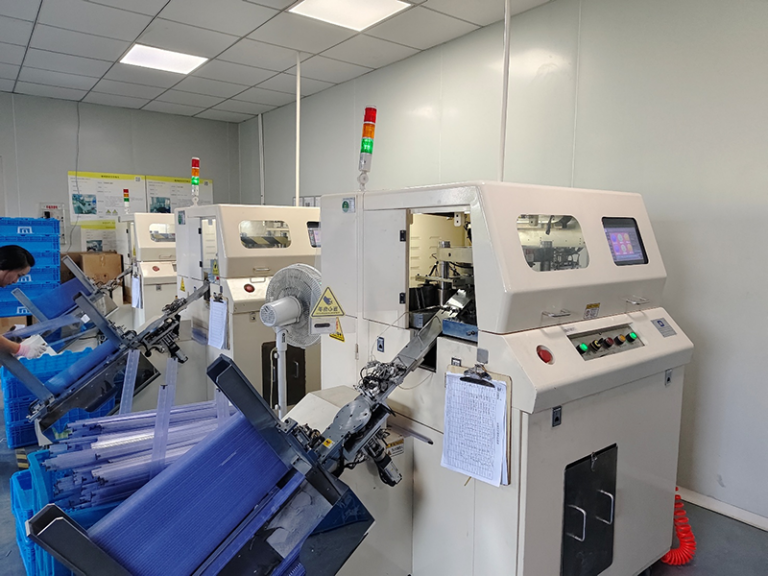
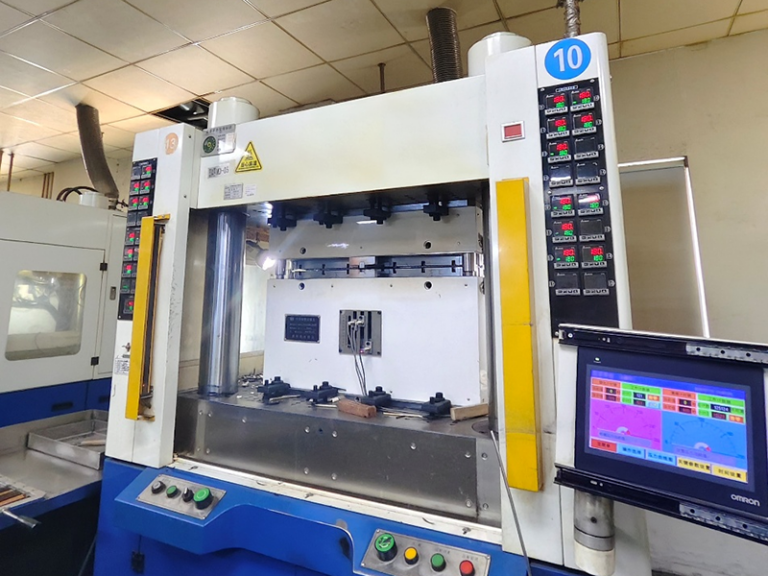
Professional Power Semiconductor Manufacturing Capability
Why Global Engineers Choose POWERSi
- 17 Utility Model Patents in Power Devices
- ISO9001:2015 Certified Manufacturing
- 10,000 m² Integrated Production Base
- 300+ Enterprise Customers Served Worldwide